
A speedy run-down of some of the shows, books, movies, and escape rooms I’ve seen this summer…
Edinburgh Fringe Shows
I didn’t see that many shows this year because I’ve just returned from a trip abroad and have been working on Strandfall and book edits, but I managed to get a few in:
Evita Too: I think this is the third Sh!t Theatre production I’ve seen now, and there’s nothing quite like their blend of gonzo journalism, comedy, clowning, and introspection. This time, the story is about how Isabel Perón, “the first ever female president of a country in the history of the world”, has been memory-holed, and what that means for anyone who hopes to be remembered through their works.
Robot Vacuum Fight Club: Pretty much what it says on the tin: teams pick their own miniature robot vacuum cleaner, modify it with bits of sticky tape, pipe cleaners, and cardboard to compete in challenges (vacuuming as much confetti as possible, popping an enemy’s balloon, etc.). Decent fun, doesn’t overstay its welcome.
Demi Adejuyigbe Sells Out: Lots of really fun bits, but somewhat disjointed? I don’t know if the theme of “selling out” worked strongly enough here. Still, there was a thought-provoking moment (at least for me) about the nature of honesty within the frame of a comedy set.

Supposing: A modern take on the myth of Cassandra. Impressively physical performances, though it came across as a little too “ripped from the headlines” in terms of its politics, which didn’t really cohere and count for much in the end (also, I got this as a comped ticket from the Traverse Theatre as I’m an artistic associate there).
Solar eclipse: Not a show in the formal sense, but very much so in how it was received: Edinburgh had around 92% totality for the eclipse, and I’d guess up to ten thousand people climbed Calton Hill for a view. Genuine, unironic applause and cheers broke out when the sun emerged from behind clouds at just the right moment.
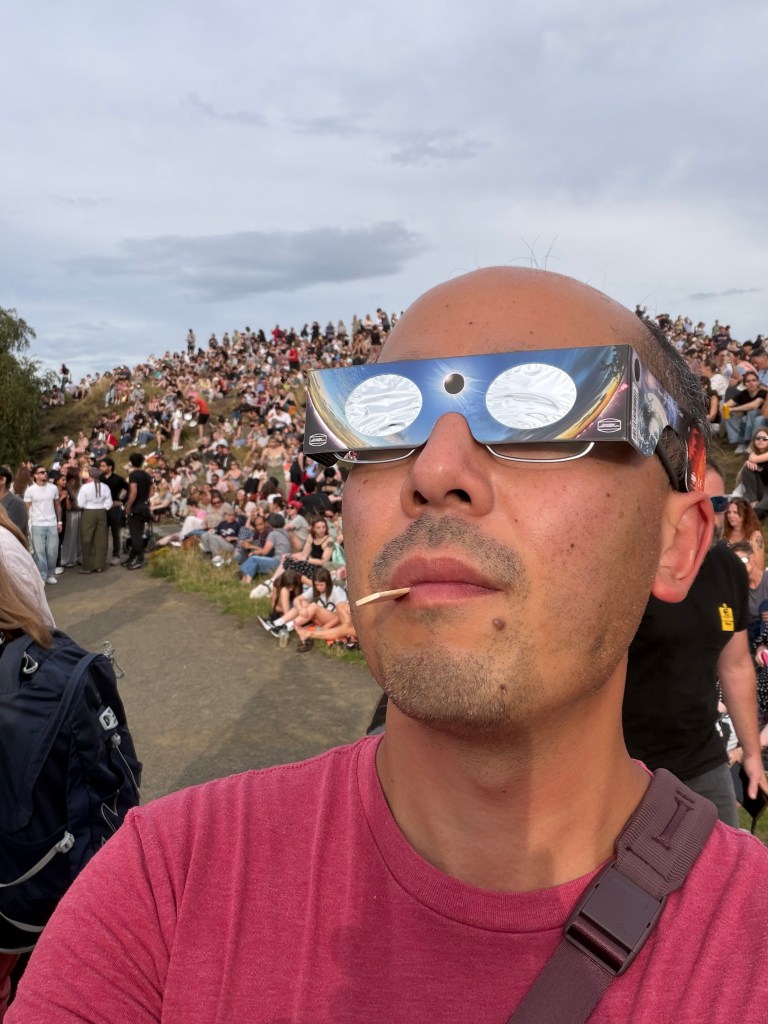
I’m also booked in for Extra Lives and Mark Vigeant: Out There, but wanted to get this post out in time to help Fringe-goers decide!
Books
A selection of things I’ve read:
The Wager by David Grann: “How good can it be?” I wondered, given the tremendous hype this has received. It turns out the hype is absolutely deserved: this is an astonishingly well-researched page-turner about a British fleet on a secret mission. There are passages so exquisite they practically make me weep as an author, but then again, Grann is the best there is when it comes to narrative non-fiction, so it’s no shame to feel outdone.
On the Calculation of Volume I-IV by Solvej Balle: Volume-heads rise up! Balle is doing Groundhog Day as literary fiction, and it works. Whenever you think you’ve gotten a handle on the story, which starts out in soporific fashion, something surprising happens.
Perspectives by Laurent Binet: Widely described as a murder mystery set in the Renaissance, Perspectives is, in fact, a comedy. Where else are you going to find Vasari and Michelangelo bickering about bad food and bowel movements, or a surprise Assassin’s Creed reference:
I ran to the wall; a leap from that height could be fatal, even to me. But God rewards the brave: at the foot of the wall was a cart loaded with hay, left there by some groom. It all happened in a flash: the decision, then the execution. I climbed onto the parapet, arms outspread like Christ on the cross, I closed my eyes and I dived. During my fall I heard the cry of an eagle. My landing was as soft as on a feather bed, and in a second I was up on my feet again, completely unscathed.
After this and his gripping alternate history Civilizations, Binet is probably my favourite working novelist.
Moderation by Elaine Castillo: Ostensibly about the horrors of social media moderation, I hadn’t appreciated quite how much this novel would veer across a whole swathe of my professional interests. My theory is that Castillo read about the Igorot Camp at the 1887 Philippines Expo in Madrid, and the human exhibitions at world’s fairs more generally, connected them to right-wing historical theme parks like Puy du Fou, and extended them on to VR and immersive experiences.
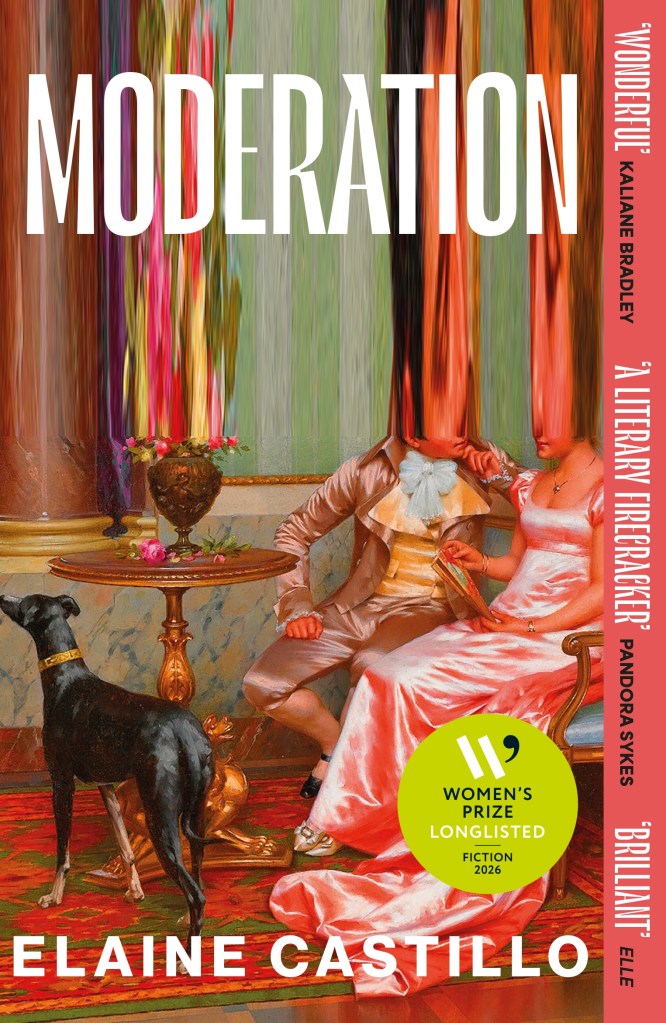
It doesn’t quite hang together in practice. Most readers won’t be too fussed by the unlikelihood of the business and tech mechanics, but it’s harder for me to ignore. That’d be OK except for said mechanics being detailed almost entirely through data-dump dialogues. Why not show rather than tell?
It would’ve been way more complex and interesting and dramatic to play out the dangers – and limitations – of people trying to espouse reactionary and far-right views through immersive re-enactments. In the end, I found myself far more taken by Castillo’s sharp and funny Austen-esque observations, especially that of a Filipino woman surviving in a content moderation job in Las Vegas. There was such a brilliant specificity and energy that I found lacking in the turn toward technology.
Funnily enough, a lot of readers seem to hate the romance parts and wanted more of the tech. I’m the other way around! I guess I should read more romance novels?
The Big Con by David Maurer: I read this after learning on a podcast that Joseph Weizenbaum, creator of the first chatbot, ELIZA, was deeply inspired by Maurer’s 1940 book about the elaborate sets that conmen used to earn millions in the early 20th century – entire fake telegram switchboards, banks, and betting parlours, staffed with dozens of performers; Maurer would later sue the makers of The Sting for plagiarism.
Maurer is a great storyteller and describes the cons in loving detail, though the book falls off a bit in the second half as he laboriously describes the less-interesting parts of the schemes.
Sins of Sinister by Kieron Gillen: Yes, I bought this X-Men compendium after the reveal that Adam Driver will be playing Mr. Sinister in the upcoming movie. Whomst among us? It’s the perfect execution of “what if the baddies won?”, where the possibilities of mutant powers are extrapolated to the nth degree.
House of X/Powers of X by Jonathan Hickman: FYI, this takes place before Sins of Sinister, and while this story is connected to Gillen’s, there’s a fair bit that happens in between. You’ll figure it out! (or just read Wikipedia synopses, I guess). If the “Krakoa” means nothing to you, this is a fantastic introduction to a whole new X-Men strand.
Movies
I’ve been averaging three movies per week this year, so this is nowhere near a full list – I haven’t mentioned any Scorsese, for example:
Teenage Sex and Death at Camp Miasma: The main observation I’d add to the discussion around this great movie is the centrality of play in the expression of desire, and how it represents a necessary complement to the discovery of new desires through shared mass media like, in this case, trashy slasher movies.
Le Bal: Zineb Sedira’s recreation of a Parisian dance hall at the Whitechapel Gallery was based in part on this 1983 movie, and so I expected it to be a serious drama, yet I was chuckling throughout.

Le Bal has some of the best clowning (in the sense of wordless, highly physical performances, not in the sense of featuring people in clown costumes) I’ve seen, and really qualifies more as a musical comedy than anything else. A very fun time!
Mother (2009): Bong Joon Ho is best known for Parasite and Snowpiercer, but I think there’s a strong argument for this as his masterpiece. The premise is beguilingly simple – a mother defends her son against accusations of murder – but the movie continually wrongfoots you, right from the start. Not in an overtly Shyamalan twisty way, but more as a complication of character. Stylish and stunning.
They Shoot Horses, Don’t They?: Battle Royale/Hunger Games decades before either of them were a thing. I’d heard of dance marathons in the Depression before and assumed I knew how this movie would play out – such is the fate of exemplars. Director Sydney Pollack goes way harder than I expected, however, and if this were released today, I think people wouldn’t be able to stop talking about it.
Universal Language: Magic realism with strains of alt-history and Wes Anderson charm, but much more mysterious. One of those movies where you’ll wonder how on Earth it’ll stick the landing – and then it does.

John Wick: I resolved to watch all five movies (including Ballerina) this summer. Pretty good, though I expect they’d feel less repetitive and self-derivative if watched over a decade.
Nirvanna the Band the Show the Movie: Madcap guerrilla-footage Back to the Future homage. Another “the less you know, the better” movie, though if you like it, you must check out the TV show (the webseries, while it has some very funny bits, is quite offensive at times).
Exit 8: I claim 0.00001% credit for this movie’s existence because I was one of the first people to write about the video game, to the point where the official Google search box pointed to my blog post. To my surprise, this was a really solid horror movie and a considerably better adaptation than Backrooms.
Finally, I went on an Ernst Lubitsch kick, watching Ninotchka, Trouble in Paradise, and To Be or Not to Be, all of which are unqualified masterpieces and serve as a thrown gauntlet to contemporary filmmakers: yes, you can do politics and comedy and drama and action in the same movie and keep it well under two hours!
Games
Marathon: Not satisfied with making a punishingly hard game, Bungie chose to create what may be the world’s worst tutorial. And yet, if you can get a group together, and if you can find a match, and if you don’t get shot to pieces by veterans within thirty seconds, you just might have one of the most thrilling video game experiences ever, sneaking through a sci-fi world full of AI and human enemies, half-dead and bereft of ammo and only making it out alive with seconds to spare.
Peak: After one too many excruciatingly long waits for matches in Marathon, we opted for this now-classic friendslop game where you climb a mountain. It’s very silly and very fun!
News Tower: SimTower crossed with a newspaper management simulation. Simultaneously addictive yet revealing of the fundamental flaw of real-time non-combat strategy sims, which is that most of the time nothing interesting is happening so you end up constantly pausing and fast-forwarding in order to min-max things.
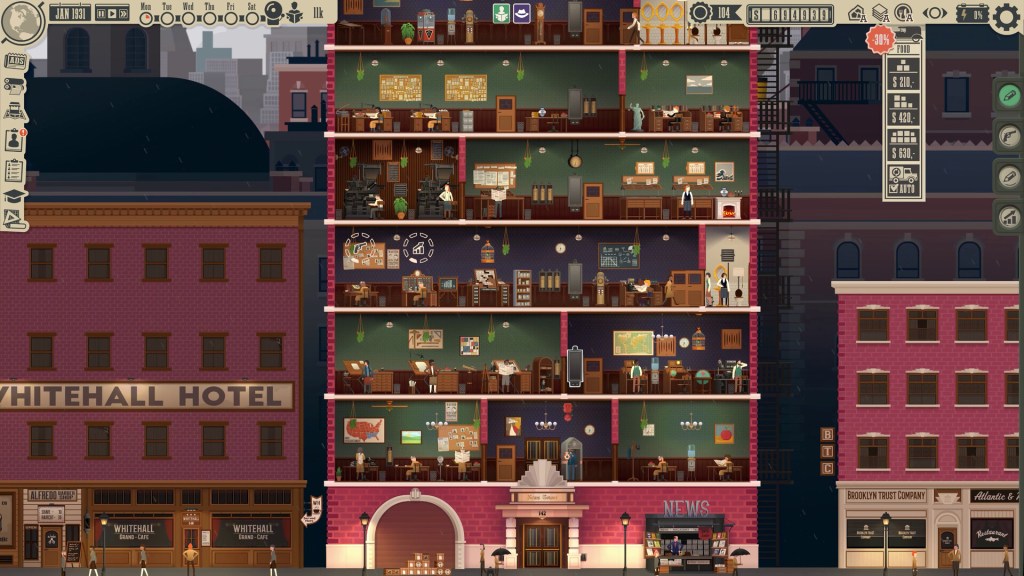
The balance also seems off to me; it keeps throwing problems at you to which the proffered solution is far beyond your grasp. Still, it’s a smart idea, and it passed my test to see if a traditional keyboard-and-mouse game would work on my new Steam Machine.
Arco: This Western-themed turn-based combat game was one of the casualties of Panic publishing too many indie games at once, but I decided to return to it on hearing it’d finally broken even on development costs after two years. Some elements feel very dated in a bad way, but the core combat is excellent.
Escape Rooms
Given how rapidly escape rooms are innovating, I haven’t been to as many as I should, but I’ve made a little progress:
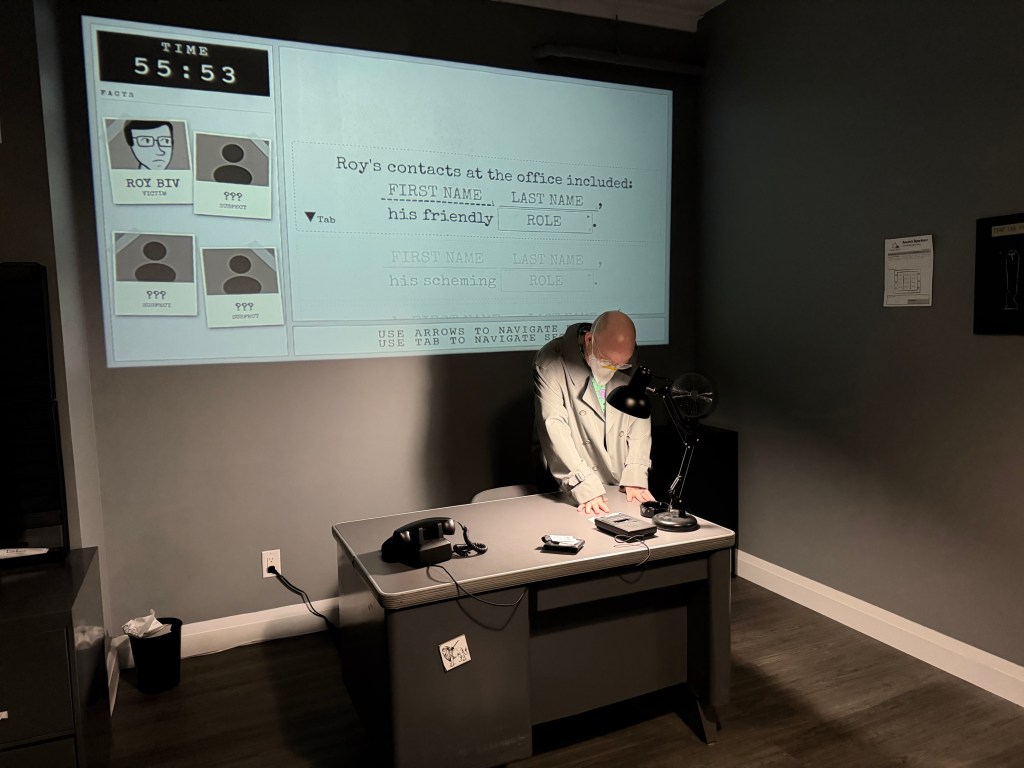
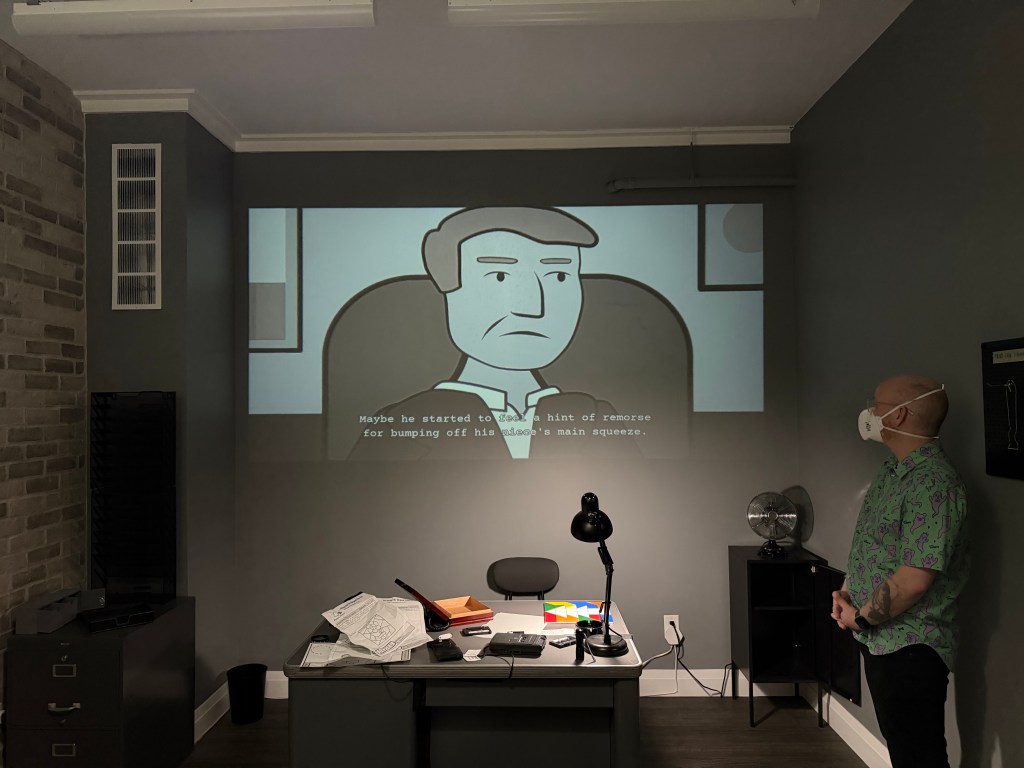
Shades of Grey (Toronto): Golden Idol/Obra Dinn video game deduction mechanics meet a real-world escape room. Puzzles and story are communicated through a projector, with input handled by a keyboard; players fill in the blanks, madlibs-style, to answer multiple-choice questions like the occupants of the office you’re investigating.
The great advantage of this system is that it enables a story-heavy experience through cartoon cutscenes, along with narrative-driven puzzles that would be harder to express through old-school combination locks and pin codes. We also enjoyed the clever black-and-white theming of the room, which very directly ties into the story and gameplay.
If I were going to knock Shades of Grey a little, it would be to note that the keyboard-only input is a little clunky – in video games, at least you get a mouse as well; I also felt like it was missing a final puzzle to lead us into the denouement. Those are very mild criticisms, however, of an otherwise highly polished escape room, with interactive components that frankly work better than a lot of video games I’ve played. I hope more escape rooms take up this mechanic, as Case Closed in Edinburgh has done previously!
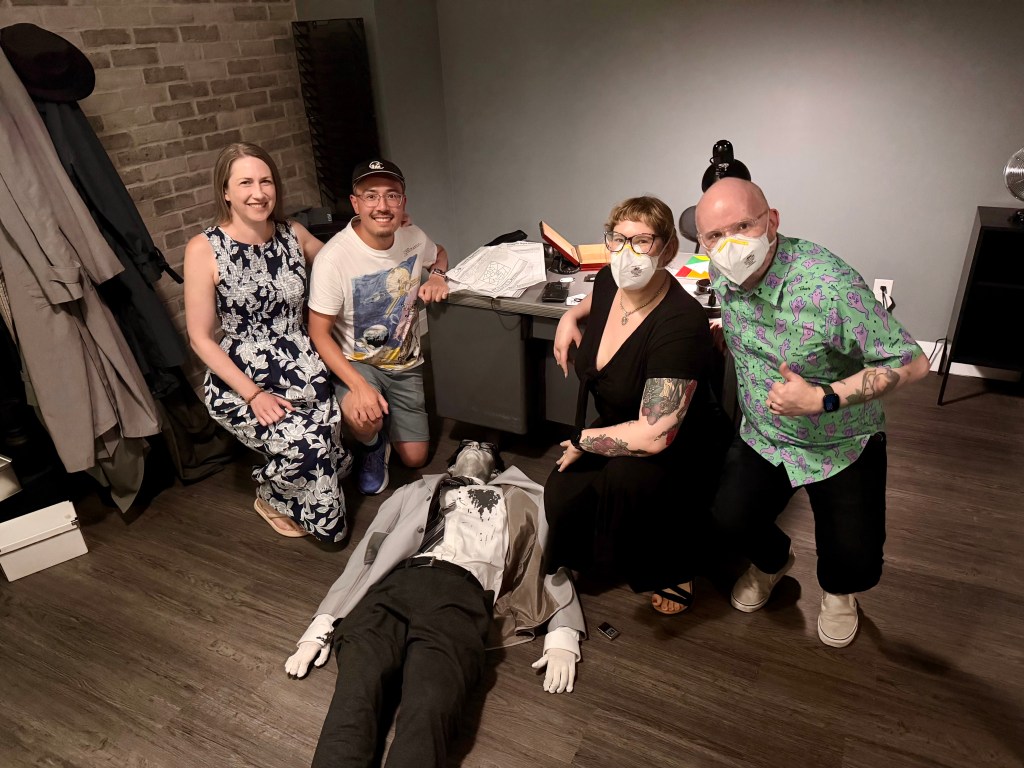
Call of the Void (Edinburgh): Speaking of Case Closed, this is their latest “Bureau of External Affairs” game, all three of which take place in the same small X-Files-ish office.
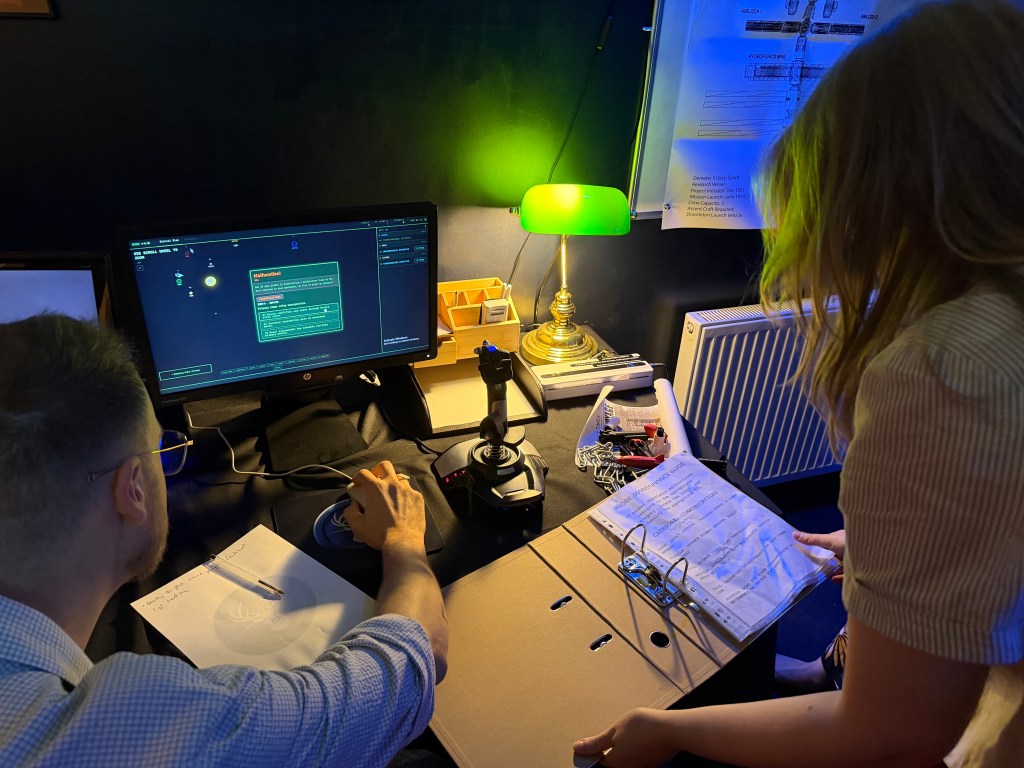
I’d been advised to play this solo by someone who’d raved over it. This wasn’t possible given the circumstances, but I totally understood what they meant since Call of the Void resembled immersive theatre more than a traditional escape room. Inspired by Project Hail Mary, players investigate the fate of a mysterious spaceship, analysing physical samples, unfurling blueprints, and watching what are effectively video cutscenes, co-ordinated by a plainly vibe-coded but nevertheless very cool sci-fi computer interface.
I’m a little flabbergasted by what they pulled off here on basically zero budget; there are entire Fringe shows and professional installations that aren’t this ambitious. That doesn’t mean it’s perfect – the video quality didn’t meet my sky-high expectations, though the half of our party whose brains haven’t been ruined by sci-fi movies as mine has been thought they were totally fine. And I think the experience suffers somewhat with more than two players, since it’s hard to get larger groups into the proper, more serious frame of mind required by the story.
Yet I can’t help but wonder if this might be a future of immersive experiences. There are moments that really challenge what you expect from escape rooms, with space for improvisation that’s cleverly guided into genuine pathos. Increase the length from 75 minutes to two hours, bump up the production quality a touch, and I really think you could charge Broadway prices for what you get…
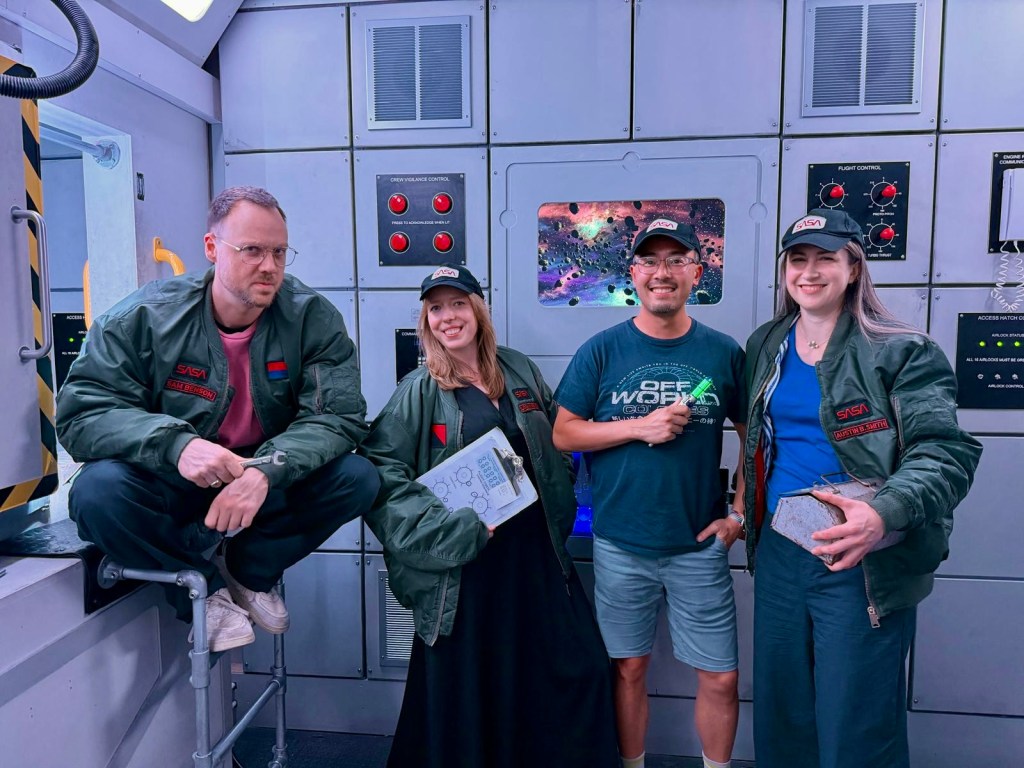
The Space Academy (Edinburgh): Much more along the lines of traditional escape rooms, this is where the video cutscenes from Call of the Void were filmed!
EXIT: The Game – The Magical Academy: I’ve played a couple of EXIT: The Game “escape rooms in a box” before and they were both totally fine, but the puzzles here were truly dreadful. I’m beginning to suspect the main reason this series is successful is because it comes with a built-in hinting system to compensate for their manifold design issues.


 mssv
mssv 