Let’s say you want to teach teenagers about the dangers of toxic communities like the manosphere. You could talk about the politics and history of fascism and explain why the Nazis were evil. You could show them a movie. You could even get them to play a live action role playing game (larp), to give them a really visceral, immersive experience.
If you’re gonna do that, you might set it in a magic school, because historically those have been one of the most popular kinds of larps for kids. But there’s a couple of problems here. For one thing, magic schools have a pretty unsavoury association with Harry Potter and J.K. Rowling. For another, most fantasy adventures portray the protagonists as rebels fighting against fascists.
That’s great if you want to fight comic book villains, but it doesn’t address the fact that toxic communities are pulling in more and more young people today – people who think they’re the heroes fighting for good, people who are attracted by the sense of belonging and dignity and purpose that these communities offer.
How do you teach that? Well, a magic school larp might work – if you had the teenagers play the fascists, not the rebels. That way they’d get to understand and experience first-hand just what it is that attracts people to these toxic communities – the rituals, the certainty, the binding of an in-group through exclusion and bullying, the constant praise from authority figures.
Now, if you were going to do that, you’d have to design it incredibly carefully. Partly because it’s a serious and sensitive topic, and partly because if it’s too didactic, teenagers will simply check out. But mostly, it’s because you can’t risk accidentally teaching teens that fascism is actually awesome. To be really careful, you need to prepare them for the experience months in advance, and have a lot of good onboarding and safety mechanics.
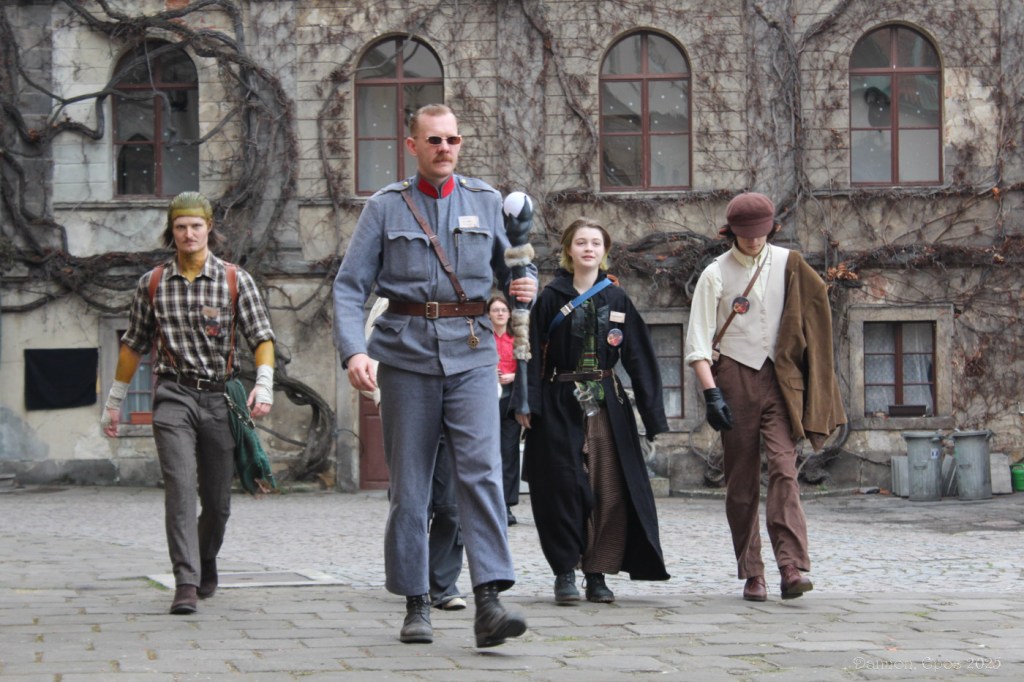
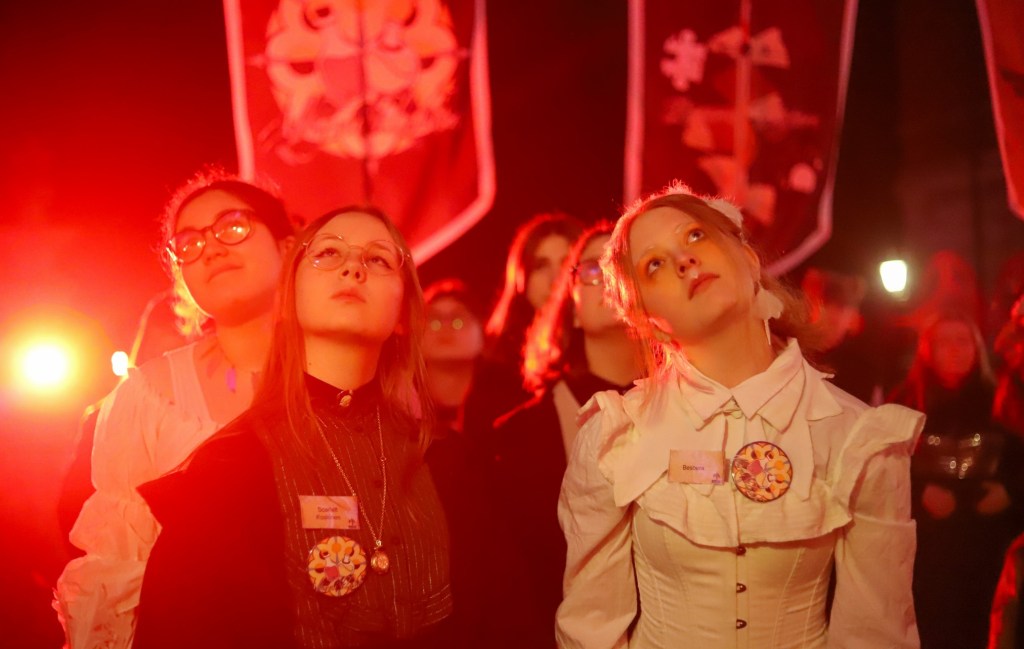
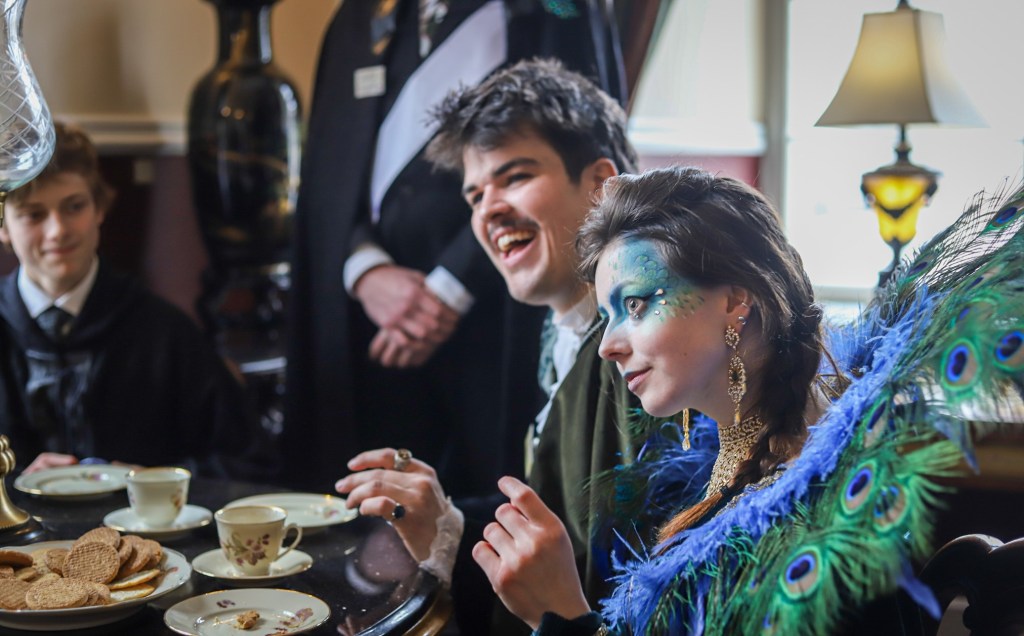
That’s what Epos Daimon does. It’s an antifascist magic school larp in Denmark where teenagers role play as fascists. Players are high ranking students at a prestigious school at the very heart of a theocratic, fascist regime. For four days, they hunt down witches and monsters, they denounce their parents as rebels, they build technology for the state, they sing songs and go on marches and take part in rituals. Students who break the rules aren’t cast out – they’re drawn in closer, re-educated, assimilated. They discover for themselves just how quickly their morality can slip when they’re praised for it by teachers and nobles, when that’s what the entire community is doing.
Epos Daimon was designed by Katrine Wind, a veteran larp designer, for a boarding school called Epos that uses larp as an educational tool. It’s inspired not by Harry Potter, but Philip Pullman’s His Dark Materials universe. If you’ve read those books, you know a big part of that universe is that every person has their own “daemon”, an animal that represents their souls.
That was key to Daemon, a larp for adults designed by Katrine, and it was also crucial when Katrine adapted it into Epos Daimon for teenagers. In the larps, players are paired up, with one playing the human and the other playing the daemon. It makes the experience more powerful and more safe, because it means no player is truly on their own, even when they’re being bullied within the game.
I was immediately intrigued when I first heard about Epos Daimon last year, and the more I’ve learned about it, the more I think it could be an incredibly valuable way to illustrate to teenagers the dangers and the allure of toxic communities – one they won’t instantly tune out.
During my conversation with Katrine, which has been edited for length and clarity, we discussed the origins of Epos Daimon, how she made a theocratic fascist regime feel real, the extensive preparation, onboarding, and debriefing that students underwent, her theories on “river rafting [larp] design” and “dyadic play”, and her background as a larper and larp designer.
I also produced a video essay which uses our conversation almost in its entirety. If you plan to quote anything, please use this written interview as we’ve made corrections and provided the full context here, since English isn’t Katrine’s first language.
Thank you so much for being here, Katrine. So first, can you tell me a bit about what Epos Daimon is?
[Epos] is a boarding school for 15- to 16-year-olds in Denmark that uses larp and play as an educational methodology. Students go there for a year, and are there during the weekdays and some weekends, away from their parents. Each year they have a trip, usually abroad, where they go to a longer larp. For many years, they’ve done a College of Wizardry larp in Poland, their own version.
But the organiser of [the trip] didn’t want to do that anymore. And some kids don’t like J.K. Rowling and all that, so they wanted to do something else. A teacher down there had played one of my larps and had recommended the headmaster talk to me. The headmaster was someone from the Danish larp community; I didn’t know him personally but we built a really nice bond and found out what we wanted to do.
For the past 15 years, I hadn’t done anything for people under 18. I wasn’t sure I knew anything about making educational larp, and I wasn’t comfortable with that, so I had to make sure that he’d be responsible for being the pedagogue, so that it was good content for the kids and I would do the larp experience.
So it’s for 15- to 16-year-olds?
Yeah, 15 to 17. It’s at the end of their [Danish] primary school, before they go to high school or further education. They’ll usually have their last year or last years of school there. It’s usually kids who are pretty interested in larping to begin with. But some of them haven’t [larped]. Maybe they have mostly been cosplayers, or maybe it’s completely new to them, or they’ve done some D&D around a table – but the live role play part is something many of them have an interest in. Then they also have school weeks where they do different themes [in larp]. So they do some [larp] but not in this kind of form before this [annual trip].
They can’t do a long form, spectacular blockbuster larp every week at the school. That’d be too expensive or disruptive.
Absolutely. They’ll put math into some [larps], history lessons, English lessons – they’ll take it all into a themed week several times during the year. And then maybe they do smaller one-day larps.
But [Epos Daimon] is for fun, both a great and memorable experience – and not actually part of the curriculum, which their normal classes are. Usually they would go to a castle in Poland. But what the headmaster and I agreed was, “Yes, it’s really cool for them to be in a castle, but the trip there itself exhausts them so much.” So we found a castle in Denmark, and it doesn’t matter that they are in Denmark when we are [inside the castle and playing].
Historically they went to College of Wizardry, which was originally literally based on Harry Potter, then for obvious legal reasons it became Harry Potter-inspired. So when the Epos students were still going there, they had a fun Harry Potter-inspired experience of being in a magic school?
Yes, exactly. Everybody knew about wands and spells, so even though the spells were called something different, they still knew about being in a magic school. It was very familiar to them, either the Harry Potter universe itself or something homemade that looked like it. That was also a consideration – what should we design so that they’re all on board?
I suggested I could adapt something that would challenge them a bit more, larp-wise. The students will definitely find fantasy larping on their own – some of them already have – and many of them will find vampire larps, many of them will find D&D. But we also wanted to make sure they were introduced to Nordic larp, because that’s not something they’d necessarily find themselves. So I focused on: how do you make your own character, how do we create a coherent world, how do we workshop so that we are playing the same thing, and what themes could we consider when the larp isn’t just about stats and spells and explosions?
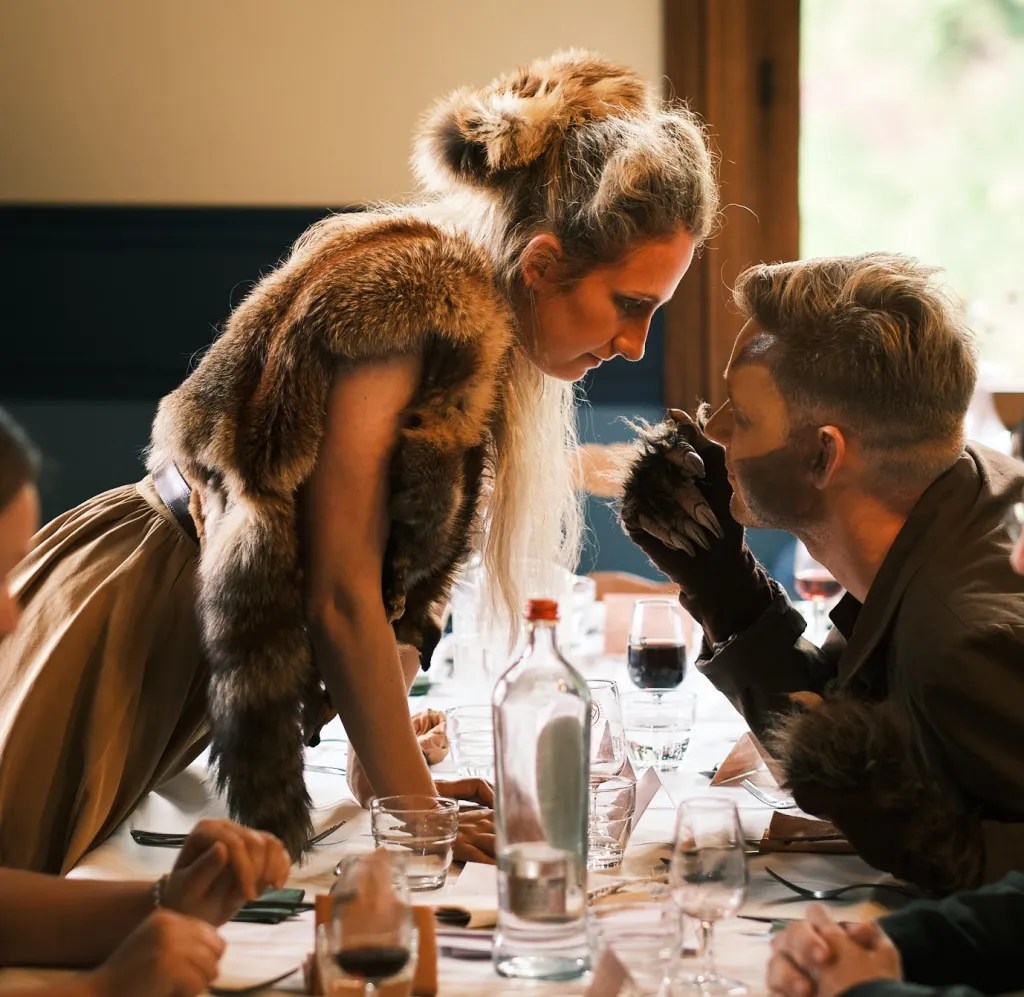
I thought I could adapt my larp Daemon, inspired by Philip Pullman’s His Dark Materials trilogy – some might know it as The Golden Compass. That’s also a magical version of our world. I didn’t want to take the adventure out of it for the kids, it should still be a special experience and not just a historical larp. But the grown-up Daemon version is only for 36 people. I decided I’d rather just make one for them.
How many students took part in Epos Daimon?
85 kids. The original version of the larp was definitely not able to do that.
Unlike some forms of larp, Nordic larp isn’t stats-driven or about beating other people in combat, and it’s often co-created and has serious themes. Presumably there were some pretty serious or adult themes you couldn’t bring into Epos Daimon?
Absolutely. To make sure there are no unclear boundaries, anything like sexual violence or sexual interactions in general aren’t themes that exist [in Epos Daimon]. They can have some romance – if they’re 17, that’s okay, with others their own age. But we set some clear limits and their headmaster agreed, because then there’s no misunderstandings or off-game issues with bleed.
Let’s get into Epos Daimon. It’s inspired by His Dark Materials. What is the world like, why is it interesting, and who do the students play?
There are many really interesting things about the original source material. The thing I use the most is that people have their soul outside their body in the form of an animal. That’s called your daemon, or daimon in Danish – that’s why it’s called Epos Daimon. You can only go a very short distance away from each other without pain. It’s like an invisible bond: when one hurts, so does the other, and you can kind of read each other’s thoughts.
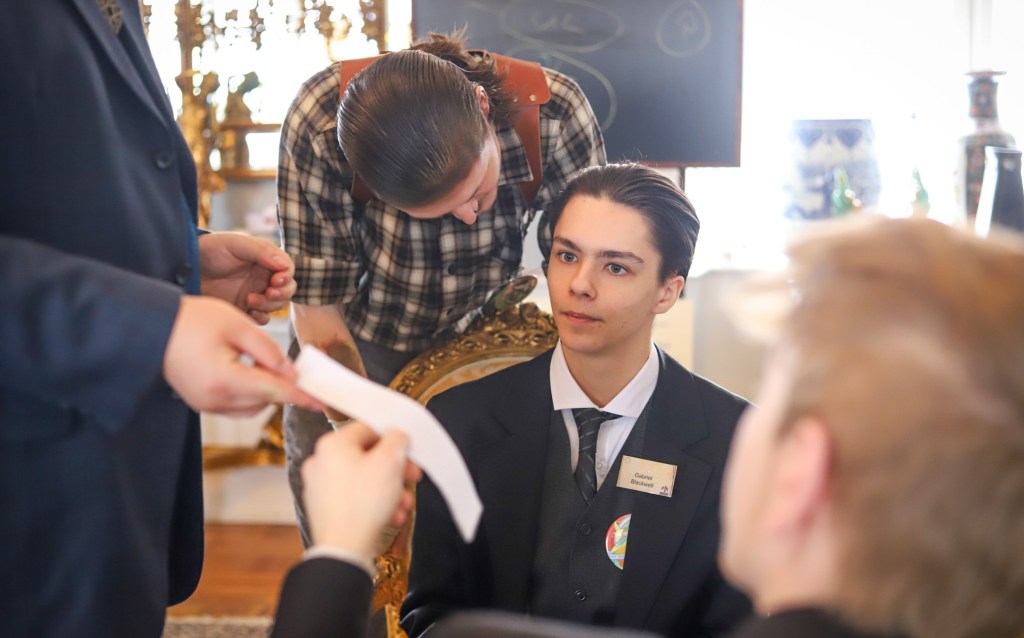
I have always been very fascinated with what I call “dyadic play“. That means having some kind of very close connection, either narratively or as a character identity/concept, with another person. I would say that Daemon is the most extreme form I could imagine as a dyadic play experience. This means these kids are playing two people that are one character. One is the human and the other is the daemon – the soul.
Obviously they can’t really read each other’s minds, but we run a lot of [pre-larp] workshops around how you can have awareness of where the other person [in a pair] is, how you share a story, how you build a character together. That challenges them as writers, designers, and larpwrights. It also means they take responsibility for both their own game and the co-creation with another, which ensures that they’re less lonely.
You know, these kids, some of them have really rough childhoods. [The design] makes sure that they’re not standing on the outside looking at the fun, but always have a buddy with them. That was the perfect setup for these kids.
It’s not like one person can go off to another part of the castle, they have to be close to each other in the game. They’re always talking to each other. Even if they’re fallen out, which I know happens in His Dark Materials, they still come back together. Then we have this idea of the Magisterium, which is a fascist organisation?
Theocratic, yeah.
Now, normally the kids would be rebels. That’s what happens in Harry Potter. But you’re doing something really different here.
Yes, absolutely. I wanted a school setting. College of Wizardry was very good because it’s recognisable and it gives a structure to their days. But I was thinking that, as you said, with Nordic larp, we also try to explore societal structures or relationship structures. Competitive [experiences] often make it more fun to be the rebels or try to win, and that’s what I tried to take out of this.
There’s also a very serious theme that emerged. When I was designing this in 2023 and 2024, suddenly both in America and with a lot of the politics in Europe, things had gotten really, really dark, really fast. The kids saw some of their friends disappear into manosphere forums. Conspiracy theories were on the rise and being legitimised.
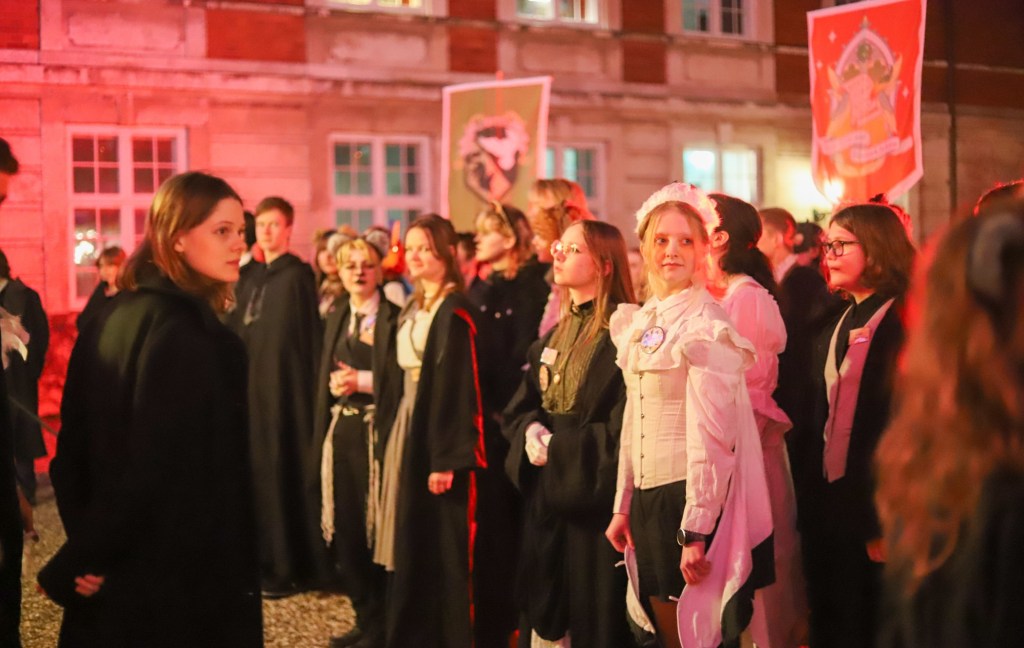
I’m also a political scientist myself, so I thought of the brilliant, brilliant film, The Wave or Die Welle (2008). A classroom teacher teaches his class to be fascist, and then they don’t stop when he tries to stop them. I was thinking, how can we help kids understand why people get lured into these toxic communities? Not everybody who is attracted to a toxic community is stupid or evil, which often becomes the explanation. I wanted to show them the attraction of it. So we have this theocratic fascist regime – if we make the kids part of it, I could try to show them the allure, because we misunderstand what is drawing people in. It’s about dignity and belonging and purpose and clarity. And by letting them feel it themselves is definitely something this larp can offer.
Most students in Epos Daimon role play as supporters of a theocratic fascist state. I’m going to attempt to word this carefully, but you’re trying to show why some would willingly choose to belong to it. You have rituals and songs and things like that. How did you bring that to life in terms of what students are actually doing?
First of all, I brought twenty-five good friends as volunteers to depict the grown-up world. They were the teachers. They were parents. They were also rebels we had to do something about.
I tried to make a very obvious otherness in the lessons. So, for example, one of the lessons was monster hunting, but one of the things we were hunting were witches that were actually just people, and some of the students were even witch-born. We made them ashamed of it and hide it. Basically, I showed them the “inclusion through exclusion” mechanism so that we are the in-group and it’s us against them.
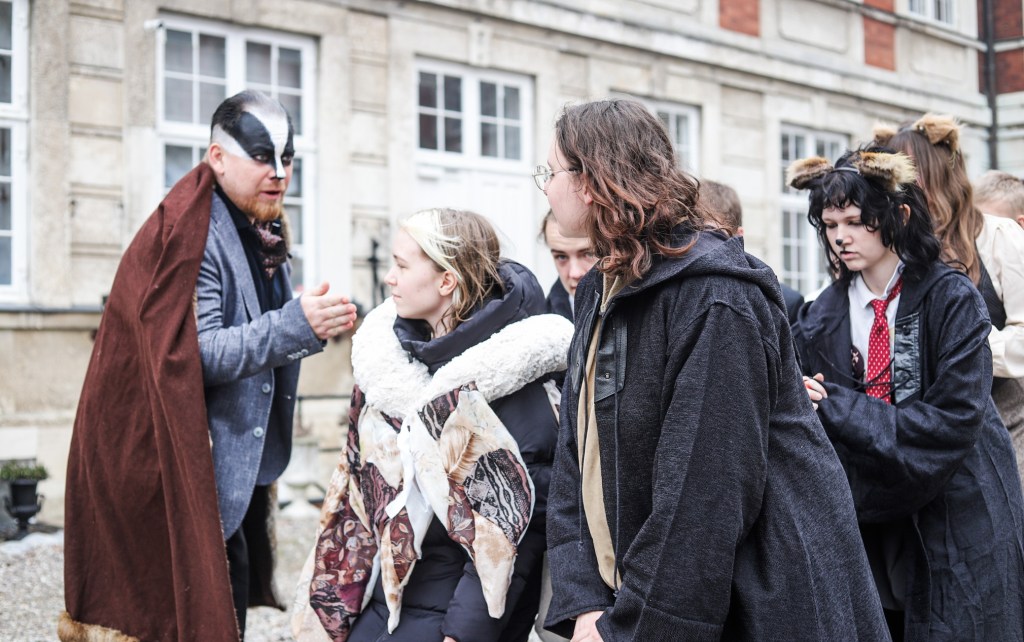
The teachers praised the students all the time when they adhered to the system, and when they bullied each other into adhering. They felt proud and seen and important and felt good when they were actually adhering to the system. That’s the mechanism that lures people in so fast, in my opinion. None of this is science-based. It’s just a political scientist’s take on something that sounds pretty obvious to most people.
Students playing witches weren’t just kicked out of the game or taken to some different thing. Other students who were loyalists would draw them in, they would hold them tight.
Yeah, they would draw them closer. I’m not sure this is what actually would happen in many of these [toxic] communities, but at least one of the mechanisms was that we have to draw them closer, we have to teach them, we have to keep an eye on them, we have to make them part of us, we have to assimilate them. That’s obviously also an off-game structure to make sure no players are just thrown out or killed [thus removing them from the game permanently] but it is actually something that happens in cults as well.
You mentioned cults. Are there any other organisations or parts of history that you drew upon?
I’m not a historian, but the fascist regime of Italy, obviously Nazi history, there’s been some cults that I’ve looked at as well. But basically, it’s just human psychology, much of it, and bullying structures. Even though it’s on a very, very extreme societal level with many of these really dangerous political communities, it’s not that different from how bullying works in a schoolyard.
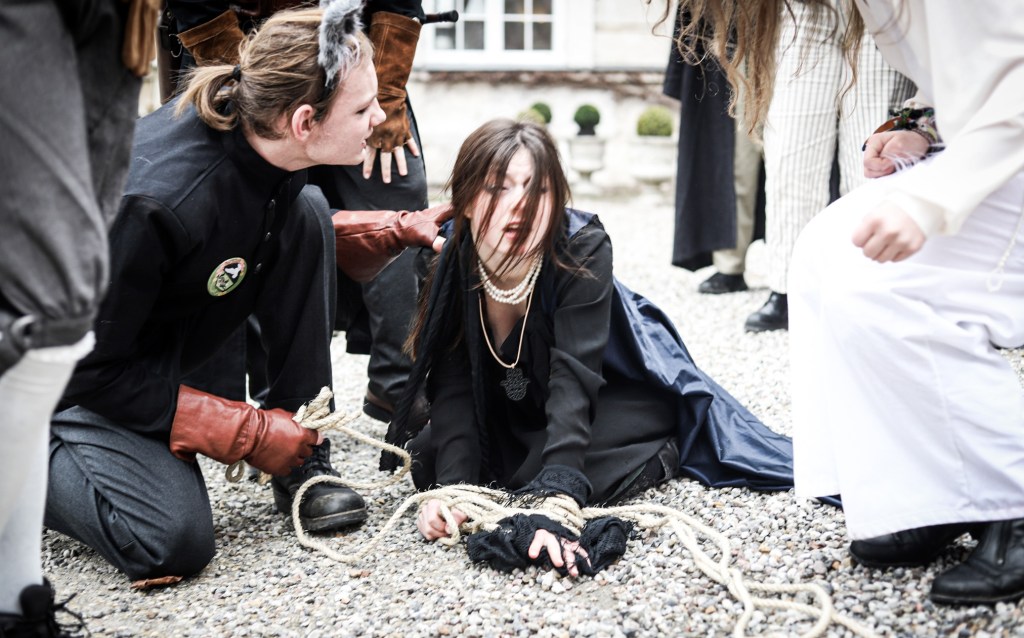
If I could keep that relatable to the students, they’d also recognise it themselves more than if it was about, “We need to murder this whole group of people.” It was much closer [to them] because it was like, “My friend was [a child of] one of these rebels, but at least now they showed that they didn’t want to be their child and publicly renounced their parents. So that means now we’re in the same group and they’re OK.”
Can you talk me through what a typical day would look like? It was like three or four days long, is that right?
Yes, four days. They’d have an off-game time in the morning where we could see if anyone needed anything. They could get practical information. Also, teenagers – many of them neurodivergent as well – so many of them needed a little extra support, like, “You have to eat now!” [laughs]. You have to just make sure that they were “off-game OK”. There were ten teachers from Epos taking care of the off-game needs. The rest of us were there as the game helpers.
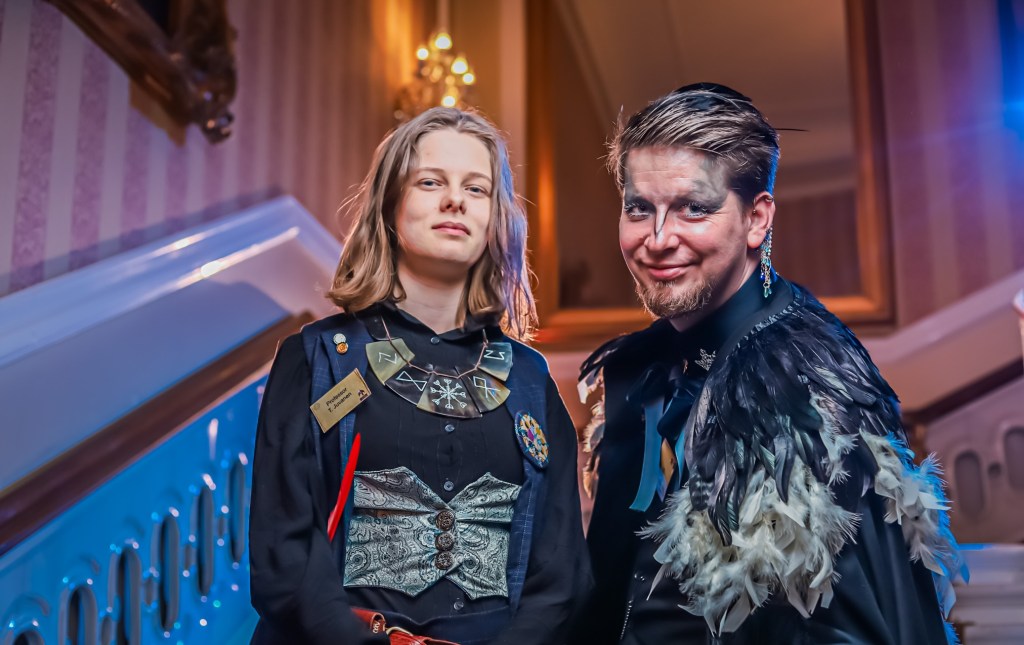
When going in-game, we would start with communal singing. We had these two songs we wrote and practiced from home, so we sang them every time we went in-game. They knew them by heart. Then we would make our greeting [like a two-word chant] that was very powerful. We said a few words, then raised our hands in a certain way. When a hundred people did that, it was super, super powerful, so we did that as often as possible – also when greeting the teachers and each other. We made it a symbol and a tradition, a ritual to symbolise belonging to the in-group.
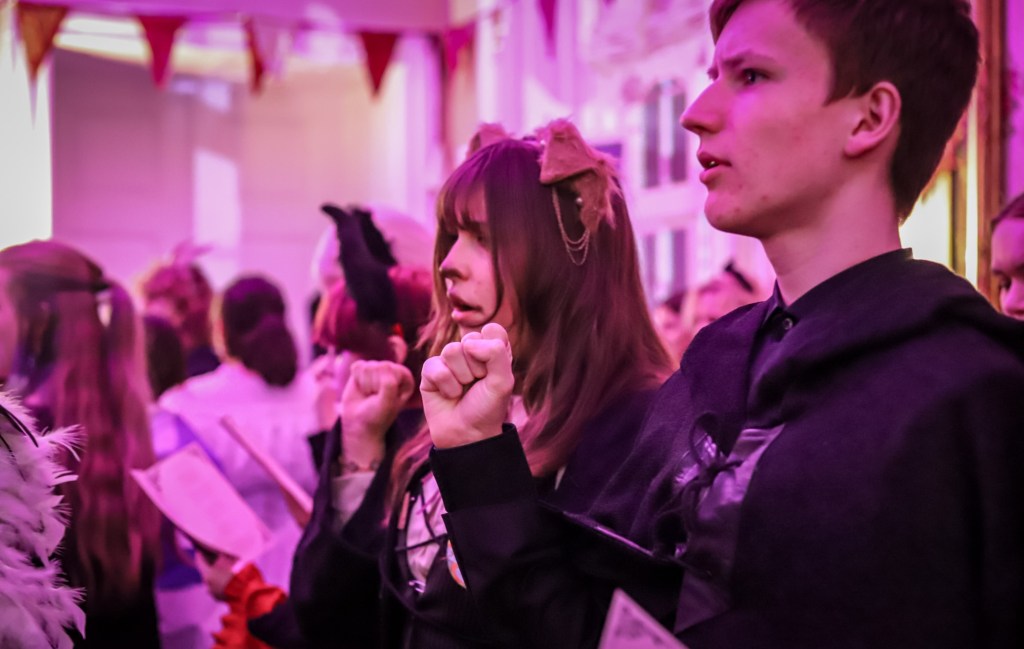
Then we would go to either a lesson or, sometimes, a club you were part of. You had lessons where you were with the same classmates, then there were shifts to clubs based on interests, basically like houses. You’d have maybe one and a half hours of lessons with a break in between. We’d have a meal where we were sitting with the teachers up front and then the kids present and eating in-game. And we would have then club time. There was free time as well.
A lot of the students got punishments where they had to go and do extracurricular stuff if they hadn’t been adhering to the rules, and a lot of them thought that was a lot of fun, right? Then we talked with them as teachers. So they had three blocks of different kinds of lessons each day. One of the nights there was Lanciers, a dance party in a very well-mannered, very proper way.
We also had a nighttime [event] from 10pm to 11pm. The students’ characters were supposed to be to bed, but this was an hour where the off-game students were allowed to actually run around the castle. We were patrolling the corridors so they could do stuff that they weren’t allowed to do [in-game] and possibly get caught. But at 11pm they had to be really in bed
They slept in the castle?
They slept in the castle, yes.
Obviously you spent a long time preparing the students with workshops and onboarding. Absent that, you could imagine some people saying, “Isn’t this just a way to get people to think fascism is awesome?” but clearly this is an illustration. I think you told me that throughout the year leading up to the larp, you were talking to the students or they had lessons about it. What did that look like?
It’s a school year for them. Already in September or October, I’ll be there and present the world to them, and what we’re going to do. They’ll watch The Wave in their lessons. They’ll talk about all of this. The teachers at the school are very good at teaching anti-fascist stuff. They also have subjects already where they are taught what it all means.
But then we also built the characters together. I tried to tell them of the advantages of actually playing part of the system [i.e. the theocratic fascist state]. Because many of us, again, want to play the rebels, but larp-wise, it’s nice to have people who actually want to play [in] the system in that way. I tried to make sure they knew the interesting parts of upholding the structures of the larp with your own character.
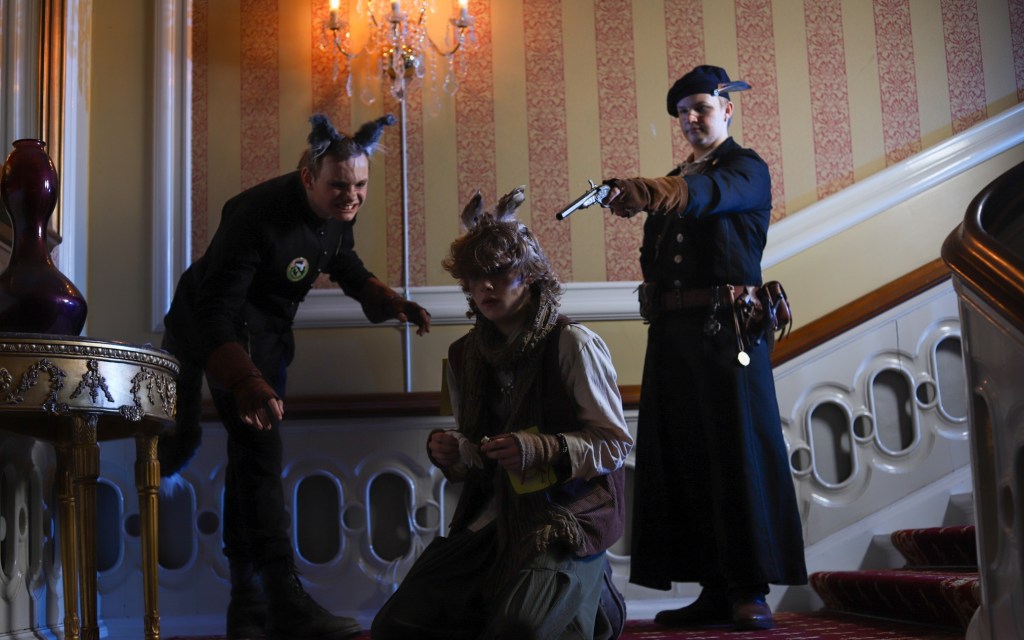
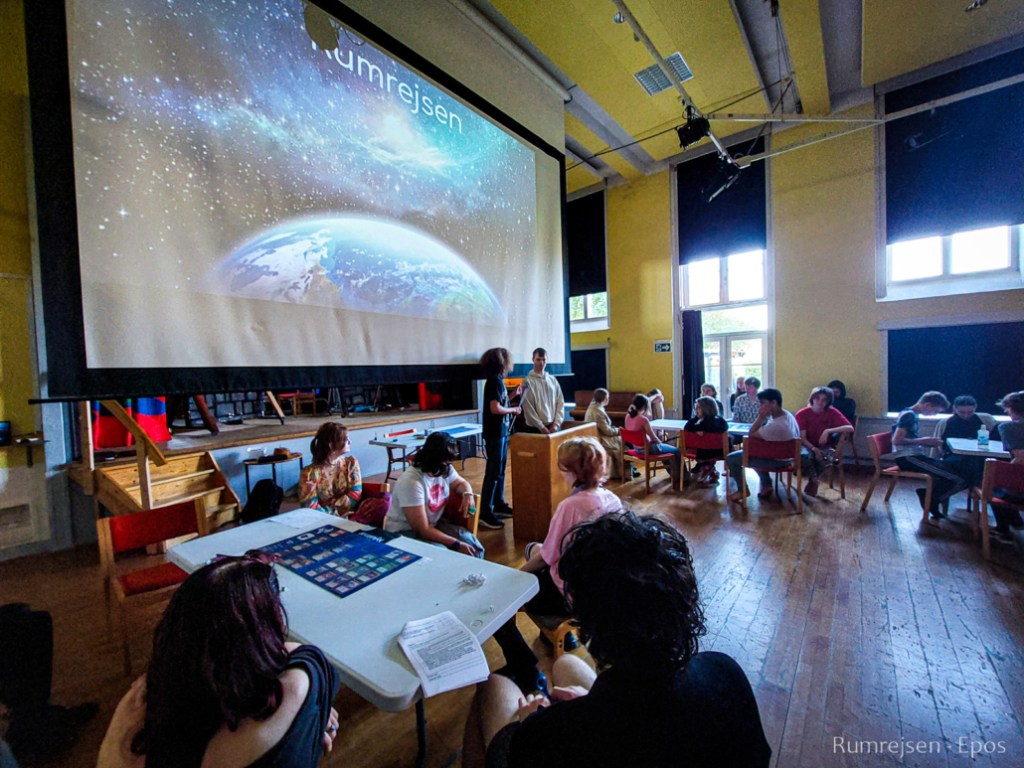
They also filled out a questionnaire before the larp, like, “Would you like to do more fringe science or monster hunting? Would you like to be a secret witch?” They could [express] different preferences. I built a character based on their wishes, then they built their [character’s] relationships while I was there. They kept doing it during the year and building their costumes. All the way from when they were introduced to it in October until the larp in March, I worked with them, and so did their teachers.
This is a whole process where you are preparing them for the larp and you’re giving them context. There are other larps and Nordic larps that do that, but I would contrast that with a lot of other immersive experiences or immersive theatre where it’s just like, “Let’s just go straight in, we can’t be bothered doing any workshops.” So what do the pre-larp workshops and onboarding look like? What sorts of things are you teaching the kids or getting them to practice?
I introduce them to the setting and they can ask questions. Many of them know about His Dark Materials but I usually get some people interested that weren’t necessarily into it before. I’ll start with some collaboration practices like, “What will an [in-game] greeting look like?” Then they go and workshop that and get some influence over what this world will look like. I show them some photos of previous Epos Daimon runs, from His Dark Materials, from my Daemon larp, so they can relate to it better.
Then we practice some of the things that are part of this world, like what it feels like for characters to be pretty close to each other, how it is to move like an animal, and what are the safety mechanics. So there are different exercises.
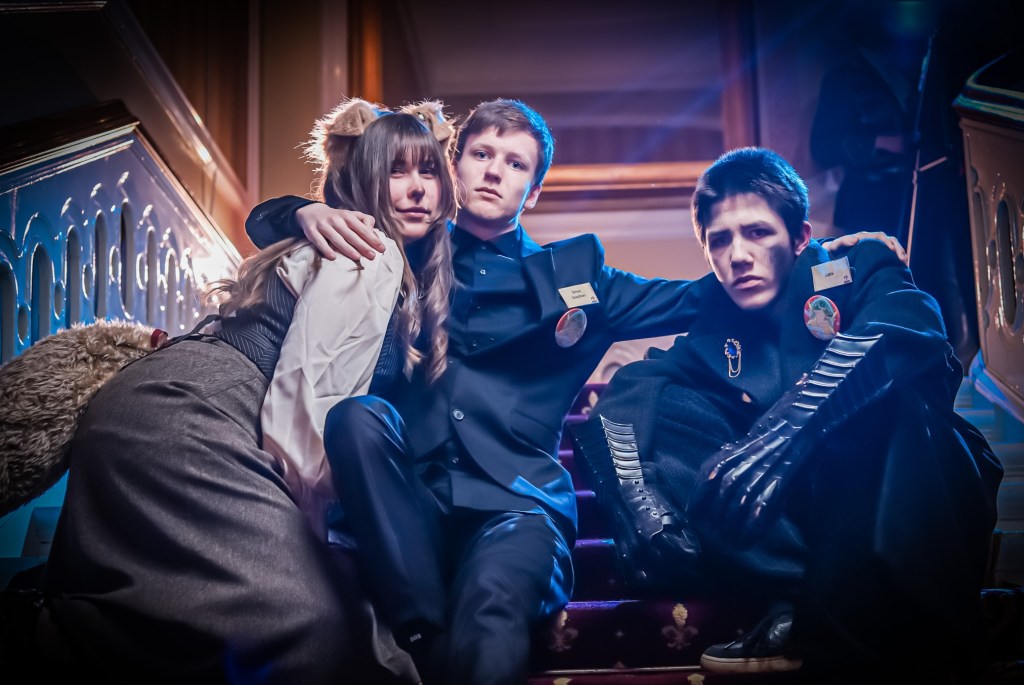
Because these are boarding school students and [teenagers], they might not be friends with the same people as they were three months ago, so I make sure not to make [in-game character relationships] for them. I say, [your character needs] a best friend, you need an enemy, you need a … and we workshop that. Like, “Who needs [X relationship], is there anyone interested and to what degree”? I make them do co-creation in relationship workshops several times to make sure they’re comfortable with what they’re building into their character themselves.
Students’ social dynamics are arguably even more dramatic and changeable than with adults. You can’t just ask six months in advance, “Who’s your friend?” You need to double-check, like, the day before, “Are you sure you still want to play with this person?”
Yeah.
I’m really fascinated in the dyadic play. How does that play into the anti-fascist, theocratic themes of Epos Daimon specifically? Could you do the larp without it? And how is it better with the dyadic play?
I think it at least makes it a lot safer emotionally, because if you are the person being excluded or is threatened with the prospect of no longer being part of the “in-group”, it’s much nicer being two people standing there against the others. You’re never really alone, so the off-game loneliness doesn’t hit as much. You always experience the same thing as at least one other person.
Usually when I do the adult version, people can’t go take a break away from each other unless they really need to. The kids will have to sometimes, and it’s OK. In Epos Daimon, if one of the [two players in a pair] needs to go and lie down, they can get into the game again more easily if they have someone who can explain, “So this and this and this happened,” which means their character has still been [in-game] and done stuff even though they as an off-game person weren’t there themselves. That’s really valuable with this age group, I think.
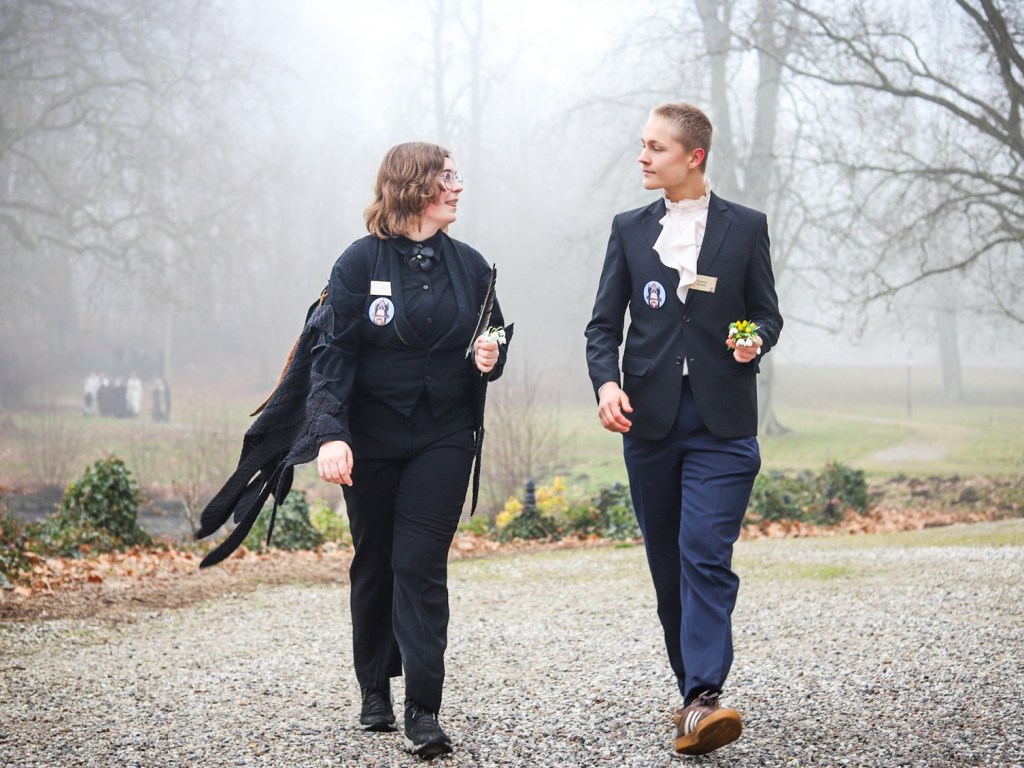
I’m not sure if the fascist part is better in a dyadic version, but it’s easier to be a bully and [perform] groupthink if you’re more people. If you’re only two characters standing around, there are actually four people present and suddenly you are a group who can be a structure. I think it helps in smaller ways, but maybe more with the play experience than with teaching them about the allure and danger of fascism; we could do that in a normal classroom as well.
I was wondering whether you had pairs of players who were “internally” torn about what they’re doing, where they’re disagreeing?
Totally. I would say 20 or 30% of the kids are so powerful and experienced [at role playing] that they would be ready to play with the rest of us [adults] now, even though they’re 16-17 – at least roleplay wise. I can’t speak of their individual emotional maturity. They would be super good and challenge a lot of us grownups, so many of them want to play around with the internal fractures that this type of dyadic play offers to explore at length.
Some of them also just think it’s fun to do the conflict part, but they can do it with someone they feel safe with. They’re definitely up for arguing with each other internally, like, “I’m not sure that this is what I actually want to do,” [and the other saying], “It is what I want to do.” And then they kind of tear each other apart in that way, emotionally.
I’m not going to ask for spoilers on how it ends, but I am interested in the debrief because they’ve gone through this really intense and, I assume, very emotional experience. What does that look like?
Usually we split them into smaller groups. Because the interest-based clubs have one teacher they’re connected to all through the larp, they’ll go with that teacher-couple, then we’ll talk about what is filling them up right now and how is this different from your normal life? [The students] say stuff like, “It was scary how easily they stopped seeing witches as humans” and how happy they are that they have a healthy community in their real life. So many of them will have reflections like, “Whoa, that was fast how my morality slipped because it was easy and felt good.” And that is exactly what we wanted.
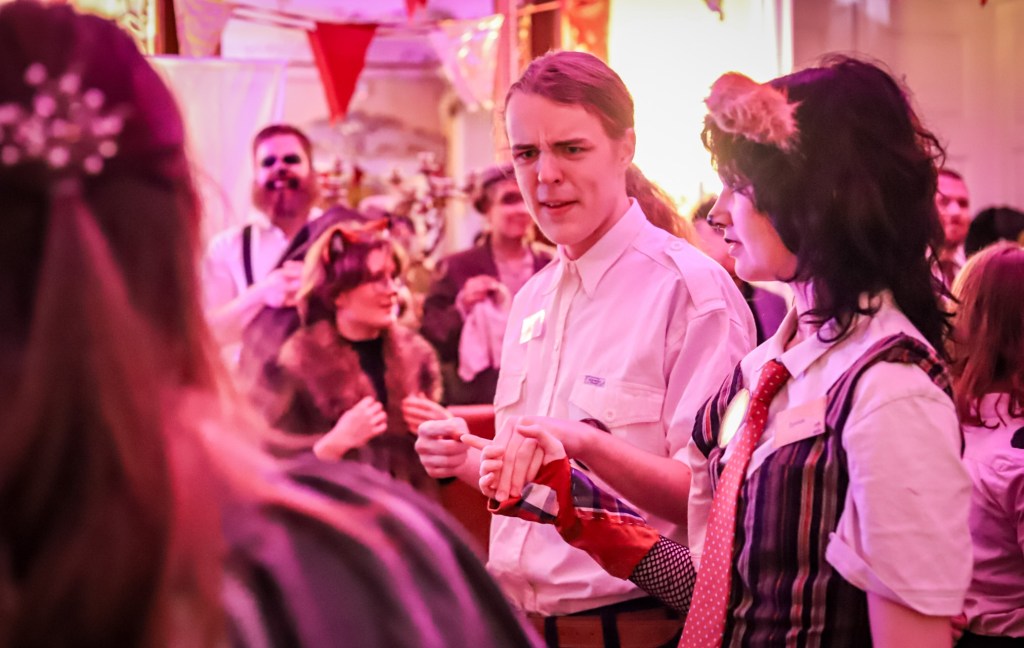
Some of them also need to talk about what we can do to resist, because it can feel pretty hopeless in real life – “But it’s my real friend who has gone to this internet community that’s really toxic.” And obviously, we don’t have the solution for all of that, but we try to make them comfortable talking to each other about it, talking to the teachers about it, and making them appreciate what a healthy community they have at the school, so they can actually talk about these complicated emotions.
I want to return to what you said about whether this larp would inspire some to think that it would be really awesome [to join a community] that’s super toxic like this? And I will say it’s a risk. Definitely. It is a risk. We could introduce someone to something, but my claim would be rather that they do it while they are in a school with great, great teachers and other students who can help them with these thoughts. And the question is, would they have found it elsewhere anyway?
It’s not like I hope that anyone will go that way, but it is a risk and that’s why I definitely need the school and the headmaster to say, “Yes, this is something we want to do, we are behind this and we know what we’re doing,” because it is scary what could happen.
Like you say, this is not a theoretical thing. Young people are finding these toxic communities right now, from all walks of society and political persuasions. So, how many times have you run the larp and how has it changed over time?
I ran it a few months ago this year for the second time, and I just agreed with them that I’ll do it next year as well. it changed a lot in the way that obviously we didn’t know how things would work. The teachers didn’t know the world. That was a bit like, “Oh, but I knew about the wands. What about this? What should I say? How can you talk here?” But I think it’s mostly the structure.
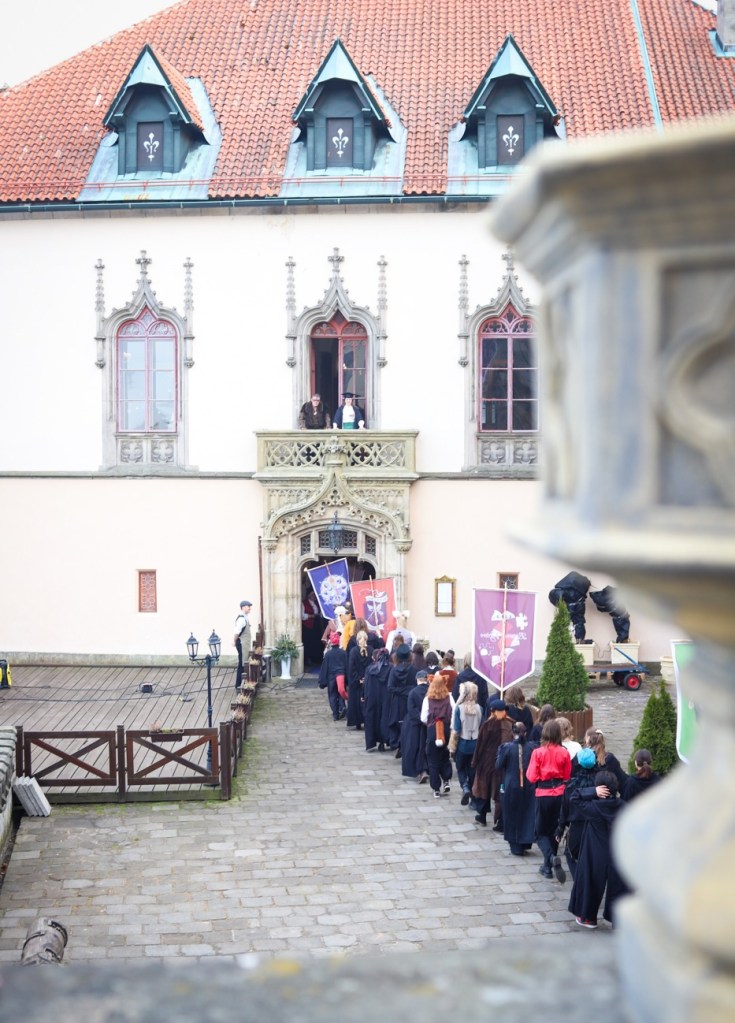
We changed some of the schedule. We gave them a little longer break. We moved it to Denmark. The first time it was in the Czech Republic, in a beautiful castle, but then we just decided that it wasn’t worth the trip. We’d rather have more time where [the students] were actually rested.
We had more helpers as well, because when you need to go out [as] two people to be a helper [e.g. NPC], it takes more. And many more visits, phone calls, and letters from disappointed parents, or from two supportive parents. They loved that shit.
Oh, so in-game parents visiting them at the fictional school saying, “You’re doing great,” or, “You denounced me!”
We made some of the board members of the school the kids’ parents, because they gave status to the students who wanted that. Both years, we’ve had the [in-game] king visit to see the new science stuff that the students have been doing, because it’s a prestigious school for the nobility, the top of society. Some of the kids have a noble and a rebel parent, and they don’t even know that, then they get a visit from both.
We combine the down-to-earth stuff with things like a “steampunk science” witch-suppression machine. Another example of the scientific stuff we put in to balance out the very emotional play was that we had these really complicated marble ball lanes that took, like, eight hours to build and then it can do all kinds of mechanical stuff. We put these items there because some of the kids just want to tinker a little bit.
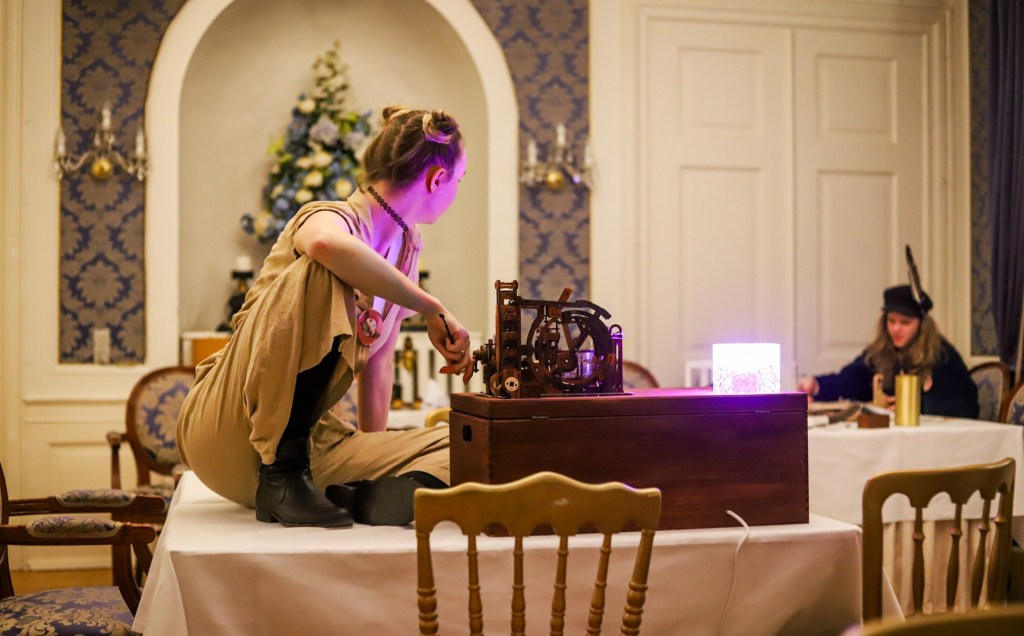
There was this great, great kid building one during the larp because he wanted to just sit there by himself, and he came in at exactly the right time, all proud, like, “I fixed the witch-suppression machine!” and everybody cheered and he became the hero at that moment. But it meant that the witches couldn’t actually escape as they wanted to, so it was actually pretty terrible for them! But he was the “systemic hero”, and it was such a great way of showing the terror of this regime.
Wow, that’s fascinating! So there are 85 players and 25 volunteers plus ten teachers, and on top of that you’ve got more parents or board members?
Those are taken from the 25 helpers, so we have 12 or 14 people dedicated as teachers and staff of the school, and the rest are like monsters or different parents or [NPCs].
It must be quite fun for the parents and the volunteers. They get to play and do something meaningful. Presumably that makes it easier to get people to volunteer.
It definitely seems so. A few weeks ago, I asked if [the helpers] wanted to join again, and I think it was 80% of people that said, “Yes” instantly, even though it was, like, four days they have to take out of their holidays. I’m just so impressed that everybody wants to join voluntarily.
And they’re not getting paid. I want to zoom out a bit now. I understand Denmark is kind of the capital of the world when it comes to young people larping, and this has been a long-term strategy. Can you tell me more about that? You have larp schools in Denmark, what does the youth larp scene look like?
I’m not really an expert on that, but it’s true that it’s a long-term strategy. To begin with, I think you have to see the connection to where the money comes from. In Finland, they’ve really succeeded with making larp an art form, so it’s from cultural institutions that you can get support from, but in the Danish communities it’s youth institutions and funding focused on activities for kids and youth. More importantly, we have a national [larp] organisation that’s stronger than anywhere else in the larping world, and you can be represented as local organisations.
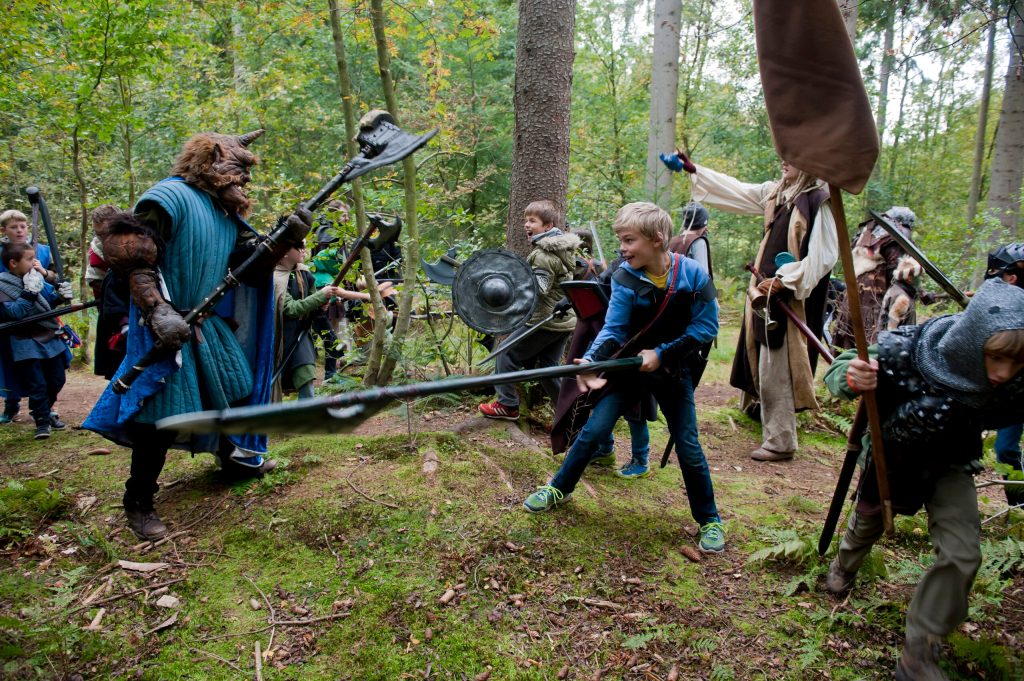
In Denmark, we have a massive organisational tradition in that if you’re a football club, if you are a scouts association, music school, everything is a voluntary association – and so are the larp clubs. That means that we have a huge tradition for voluntary work and organising activities in that way.
I would say most of the kids’ [larps] are now magic schools and fantasy larps. I started [larping] when I was a grown-up, but when I was younger, it was mostly only fantasy larps for kids.
Tell me about your larping and larp design background. How long have you been doing it for?
I’m 38 now. I started when I was 19, at the end of high school, where I come from. I was doing some amateur theater and I just thought it wasn’t creative enough, then I found these communities where you could improvise. The people I went to high school with had this local [larp] association, and when The Lord of the Rings was big, there were like 300 people [playing]. That was a lot for a local organisation, way out in the western part of Denmark, three hours from Copenhagen. Almost right away, when I was 19, I got a job as a substitute teacher, and in that setting I was allowed to make some [larps] for the kids. I just played locally to begin with.
In 2016, I went to my first English-language larp, then later that year, [I larped] abroad as well. That’s when I found that in the local organisation we’d been doing Nordic larp within a fantasy setting. There was all the stats and competition and everything belonging to the “gamist” larp tradition, but we’d been playing Nordic larp within that. So I’m lucky I found the Nordic larp community. I play all kinds of things, including non-Nordic larp stuff. And I appreciate that a lot. [Nordic larp] is just my preferred style when I design.
That means you’ve been designing almost as soon as you started larping.
Yeah, that’s actually true. It’s also because I wrote a lot already – small novellas and some theatre scripts. I just thought it was nice to facilitate some of the play we had together.
What do you like about designing? Why do you think you do it?
Basically, to make things work between people and facilitate the best possible experience. If you go way back, my larp design philosophy is that good design is just probability calculations. With good design, you heighten the probability that the most possible people will have the best possible time.
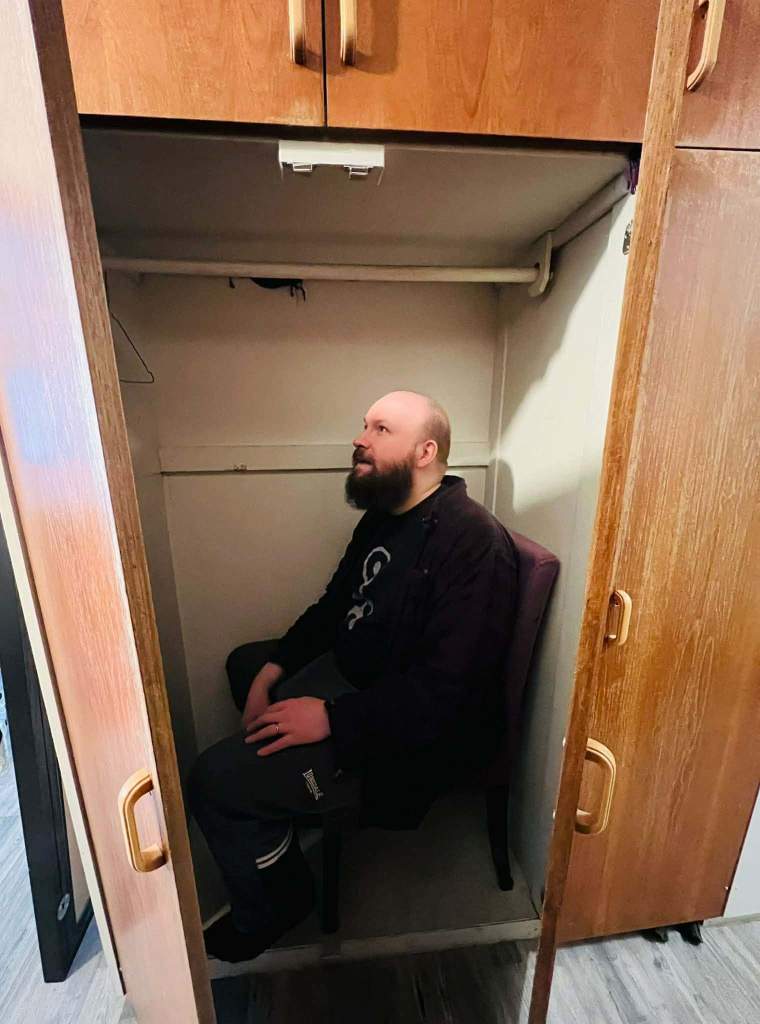
I mean, you can have the best time in your life alone at home in a closet [Mike Pohjola’s The Empty Closet larp]. I know some people have had that [laughs]. But for me, what I love is collaboration and interaction, and [good design] can increase the chance to get a fun experience around that. Solving problems of how you make something that is interesting, challenging, builds relations, builds experiences and builds immersion is what’s interesting about larp design for me.
I really enjoyed your article about “river rafting design”. Can you tell me a bit more about that and how it fit into Epos Daimon?
My river rafting design concept is something I made because I think we’ve been structuring larps wrong. I think we’ve structured larps after the Hollywood model [of storytelling], because that’s what most media is inspired by, so that there’s a climax in the end. The problem for me is that many media art forms are based around one coherent story, but I would like everybody to feel like they’re a main character. Usually, when there’s an end-of-the-world plot, or when something unexpected or highly dramatic connected to some overarching plotline happens in the end, often it won’t fit with the story that you’ve created for yourself. River rafting design is a way of saying, when you design something, design it earlier in the larp because then you have more opportunities for emotional impact that is meaningful for a larger part of the players.
The best larp experience in your life can be in a larp structured in a way where there’s nothing happening and then there’s a climax at the end. The problem is that if the climax doesn’t work for you, you’re out of luck with no second chances. So if you as a designer can put in stuff where you offer the possibility that players could experience emotional impact earlier in the larp, then you have a bigger chance of that happening. I do that specifically by trying to make the characters dense, not necessarily long, but interesting and complicated and highly playable, meaning the things that you put in as dilemmas in the characters should not be solved before or easily solvable during the larp. You should make complicated relationships that are actually interesting to enact with your physical body while you’re there at the larp. And you should make the setting really interesting and front-loaded.
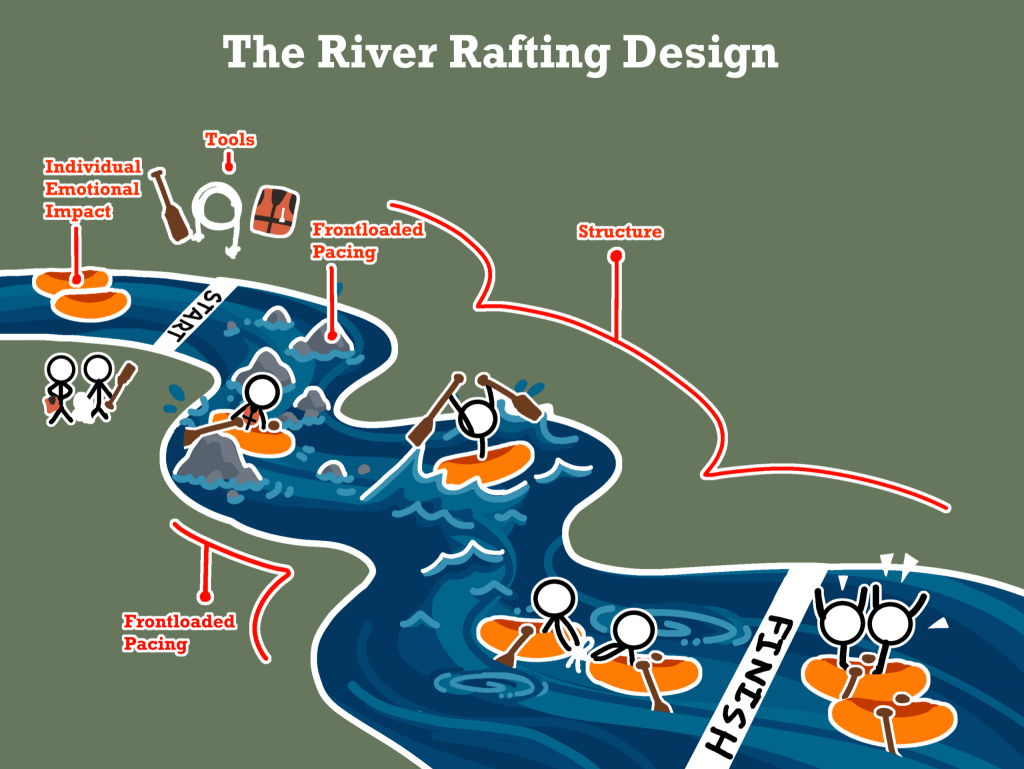
The front-loading concept is probably something that people have heard a lot about, this front-loaded setting is something like, “Why don’t we start when it’s interesting instead of ending with something interesting?” Often, there’s a big battle at the end of a larp or someone dies. Why not start there and see what happens? So, many of my larps start at the very end of a big war or right when things are getting uncertain, but we have a lot of story to play on. I think that creates a lot of basis for creativity and inspiration for interesting stories.
If you just book a location and write some characters, you make things very dependent on [players’] chemistry with co-players and if [they] like the character. This setup means that nothing happens unless you as a player happen to create it. That can be fine, but the probability for an impactful experience is lower. So I think having mechanics like, “[Players] can’t go more than two meters from each other,” or “Two [players play] one character together,” can be interesting to play with no matter whether you like your character or not. There are just more strings you can pull, more tools that you can use to make your boat rock.
Then there’s the most unusual part of river rafting design compared to so many larps I participated in: I front-load the pacing, which means that the events that I put in, or something [vivid] that everybody experiences, I put in the beginning, because then I start rocking their boat. If I rock the boat at the end, it might not be as meaningful. I don’t know where [players] are with their story. But when I’ve written the characters and made the mechanics, I can make them practice those at the beginning of the larp by making events or set-ups that actually require them to act as their characters and use the mechanics right away. That has the advantage that they start getting into the larp from the get-go instead of looking for a time to actually start engaging in the larp. Because I believe that when we act, we experience. So I make them act. Like, maybe some immediate crisis. It doesn’t have to be an action-filled event, but it has to be something where you need to react from the beginning, because I just hate walking around saying greetings for three hours [laughs].
Yes, I’ve definitely seen that in some immersive experiences [laughs]. In a way, you’re saying at the start of the larp, you have more control over the plot, over the experience, so you should make it dramatic. In video game terms, you put it more “on rails” than later on. In the aftermath of a war, there’s negotiations, you’ve got people who’ve lost, you’ve got people who’ve won, and that’s exciting. Then you can slow down and have people develop their relationships. You also said you want to give people complicated dilemmas and relationships that require them to use their bodies physically. What does that look like specifically, for using their body versus not using their body?
[If my character is] described as the most beautiful and wonderful and desirable person in the world, but it’s not in other people’s character [descriptions] and it’s not said anywhere what I should use that information for, that’s fluff description. That’s not something that I can do anything with. However, if it’s then written into your’s and another person’s character that I’m the most desirable thing that’s out there, but that I then hate both of you, that’s something to actually play with in an engaging way when we are then placed at a dinner table together for three hours and have to sit next to each other.

That’s something where you have to act. Another example could be that within this setup, you have a task that you have to propose to this person. Some people like to have jobs in larps, right? So you have a task on a spaceship. That might be good enough. Then you’re doing something with your body, but a complication comes: something happens in the pacing that you don’t know, or suddenly another person shows up that wants you to do something else, and suddenly you have a conflict with your boss.
It’s basically; what am I physically doing with my body? It doesn’t have to be [represented] in every single [relationship]. Some of the relations can be just emotional, but if there’s no agency in acting, if it’s just that you hate each other, okay, we’ll just stay away, won’t we? But then I’ll try to create either writing or situations, pacing, mechanics so we are forced together.
That’s really interesting. I want to wrap up by going back to Epos Daimon. One of the things you’re doing is showing people the appeal of the dignity and belonging and clarity you get inside of some toxic communities. It reminds me of how a lot of political commentators say people aren’t socialising enough now, that everyone’s just looking at their screens and we should return to churches and choirs and all that. But that doesn’t seem to be working. You’ve talked about how in larp, something that is really powerful is designing structures for social relationships, so people have reasons to talk to each other. That can be fun and meaningful. To what extent do you think larp has a role to play in creating a healthy form of dignity and belonging and purpose outside of toxic communities?
Oh, I think it can absolutely have a very, very good influence and be an example of a community where we can do something like that and where we are used to designing social situations.
In the broader larp community and as grownups, I definitely think there’s also the risk of exclusion in the larp community. What is the individual responsibility? What is the community responsibility? But I think we have the capability to be more aware of it and can definitely play a role in all of that. However, maybe this problem is larger outside of larp communities as well. So, if you can come together and do something social, I don’t care if you are a Scout or you go to larp – but maybe larp can open some people’s eyes to what you can do.
I don’t think that larp can solve things in itself, but I think larpers can help make these healthier communities.
Are there other schools or other institutions that are interested in Epos Daimon? It’s still early, you’ve only done it twice, but is that something you think about?
I’ve had a few people ask what it’s about, like you’re doing now, I’m really happy that you want to talk about it. But, you know, I have a full-time job besides this, so it’s not something I’m actively pursuing. But I think it would be pretty cool if someone wants to look at it or maybe even improve it, because I’m just doing it after work sometimes.
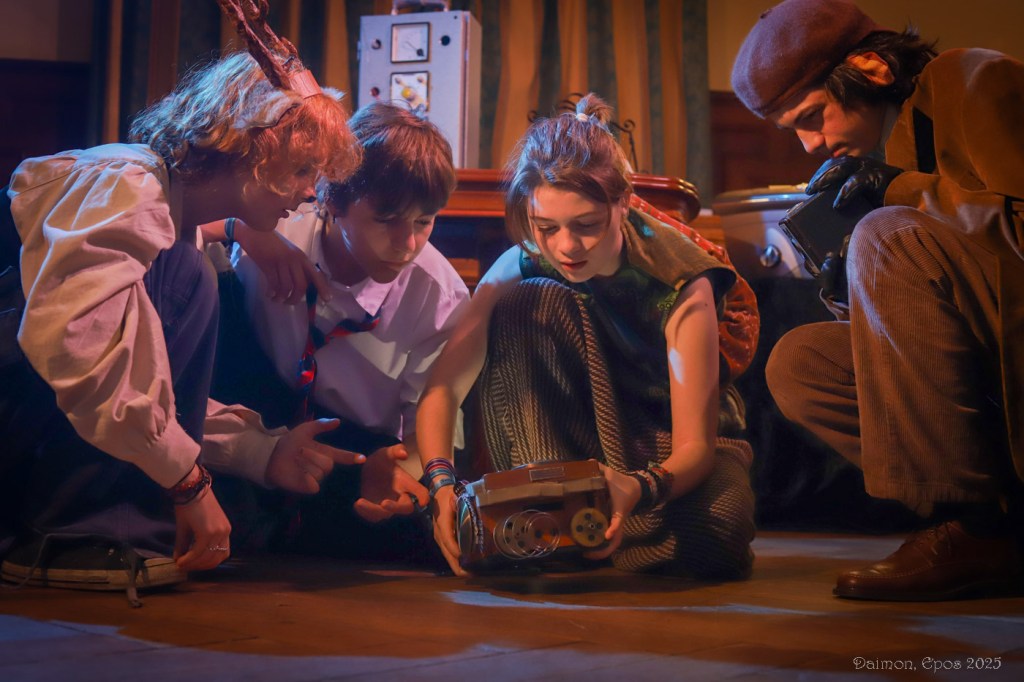
I think there’s a lot of potential. It doesn’t even have to be the same setup or the setting. There are some learnings about the dangers of toxic communities as well as the fun we create together that could be pretty universal. If Danish kids can make a boarding school British vintage setting work, then especially across Europe and maybe America, it would be pretty easy to make something adapted to local kids. But there needs to be someone responsible for the social structures off-game because I would never take responsibility for that.
Yes, running this in another location or at another school requires a whole community of people and a long time to prepare.
Yeah, or else just like giving the concept over to them, and then they’ll do it in the way they know works for them, right? All of this is written in Danish. It could pretty easily be translated, but maybe that’s not the most interesting part. Maybe it’s the basic ideas that are the most interesting, and they can build their own version from there. That would be fine with me if anyone wanted to do something with that.
We’ll try and get people interested! Is there anything else you want to mention?
It’s really nice when people can do something that’s a very good experience while also being a lesson. I didn’t want to make this just an anti-fascist lesson. Obviously, that’s a very important theme for me, but it was also really important to make a great experience.
We need great experiences, just for getting a little escapism and making sure we have some good interactions with other humans when things are dark. Just have some fun with all of this, is my suggestion.
That’s really important. You can have the most well-intentioned message but if it’s not fun or engaging or thrilling, then people have choices and they can just do something else that is more fun and maybe not as fulfilling. Thank you so much, and good luck with next year’s larp.
Thank you so much, Adrian.
Further Reading
Here’s Katrine’s bio from the Nordic Larp Wiki, which also lists selected articles and talks:
Katrine Wind is a Copenhagen-based writer and Larp designer. In 2019, she founded the independent and voluntary based Danish Larp organisation Narrators Inc. So far, the organisation only consists of her, but it has supported other larps in the larp community.
Complex and meaningful characters as well as many opportunities for emotional impact is in the core of all of Katrine’s larps in a framework she calls River Rafting Design (published in the 2025 Knutepunkt book Anatomy of Larp Thoughts: a breathing corpus).
Katrine insists on a community of kindness, tolerance and respect for cultural differences in the larps she is responsible for. Concepts like “The House of Bravery” is core to all her projects. She exercises a strict time management policy at her larps and aims for clear communication as well as predictability both for participants and crew.
She has helped as a consultant on many international larps from other designers and offers this especially to newer organisers.
You can contact Katrine at katrine@narrators.eu.
There is no complete history of the College of Wizardry – it seems to have been mired in controversy ever since it began in 2014, partly due to the organisers falling out – but a great start is the free 2017 book The Magic of Participation, edited by Jaakko Stenros and Markus Montola.
The same authors also edited another book, Nordic Larp, which is also free and provides a great introduction to the tradition.
Magic schools are a common format in Nordic larp for children. These days, most have departed from the typical Harry Potter tropes. Here’s a fun talk by Mike Pohjola about the design of his local magic school:


