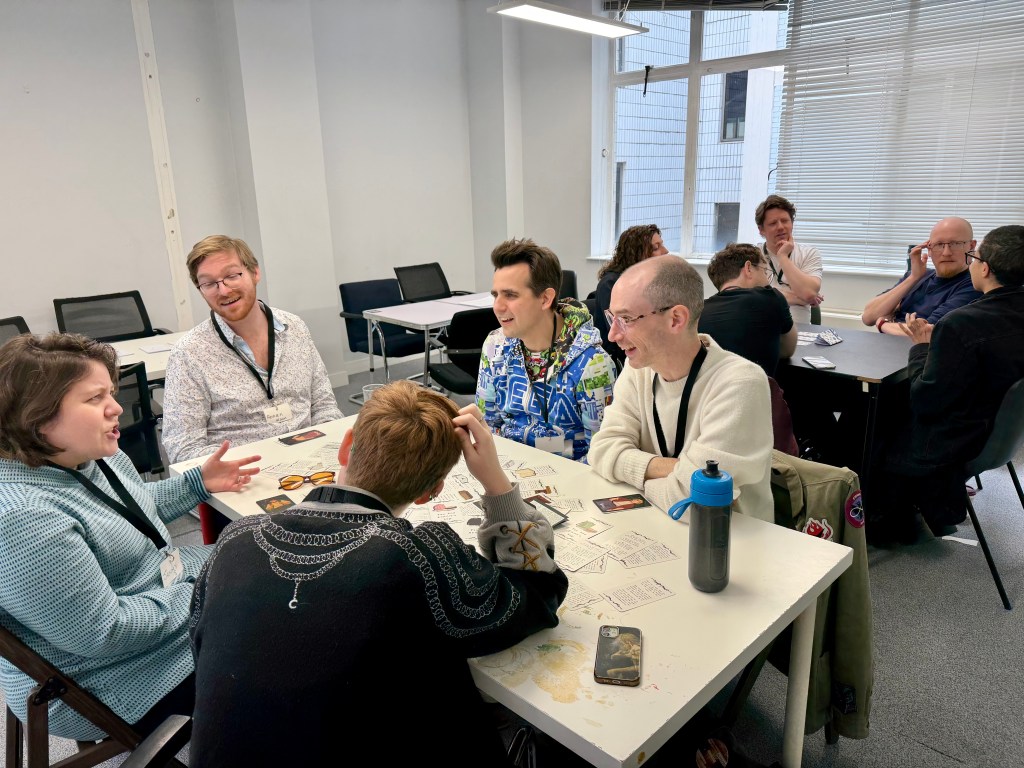
Last week, we wrapped the world’s first English-language jubensha convention, Jubensha Con, held at the Theatre Deli in London. While my memory is still fresh, I wanted to jot down a few notes for posterity and to help anyone thinking about organising a similar event.
Note: These are my personal recollections and opinions, not necessarily shared by my co-organisers, Arlo Howard, “t&c”, Joe Strickland, and David Middleton.
Origins
Several people have asked me how Jubensha Con came about and why I had ended up organising it. Here’s the full story, which illustrates the importance of writing on a public stage and having spaces that encourage repeated spontaneous interactions over time.
Jubensha Con had its genesis at the Immersive Experience Network summit in October 2025, where I was running a panel about larp. Also present were an unusual number of jubensha designers including t&c from Suspense Studio (makers of the first original English-language jubensha), Joe Strickland from Chronic Insanity, and Arlo Howard (co-creator of Spy of the Year).
I knew t&c because he’d reached out following my March 2025 blog post on jubensha, after which I interviewed him and invited him to speak in Edinburgh that May. I’d also met Arlo in that same year’s Nordic Larp conference and at other immersive events in London.
I didn’t know Joe, but I was struck by how excited the audience were in his workshop on making jubensha. Most had heard of jubensha before. They’d seen People Make Games’ 2024 video describing its enormous popularity in China and wanted to know more. Through his detailed and thoughtful presentation, Joe made the prospect of designing jubensha seem both creatively thrilling and commercially feasible.
I caught up with Arlo, t&c, and Joe, and pitched the idea of a convention. Suspense Studio had run jubensha at conventions like PAX since 2024, but as far as I knew, no-one had ever run a convention dedicated to English-language jubensha, where designers could network and run their games, the public could try out a wide selection, and experts could present their research.
I was sure this would happen on its own eventually, probably in 2027 in the United States, but it felt like this was an opportunity to make it happen even faster in the UK. I thought it might help that I wasn’t actively making jubensha and so could act as a kind of “neutral” organiser who wouldn’t have obvious incentives to favour any particular company. More prosaically, while I was still in the midst of writing my book on the history of immersive experiences, I had the time and funds to pay a venue deposit, and I’d previously organised other events.
The day after the IEN Summit, Arlo connected me to our venue, Theatre Deli, and things moved rapidly thereafter. I was confident there would be enough interest in at least a small event, and with the promise of jubensha by Arlo, t&c, and Joe, on 18th November I pre-announced the convention dates of May 8–9, 2026 on my blog and social media, inviting people to fill in a survey.
After receiving 140 responses in two weeks, it was clear we could hold at least a full day of games and talks. The official website went live and tickets went on sale on 18th January. By this point, people were pitching talks and games, including David Middleton, who joined as a co-organiser, and Ophelia Au, who knew Joe and ended up offering a free game at the convention and contributing a remote talk. Notably, Celia Pearce from Playable Theatre International and Northeastern University put together a group with extensive experience of jubensha from China to present a special session at the convention.
Hopefully this rather exhaustive account illustrates a few things:
- Lots of people were influential in the success of Jubensha Con beyond the core group of organisers.
- It may well not have happened if not for the IEN Summit. Real-world events are vital!
- Writing blog posts can result in very good things.
- You never know when you’ll end up working with acquaintances, so try to keep making them.
- You can do things very fast if you keep them simple. Idea to realisation took just over six months.
Scheduling
We ended up with a 1.5-day event, running from Friday 6pm to Saturday 9pm. This gave us four slots of around four hours each, more than long enough for the typical two- to three-hour duration of our jubensha. Since David was offering some shorter games, theoretically an attendee could play five unique games during the convention, though in practice most seemed to play two or three.
We put all the talks in a single slot on Saturday afternoon, so attendees could maximise their game time. That meant talks were just fifteen minutes long, with very brief Q&As.
Tickets and Budget
I spent a while looking for a ticketing platform that would let us sell tickets to the convention and then sell tickets to individual timed games running in parallel, each with limited capacities. The only such platform I could find was, unsurprisingly, developed by an RPG convention whose name I forget and, in any case, didn’t look particularly useable for our purposes.
In the end, I sold convention tickets via Ticket Tailor and individual game organisers sold their own tickets (£15-30) separately, usually via Eventbrite. I wasn’t very happy with this outcome – it risked people buying game tickets without convention tickets, which did happen – but I believe it’s not unusual at big games conventions, so I resigned myself to it.
I wanted the ticket price to be as low as possible. Most immersive experience conferences cost hundreds of pounds to attend, and some cost well over a thousand. It goes without saying that this poses an enormous barrier to entry and stifles innovation. Jubensha Con tickets were £15, enough to cover the venue hire and discourage no-shows. David donated all the lanyards and I spent about £50 on printouts, masking tape, sharpies, flashcards, and a hole punch. Joe provided the gear to record our talks, and t&c paid for hot meals for our volunteers.
Other costs included the website (£72 for a two-year WordPress plan), domain registration (£35 for two years via Mythic Beasts), and event insurance (£58).
Excluding my travel and accommodation, I probably spent a few hundred pounds of my own money beyond the income from our 140 ticket sales. None of the organisers or volunteers were paid, though we did offer a small fund to subsidise travel and accommodation for speakers and attendees. While I realise even a few hundred pounds is too much for some organisers to front, especially if they aren’t getting paid, the point is that you really can run a good event on a comparatively tiny budget.
I could have spent more money making things fancier, but ultimately a highly unprofitable event is unsustainable and sets unrealistic expectations for other events with shallower pockets.
Venue
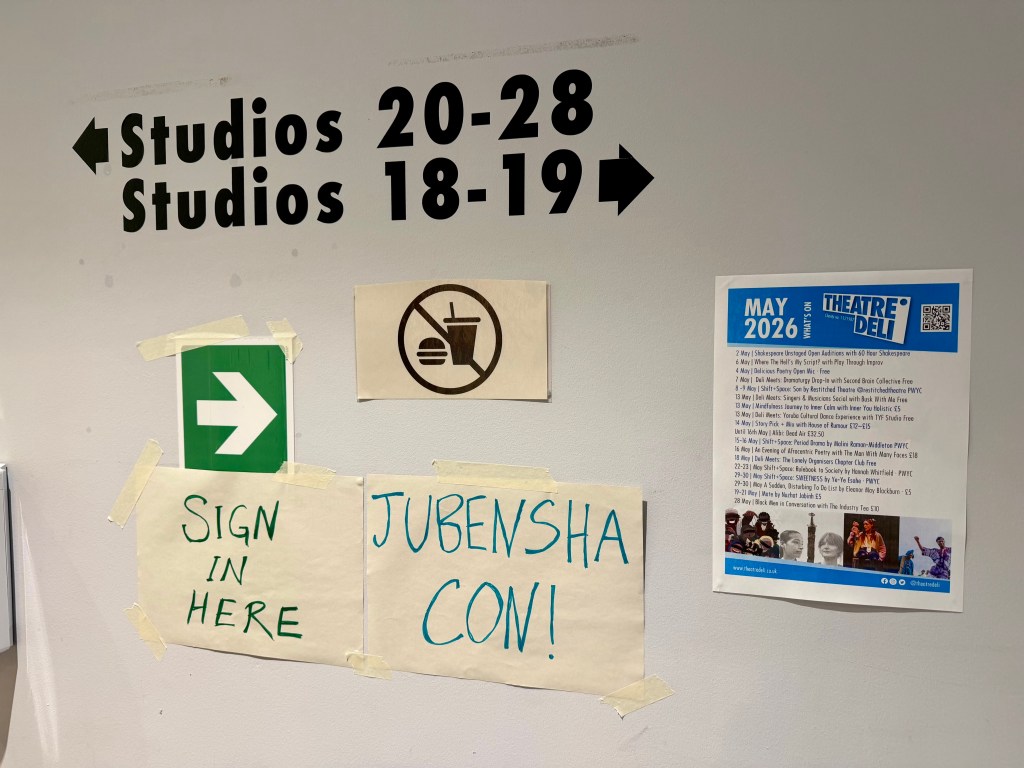
Theatre Deli takes over empty spaces in city centres and turns them into rehearsal and event spaces for artists. I’d visited their location in the City of London several times for The Smoke larp festival and Voidspace Live, and thought it was almost perfect for our needs, with plenty of small and medium-sized rooms that could host groups of six to eight around a table.
Almost, because it didn’t have an auditorium or a space where we could erect a stage for talks. This meant we had to host our talks in what was effectively an open-plan office. The building’s dense column grid meant we’d be in trouble if we had more than eighty people who wanted to watch the talks, and even then, I worried greatly about noise bleed from the game rooms. In a pinch, we were prepared to set up a simulcast room.
I felt a little bad holding the convention in London. I’ve lived in Edinburgh for several years and always want to run more events for people here. However, the very young nature of English-language jubensha demanded we give it the best chance of success, and that meant making it reachable tby the greatest number of potential attendees from the UK and Europe. Still, I didn’t like the fact that I wasn’t able to easily visit in advance.
Publication
I had hoped to print a small publication for the convention with speaker and talk descriptions, game info, and a few short essays and interviews. This wouldn’t have cost much at all – around £90 for twenty A5 pages via Mixam – but in early 2026 I was in the final stretch of writing my book and didn’t have the mental bandwidth to co-ordinate and design it.
Talks
I was honoured, then a bit intimidated, by the calibre of people pitching talks and requesting tickets. Academics and experts at the top of their fields in game studies and larp announced their intention to attend. Jubensha Con wasn’t an academic conference. We didn’t have their funding or institutional backing. Still, we were the first convention of our kind, and clearly that was very exciting for people studying jubensha-related topics.
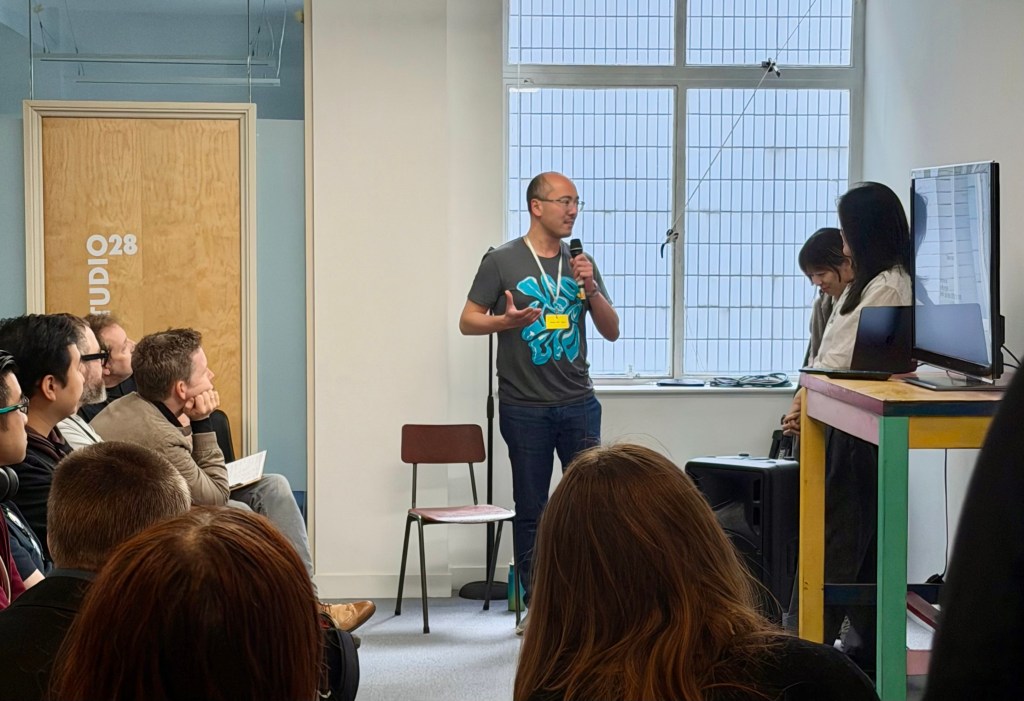
Jubensha grew popular in China. It would’ve been unacceptable if we didn’t have anyone who’d worked or studied there, so I prioritised experts familiar with the Chinese scene. At the same time, jubensha came to China via Korea and France and, further back, Britain and the United States in the form of boxed murder mysteries, so I was happy that our British designers reflected the historically global nature of the wider form.
I informed speakers they could count on the audience knowing the basics, so they should skip any “jubensha 101” introductions and jump to a more sophisticated discussion.
Marketing
We sold out of tickets within weeks, and after we expanded our lineup and released extra tickets, those sold out quickly too. As such, no additional marketing was necessary beyond the organisers’ social media accounts, word of mouth, and my posting to various larp and immersive forums.
Initial Thoughts on the Event Itself
It’s still too early to assess Jubensha Con’s legacy. We plan to survey attendees for their feedback, and there are some press stories and blog posts in the works. It’ll be months and years before all the effects are known, however – hopefully in the form of new collaborations, new ideas, and new jubensha.
In the meantime, here are my initial thoughts on how things went:
Jubensha Games
- I suspect the convention was the first time most attendees had ever played jubensha, so some hiccups were to be expected. I didn’t sit in on any games but I heard some players acted in non-ideal ways, e.g., revealing more information about their character and backstory than they ought to have. I don’t blame anyone for this – probably they were approaching puzzles from a collaborative “let’s all solve this together” attitude of pooling information. Gratifyingly, even in these cases, players seemed to have enjoyed the game and I imagine expertise will only climb.
- Some players forgot which games they’d bought tickets to. They figured it out, but a central ticketing platform would have helped.
- Around 5–10% of players didn’t show up for their games. This was quite surprising, since games cost £15-30 each, and extremely disruptive given that jubensha require a certain number of players. We used a standby queue to fill available slots, which worked well. I’m not sure how suitable it’d be if we had a multi-location convention though – maybe we’d need a standby app or website.
- Ophelia Au had sent a couple of copies of Worms Against Humanity for attendees to play for free. As a short, GM-less, 4-player game for beginners, this was a perfect way to absorb players who weren’t able to get into a longer game or wanted something a bit quicker. Highly recommended!
Venue
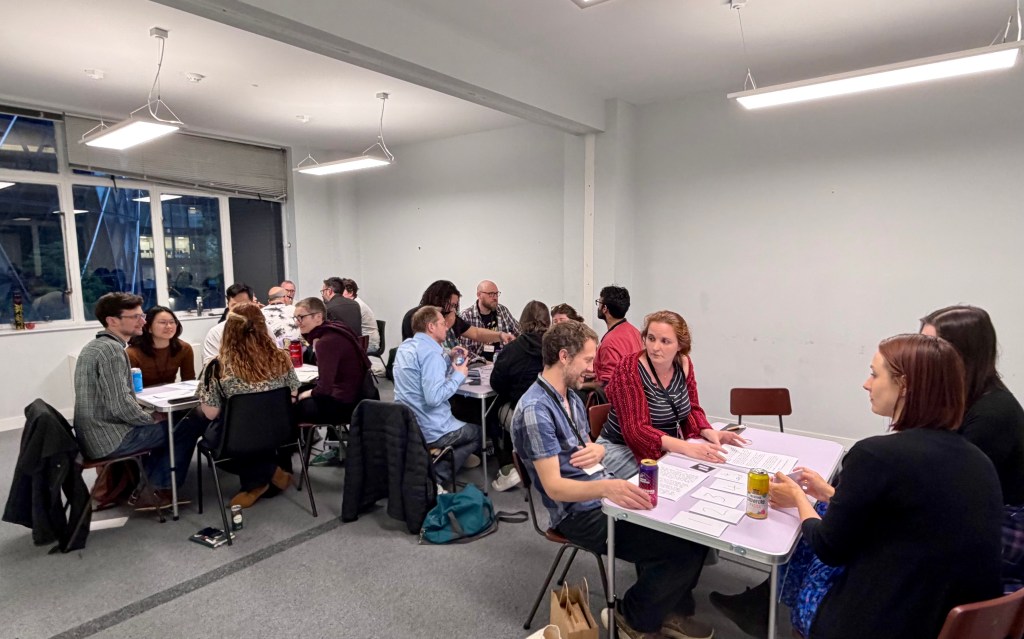
- We needed more rooms! They were a bit smaller than expected, and jubensha can get noisy when things are dramatic, which doesn’t work for some players. I had booked an extra couple of rooms in anticipation of this, but to be really comfortable we really needed another two to three in addition to the seven we already had.
- Jubensha is an extremely space-inefficient activity compared to talks or chamber larps. Most games have five to seven people around a table, like tabletop role playing games – but unlike TTRPGs, you don’t really want to have multiple groups playing the same game in the same room due to spoilers. Yes, you can mix up games in the same room, but what if people are playing the other games later on?
- Most event venues don’t have lots of small rooms. We will need to figure out how to dampen noise in larger rooms to make this work better in future.
- That said, Chronic Insanity managed to run four games in a single room during the convention, so clearly it’s doable!
Ticketing
- Because we didn’t have every attendee’s name in advance, we got people to write their own nametags. It would’ve been a bit faster to print them in advance, but not that much faster.
- We had different coloured lanyards for whether attendees were OK to be photographed. What a great idea! This was much more visible than a sticker on their nametag and, I think, instilled more confidence than the usual strategy of the photographer saying “I’ll take a photo of you and remember not to use pictures of your face”.
- A handful of attendees had bought game tickets but not convention tickets. They were usually very apologetic but it was awkward and slowed down check-in. More impetus for a better ticketing platform!
- As expected, around 20% of convention ticket buyers didn’t show up.
Talks
- Since I wasn’t running any games, this was the area I was most responsible for and therefore more worried about. But they went really well!
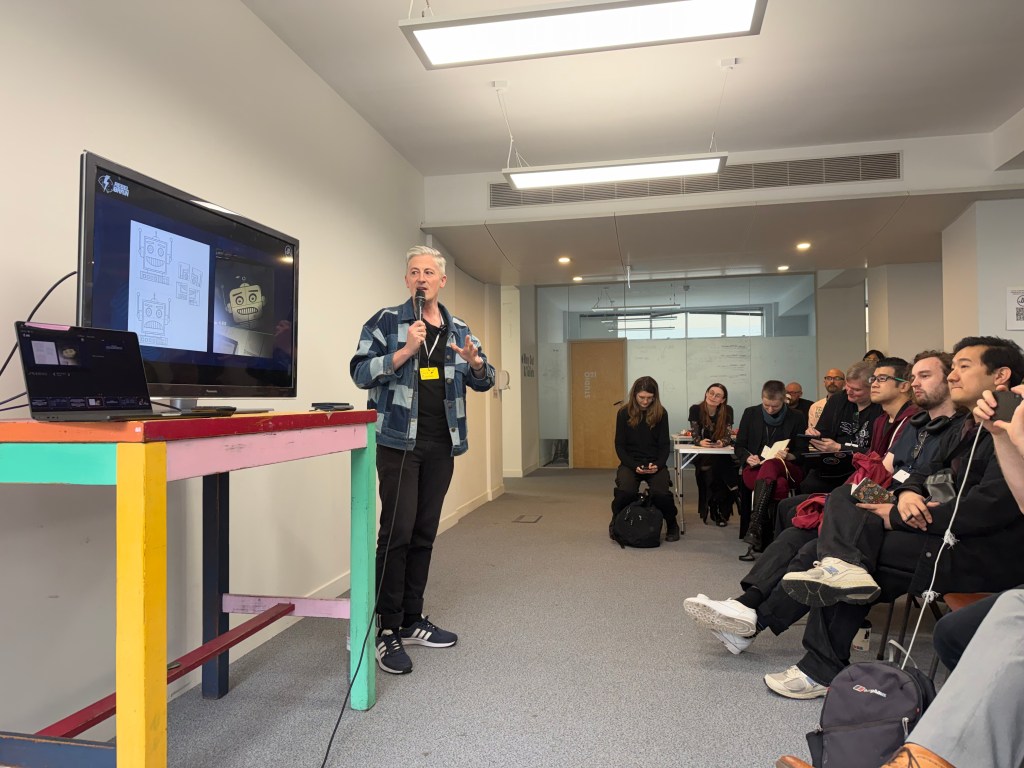
- All our speakers hit their timing marks and delivered punchy talks that left the audience wanting more.
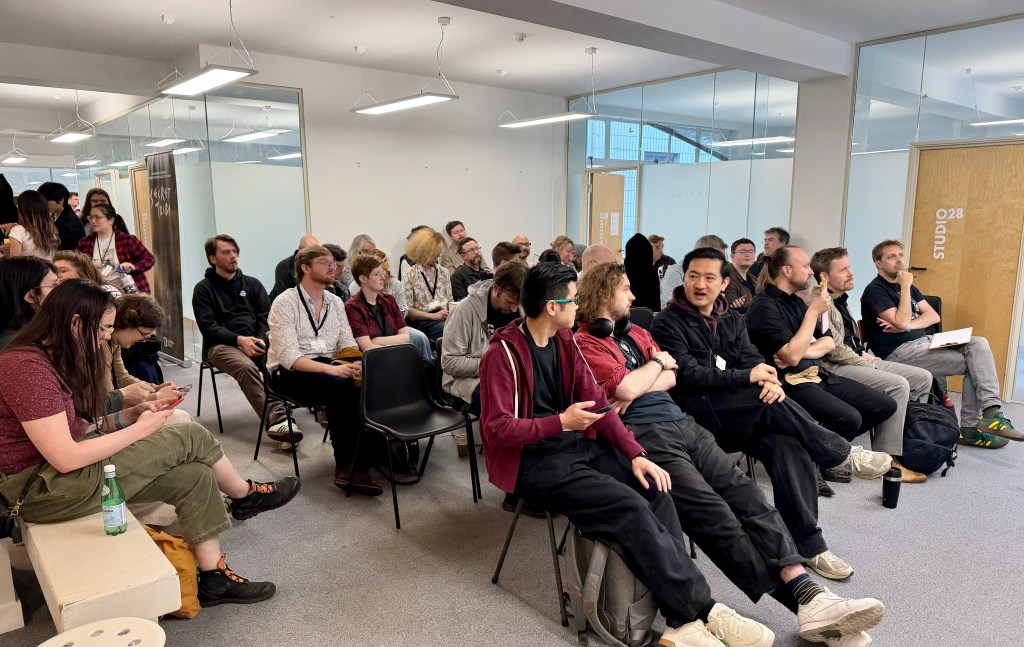
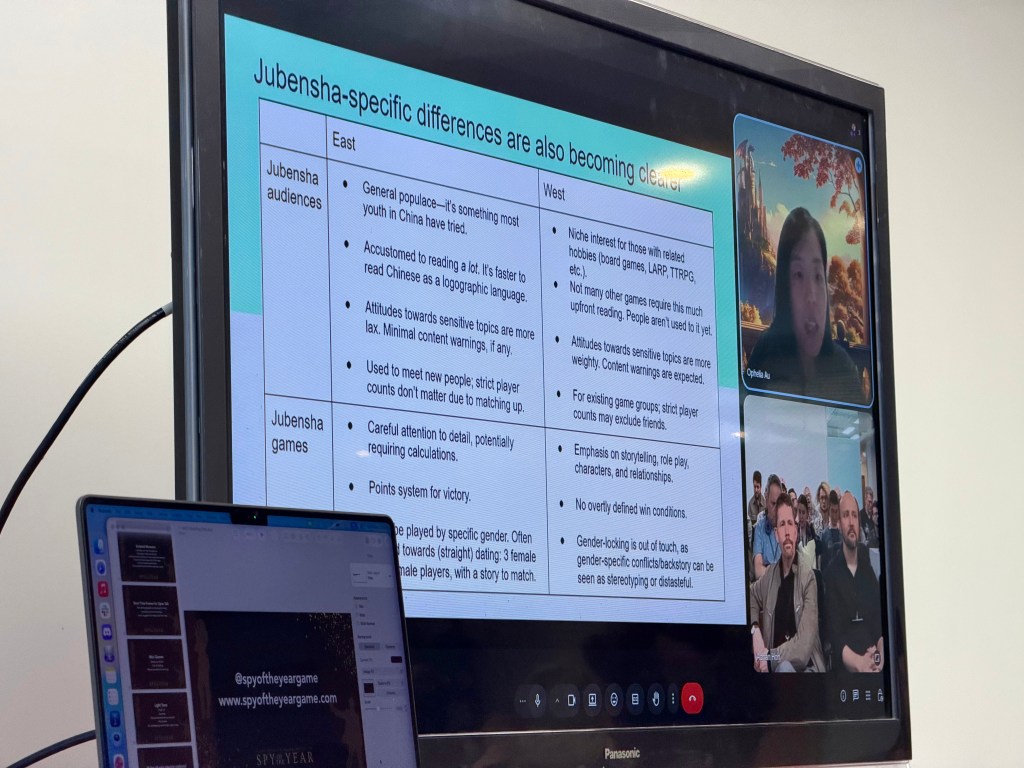
- Around ninety people attended the talks – more than I expected! Those around the edges were happy to stand or grab chairs from elsewhere in the venue.
- The audience were fantastic, bringing a lot of energy to proceedings and asking good (and brief!) questions. In particular, everyone loved the final talks by Yulin Tian and Joanna Lyu, who gave talks jam-packed with up-to-the-minute information about the Chinese scene – information that I don’t think has been written about elsewhere.
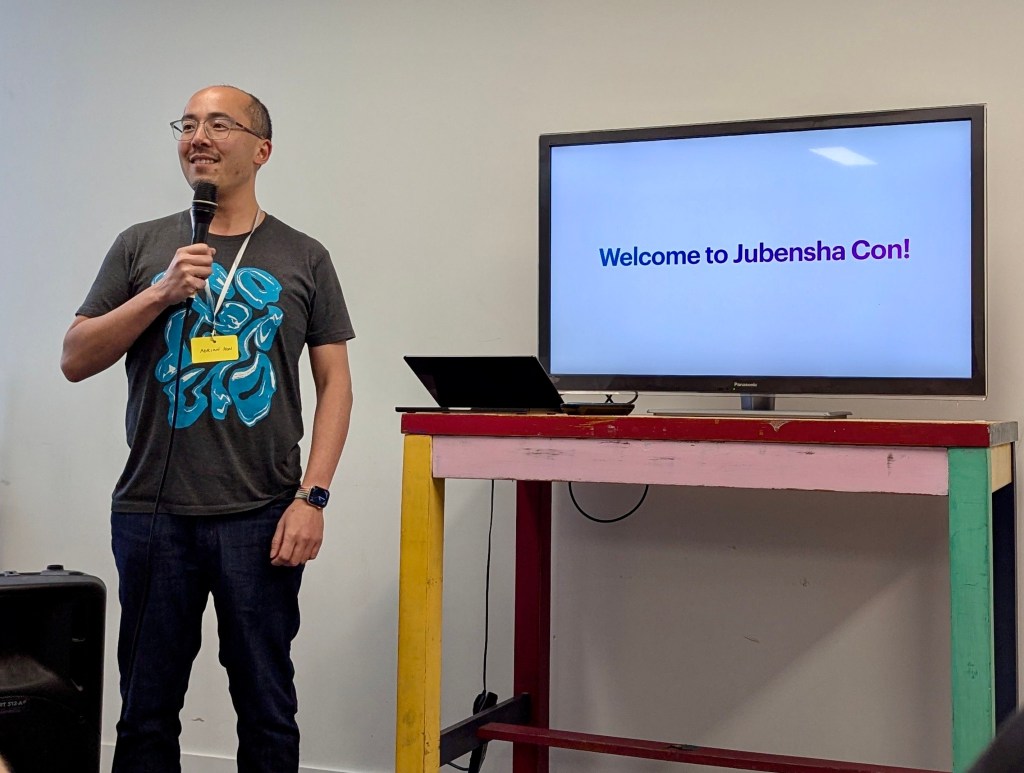
- The TV wasn’t big enough given our audience size – ideally we’d have had a projector.
- We hope to release slides and talk recordings, pending speakers’ permission.
Attendees
- I saw plenty of familiar faces from other “immersive” events in London like The Smoke and Voidspace Live – unsurprising given jubensha’s affinity with larp and interactive theatre.
- Also in attendance: video game writers and designers, creative professionals from TV, music, and movies, escape room fans, TTRPG makers.
- It was great to see Mike Pohjola bring his jubensha-adjacent Nordic larp to a design workshop, and in turn, for Yulin and Joanna to reference Nordic larp in their talks.
- A surprising number of people came from Europe, North America, and China. Often they looped Jubensha Con into an existing trip (e.g. AMAZE in Berlin was happening just a few days afterwards).
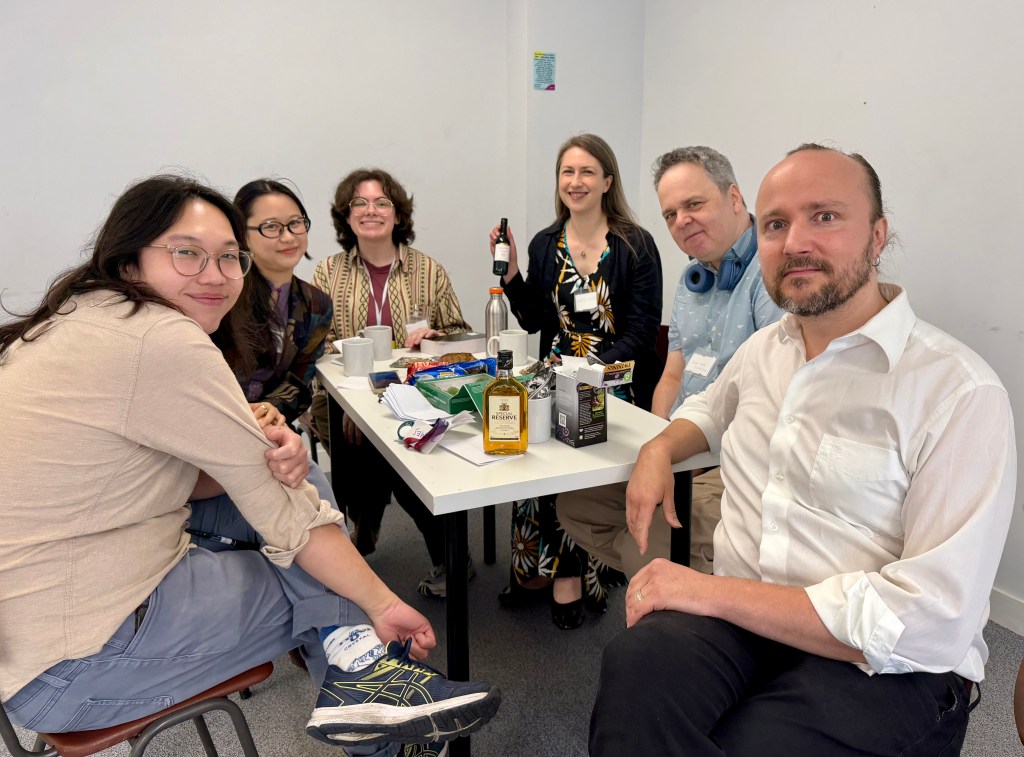
- There’s nothing I like more than bringing people from different areas together. A lot of attendees told me how many interesting people they’d spoken to, and jubensha’s ability to bring strangers together for dramatic role play was the perfect ice-breaker for players to chat after games.
Other Logistics
- Besides the organisers and their teams, we had two volunteers for the event: Miranda Lee and Margaret Maitland. For the most part, they staffed the reception desk and answered questions, and helped with setup and tidying up. Both had the chance to play one or two games and check out some of the talks.
- Ideally we’d have had one or two more volunteers so that the reception would have always had two people, and so I could’ve spent more time away from the reception helping out on the convention floor.
- While I understand the need for event insurance, I am quite resentful that it’s necessary for pro-social non-profit events like ours. If we think there’s a loneliness epidemic, we need to make it as easy as possible to organise social events.
- I completely forgot to put higher-priced sponsor tickets on sale, at £30–50. These are common at Nordic Larp conferences. They don’t get you anything extra, it’s just a way for well-off attendees to further subsidise the event. I think we would’ve sold ten or twenty, which would’ve boosted our travel and accommodation fund.
Final Thoughts
No event is perfect. We had a couple of complaints about the convention’s lo-fi trappings, which I think are broadly answered by its first-time, non-profit, zero-budget nature. And of course, there are lots of things we could have improved upon.
Overall, I’m very happy about the event. I was kept busy but it was less stressful than I expected and nothing really bad went wrong. Over a hundred people played multiple games of jubensha, attendees got to hear cutting edge talks and meet interesting people, and designers sold lots of tickets and boxed games. We moved the field of English-language jubensha ahead!
I imagine we’ll do another event, though I don’t know exactly when or where. More importantly, I hope other jubensha conventions are organised elsewhere!


 mssv
mssv 