In the twenty years I’ve been making games, I keep returning to the idea of blending the digital and physical worlds through ARGs like Perplex City and location-based games like Zombies, Run! It’s as if the act of mixing worlds enchants them both. That impulse is probably why I recently became fascinated by Nordic Larp (live action role playing), the closest thing we have to a fully embodied, truly participatory avant-garde art form today.
So for anyone who knows me, it’s probably no surprise that my next game, Strandfall, combines all those notes. Strandfall is a highly physical outdoor larp that I’m co-creating with Alex Macmillan as part of our new collective, Experimental Social Scene, supported by Immersive Arts funding.
This September, 30 players will embark on a desperate expedition in a real park in Edinburgh to uncover the nature of mysterious storms that are ravaging the world. Over the course of three hours, they’ll use our custom solarpunk-style “spatial computers” to forecast and investigate the storms, track down missing scientists, connect a long-distance radio network, and make fateful decisions that will change them as individuals and a community.
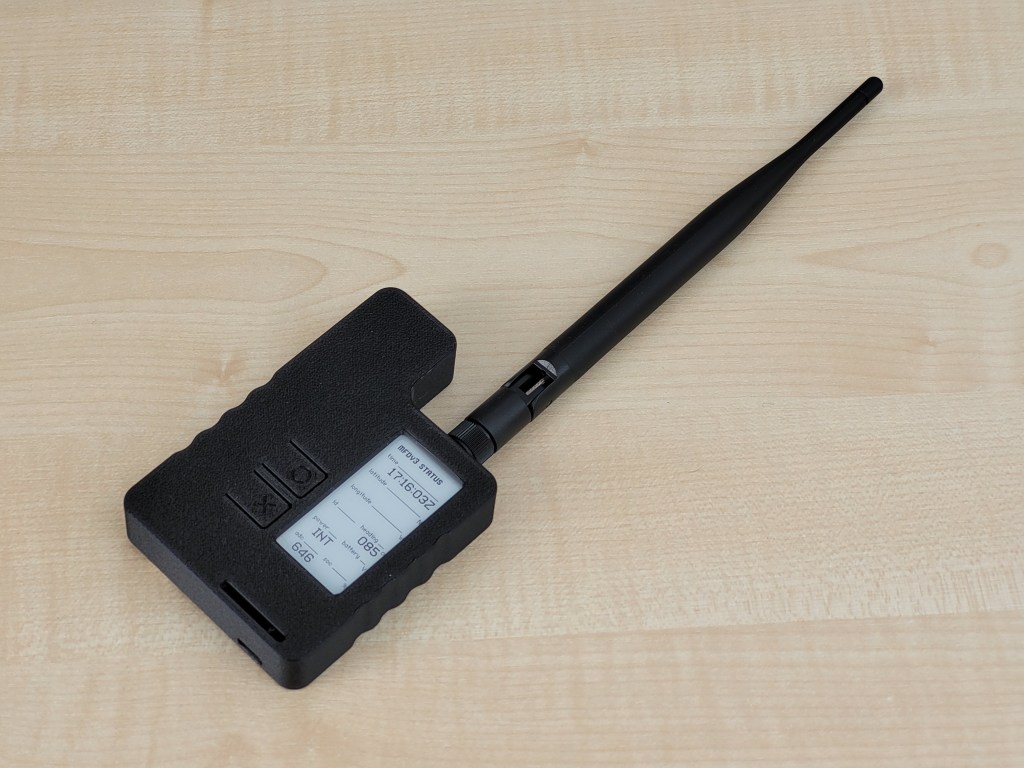
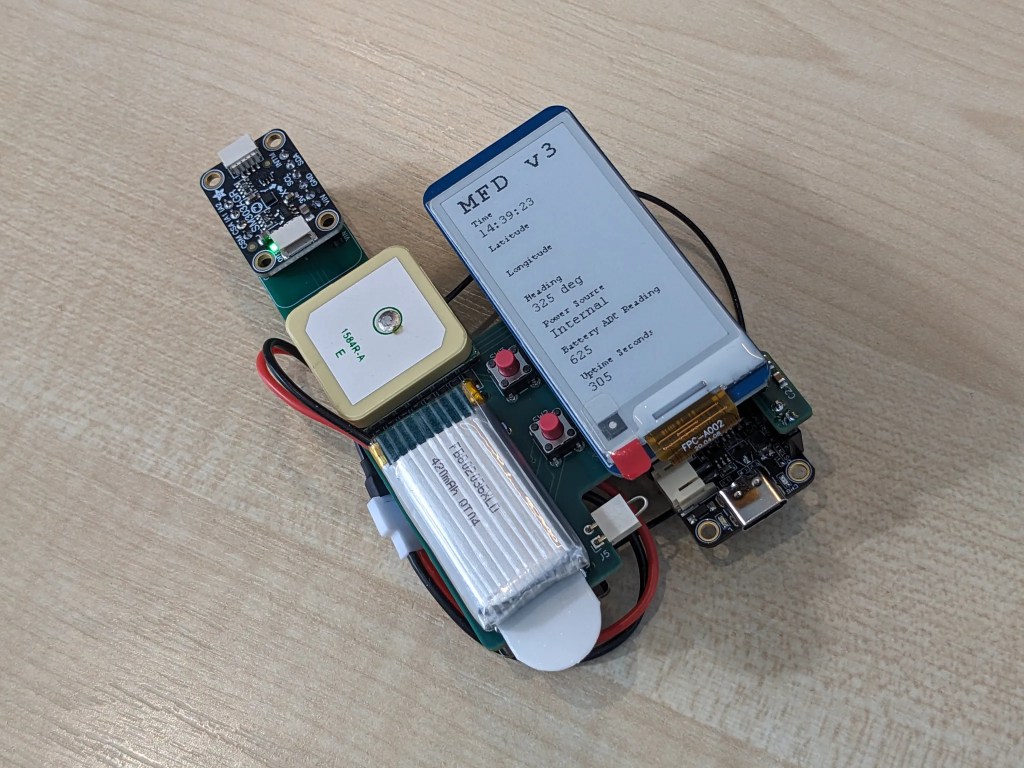
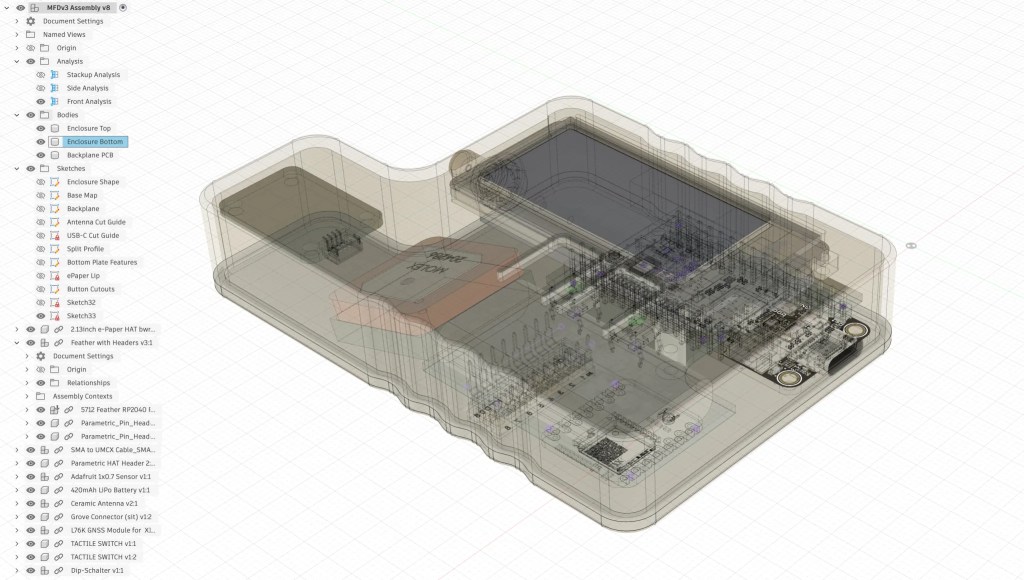
As Alex notes, many larps involve science-fictional or fantastical gadgets. Usually, participants rely on the power of imagination and role play to collectively perform their functions. In Strandfall, we’re building our “McNair-Feldman Devices” (named after its fictional inventors) for real. They contain a low-power, long-range radio for mesh networking beyond cellular and wifi service, a GPS radio, accelerometer and compass, a small ePaper display, all housed in a custom 3D-printed enclosure designed to be mounted on a standard camera tripod.
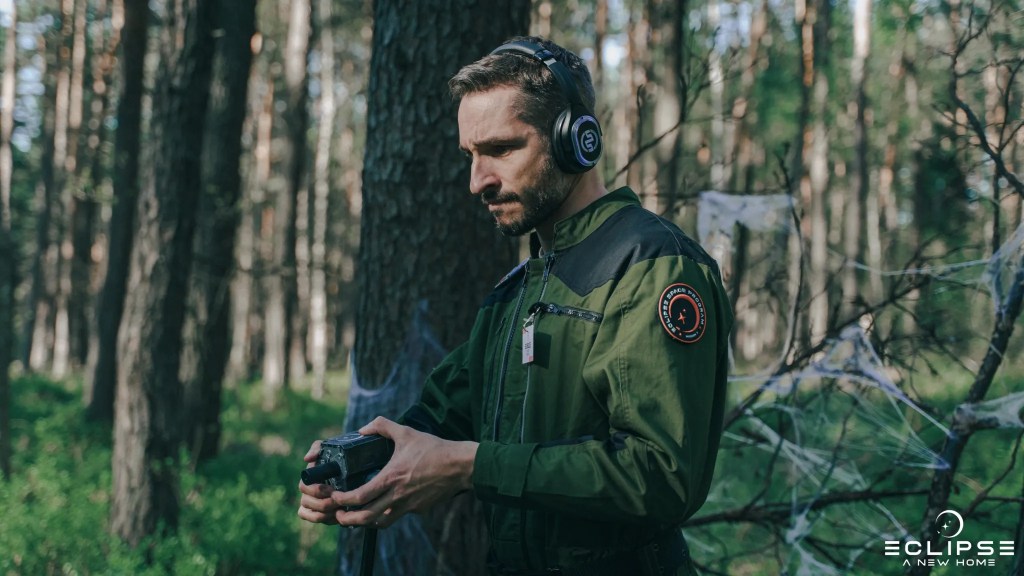
This doesn’t make Strandfall “better” than larps with non-functional devices like the sci-fi blockbuster Eclipse, but it does allow us to introduce new kinds of systems and gameplay into the experience that would be much harder if done manually.
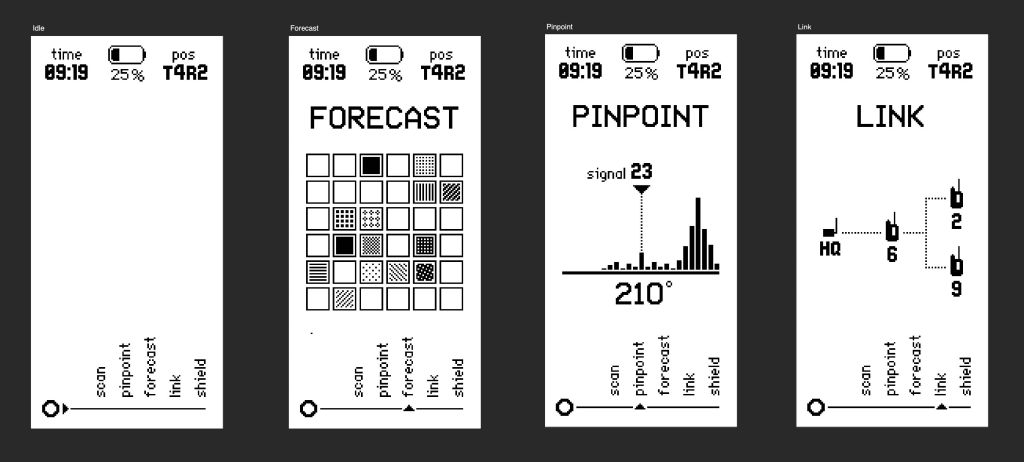
Players might deploy MFDs across the park to create a network, use them to forecast the invisible storms, relay that information back to players at the base, and then track and even “storm chase” them while in scanning mode. Other players might use MFDs like surveyors, pinpointing the effects of past experiments in the park or discovering the boundaries of a mysterious Stalker-like exclusion zone.
Wouldn’t it be easier to use cheap smartphones instead of going to the trouble of designing entirely new hardware? That depends. Putting aside their hardware limitations (lack of long-range radios, displays that suffer in direct sunlight, etc.), the problem with smartphones is that people inevitably expect to interact with them like smartphones, which is to say, instantly and effortlessly. If we gave players smartphones, they would expect to be able to use Google Maps to navigate and instant messaging to communicate, rather than dealing with the orienteering-esque challenges of paper maps and walkie-talkies. Even with those functions disabled, we’d have to deal with potential confusion and disappointment.
Smartphones are anti-enchantment devices. All too often during interactive theatre and ARGs, I see participants fixated on their glowing screens, to the wider experience’s detriment. Smartphones, as traditionally used, have no place in an immersive experience that seeks to bring participants together and get them to talk and argue and deliberate with one another. Instead, we’ve designed our devices to appear closer to scientific instruments, with a custom user interface to match.
Some MFD tasks will be fast, but many will take longer to complete and require intense co-ordination. Sometimes players will need to hurry up and run, and sometimes they’ll have nothing to do but think and talk. We’ve developed a whole backstory to the world, a lot of which will only be exposed in fragments and between different players.
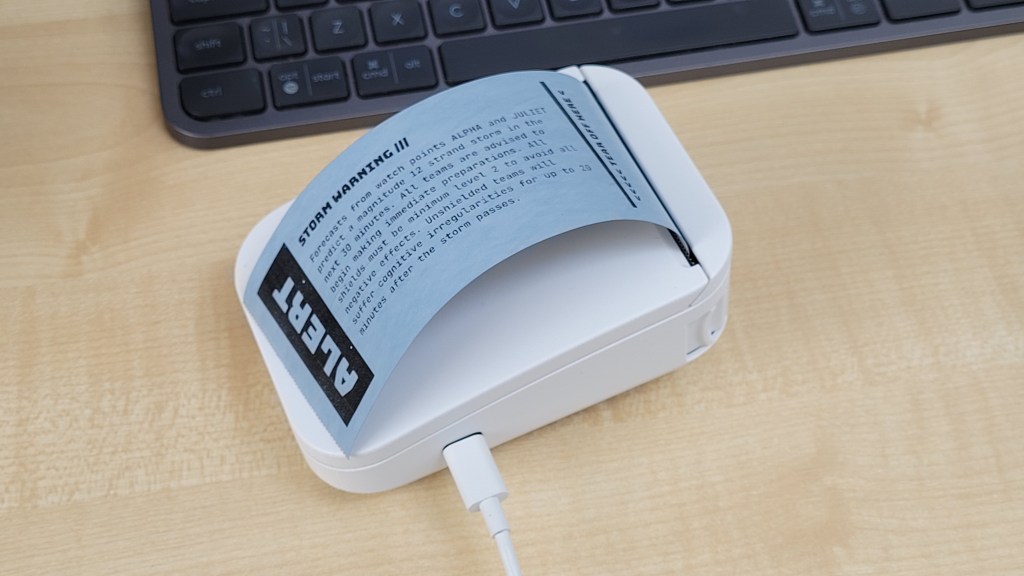
Our players remaining at the base will be working with maps and receiving information via thermal printers. It’s not that we’re completely ruling out traditional screens and computers, but rather that we’ll only use them where they cohere with the overall atmosphere and intention of the experience. It’s low-tech, not no-tech.
We want Strandfall to be a highly physical experience that taps into the pleasure and exhaustion of movement, but we’re also mindful about accessibility. Ideally, every player will feel they have something vital and unique to contribute, not just the most athletic.
We also want Strandfall to incorporate role play. Just because everyone is part of the same expedition doesn’t mean they don’t want different things, or go about things in their own way. Hopefully we can give players the “alibi” to try out roles different from their normal selves, more courageous or argumentative or deferential. Since Alex and I haven’t designed larps before, we’ve brought on board veteran Nordic larp and RPG designer Juhana Pettersson as a consultant.
While Strandfall is debuting in Edinburgh, it’s a site-responsive experience, not site-specific. It would be fairly straightforward to adapt it to other outdoor spaces and increase its duration and player count. Even though we don’t intend for Strandfall to be played by millions of people – its custom hardware and unique demands prevent that, plus we have more than enough of those games already – we have plenty of ideas of how to add depth and complexity to make it into a highly repeatable and extensible experience.
Before any of that, we have to pull off our first three-hour run in September. It’ll be free to participate, and you can find out more details and follow along on our website – we already have posts up about our influences like Death Stranding and PUBG, the technology and capabilities of our MFDs, and what I learned from this year’s Nordic Larp conference.

