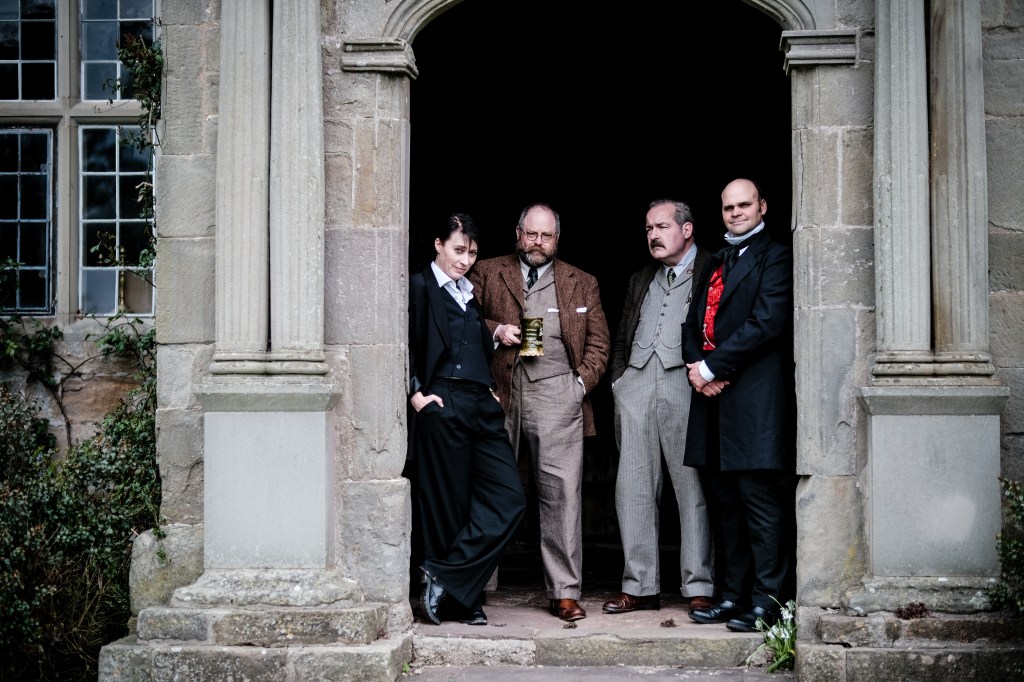
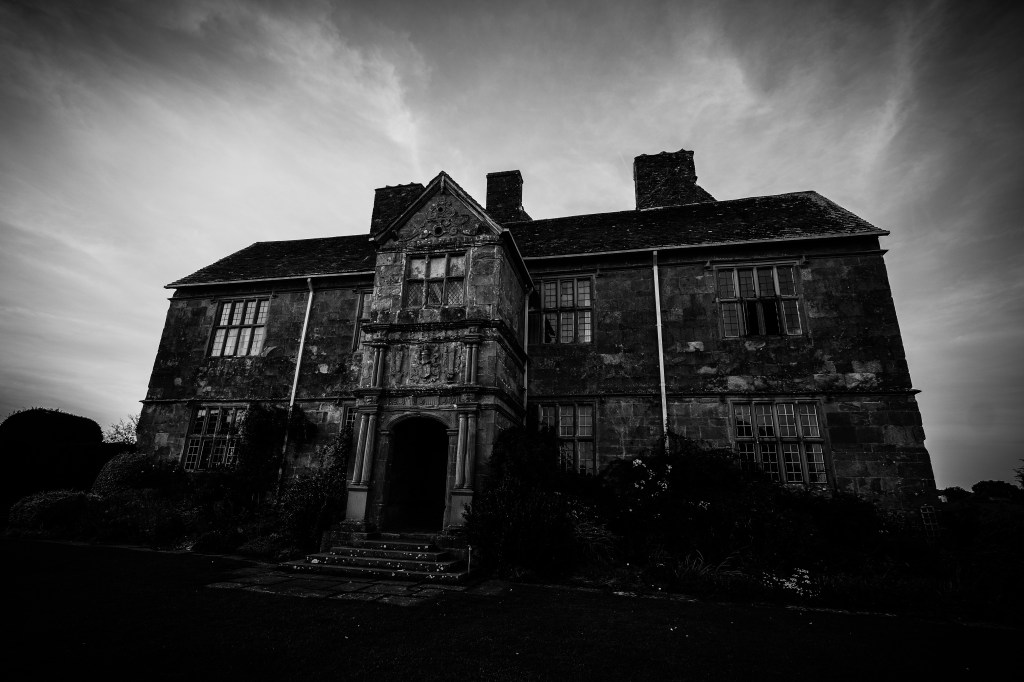
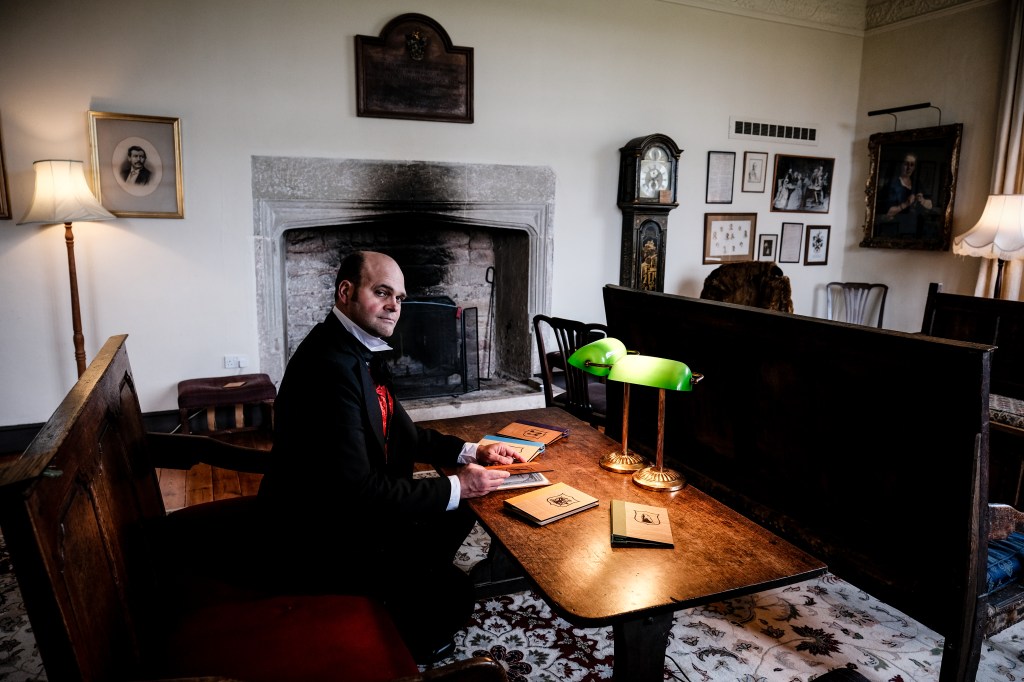
The Key of Dreams is an overnight immersive experience at a 17th century manor in the Welsh countryside. Guests investigate mysterious goings-on by studying puzzles, diaries, letters, and maps, and by talking to the manor’s enigmatic inhabitants. Ultimately, guests choose who to aid or betray, and which rituals they’ll perform to change the story.
Since opening in Spring 2024, The Key of Dreams has become one of the most unique immersive experiences in the world. It’s small and intimate, hosting only thirty guests at a time, but its regular showings mean it’s not too exclusive. Technology is woven through the experience, but it also has a very high actor to guest ratio. It shares similarities with larp, immersive theatre, and escape rooms, but it doesn’t fall neatly into any of them. And while it’s Lovecraftian, its IP doesn’t have as strong a pull as the College of Wizardry (Harry Potter) or Star Wars.
Finally, it’s luxury but not that luxury. At £450 ($600 / €530) tickets include all meals including a “lavish banquet” but not accommodation, which starts at £350 for a two-person room; guests can stay elsewhere, but most prefer to be at the manor. That means a couple staying on site would pay at least £1250 ($1650 / €1450).
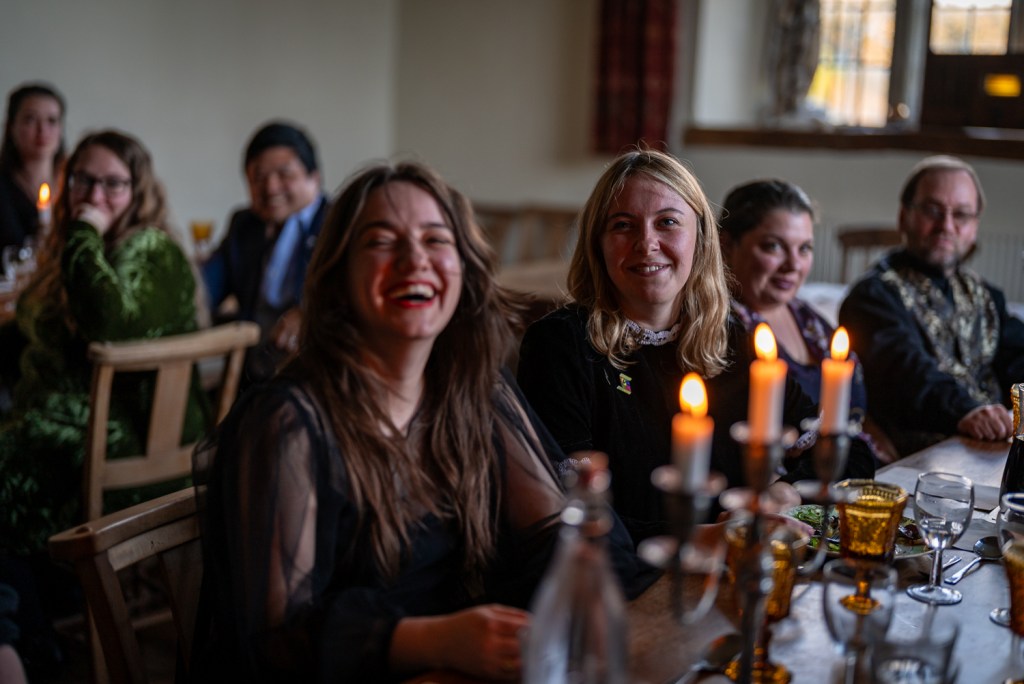
The price places it firmly at the highest end of immersive experiences, alongside the sci-fi larp Odysseus and Disney’s Star Wars: Galactic Starcruiser. This is usually where people express incredulity at the expense, but The Key of Dreams seems to be doing well, and almost half of its guests travel from the US because it’s so unique.
The Key of Dreams has been shrouded in mystery owing to a general aversion amongst guests and creators to sharing spoilers, but my conversation with Ivan Carić, founder and creative director of producer Lemon Difficult, and Laura Langrish, lead writer, gets into the details. I wanted to find out just how they make it work.
During this conversation, which has been edited for clarity and length, we cover:
- How The Key of Dreams differs from traditional immersive theatre and escape rooms
- Its use of Home Assistant, Bluetooth beacons, and Zigbee technology
- Creating a connected universe of experiences to provide more accessible on-ramps, including a boxed puzzle game
- Why a manor in Wales? Why not London?
- Inspirations including Gone Home and Inscryption
- A theory about extended durations enabling deeper immersive experiences
The Key of Dreams aims for a more developed sense of game design and puzzle design than immersive theatre and immersive experiences in general. Is that right?
Ivan: Absolutely. So escape rooms are great. I’ve only been to four or so, but I can see how you could get very passionate about them, and about the grammar of how they work. Therefore, like familiarity with literature or films or theatre, when those expectations are subverted, there is a joy to that. But it is also a barrier to immediate engagement. It automatically creates a bunch of people who are experts, and then everyone else has to start at a lower level.
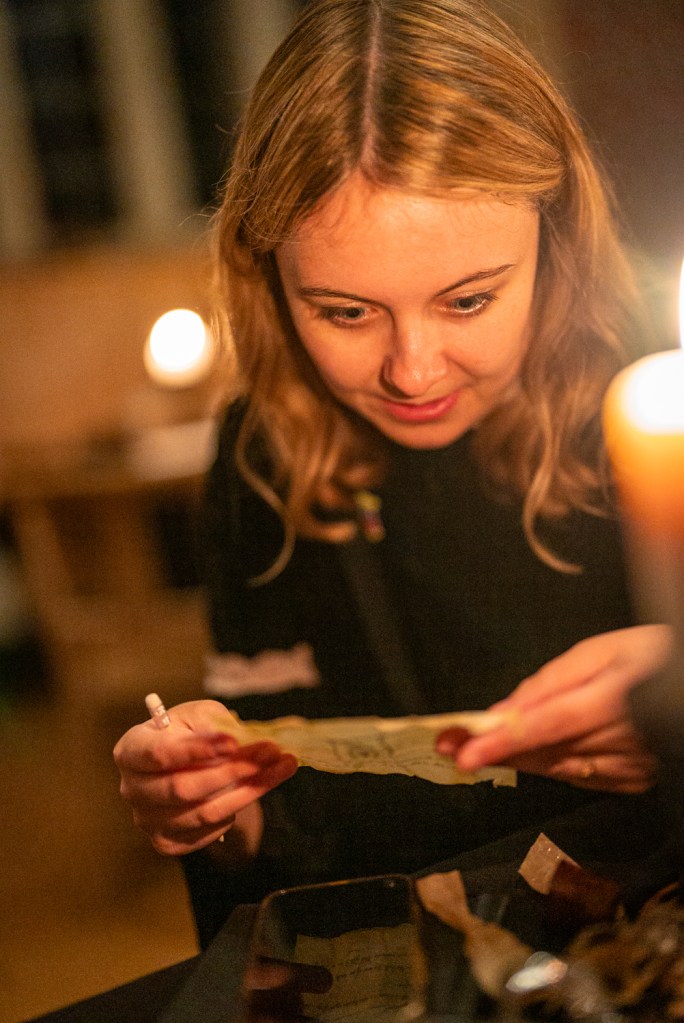
One of the things I love about board games is the feeling of mastery you get when you think you understand how it works and then you use it in a way that you couldn’t have necessarily predicted, or in a way that you very carefully planned out. Both have their own feeling of satisfaction. That’s something that we try to do: introduce elements and puzzle elements that have multiple functions that then create opportunities for emergent play. I like puzzles and game elements that feel appropriate to the world.
Can you give me an example?
This is a little bit spoilery. There’s a Lovecraft short story called The Terrible Old Man. where there’s a sea captain, and there’s three guys in a car staking him out to rob him. The captain speaks to bottles which have bits of lead floating in them, and as the story goes on, the implication is that these are the trapped souls of the people he sailed with in the past. Obviously, nothing good comes of this.
We have soul bottles in [The Key of Dreams]. They’re ostensibly beautiful objects that are physically satisfying. They have a name associated with them. They’re there throughout the show, but they also have a function. You can listen to these soul bottles and they have beautiful pieces of microfiction, but you can also listen to them in certain specific circumstances with almost a ritualistic element. It has to happen at a particular time in particular places, and it’s lore you can learn and use.
So far, so simple. But then there’s the little stories in the soul bottles, the snippets of soul, the things you learn when you listen to them. Those have been used to threaten or cajole our characters, because one of the soul bottles has something that’s important to them.
They’ve been used by the audience in a Punchdrunk way. At the close of the night, we’ve had the whole audience wrapped around the stairs listening to the voice [from a bottle] echoing down, whilst the character to whom this is important is crawling up the stairs, broken.
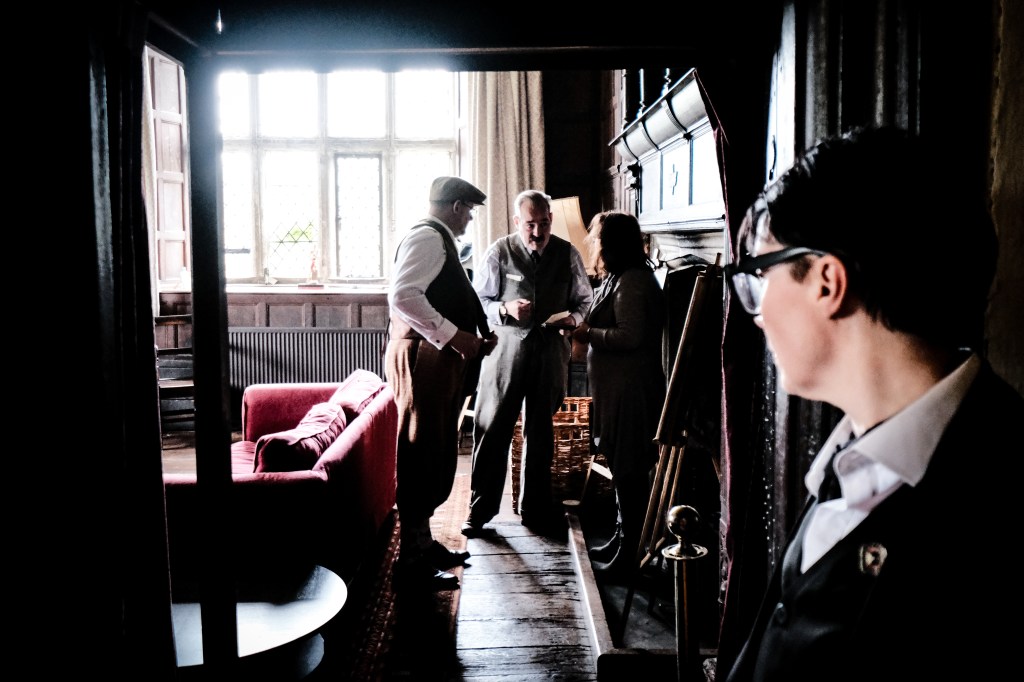
We’ve had tiny moments where someone has discovered the history around a bottle. They’ve taken the bottle and the character associated with it into a priest hole, this small confined space, and there’s this moment of intimacy where they’ve spoken about what’s happened.
There’s been times when it’s been used as blackmail, so players have said, “You won’t get to listen to this.” All of these are social mechanics.
Note: The Key of Dreams’ FAQ addresses “Why Lovecraft” and links to The H.P. Lovecraft Historical Society’s statement.
It’s not like a voice in one of the bottles says, “The code to the safe is 1234.”
Exactly. [The bottles] are being used in a different way almost every single time, but there are certain common ways, and it’s about what’s meaningful to you. You’ve built a relationship with some of the characters. You’ve eaten dinner with them. You have a view on how you want to help them, or if you don’t want to help them. You can use [the bottles] in whatever way you see fit.
[The bottles] were an obsession of mine because there’s tech involved. Whilst it is relatively simple, there are Bluetooth Low Energy beacons and Raspberry Pis embedded in radios, for some dumb stuff but also for some sensing. The whole point is that it should feel utterly transparent. People know there’s some sort of technology involved, but initially we did a bunch of testing and looked at RFID; with RFID, as soon as you do anything like <pretends to tap contactless card on a reader> people instantly think, oh, I’m paying with a card, and then immediately they’re gone.
We give visual as well as auditory cues that something is working. I mean, none of that is unique to us. Escape rooms do that with tech, some extraordinarily beautifully. There’s an escape room that was very simple, in Tunbridge Wells. It had this lovely mechanic, a puzzle to do with a cooker all made out of wood. You’re supposed to identify a simple timing code. But they use, you know, the clicker that sparks the fire. It’s wood, so it’s not real, but it has exactly the same sound, and diegetically it feels right. There are those gorgeous cues showing I’m doing something right, something is happening.
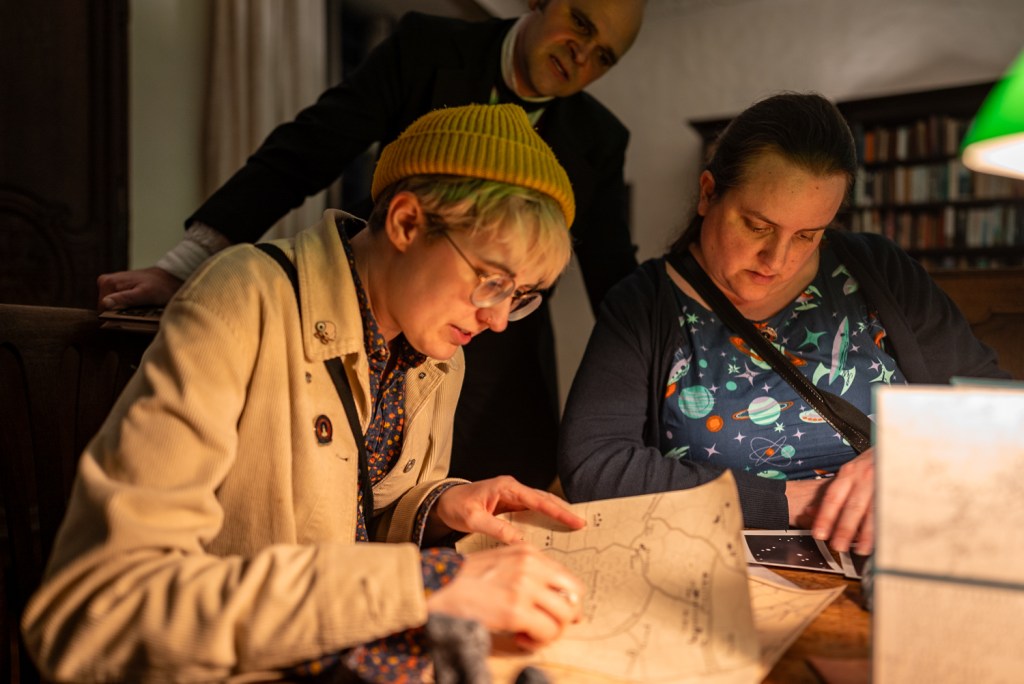
The one thing I hate is wondering, “Am I doing it wrong, is it not working?” Same with clues. There are multiple ways of doing things, but our actors can notice and respond to you, push you in a particular direction in your relationship.
You’re trying to build a sense of empathy with the audience. You want them to be engaged but you don’t want them frustrated because a piece of technology doesn’t work or they feel like they haven’t gotten a puzzle.
Exactly. We call them moments of delight. It doesn’t have to be high tech, it doesn’t have to be complicated. It can be complicated behind the scenes, but it’s that little moment where people go “ahh”. It can be a moment of realisation or it can just be something that is tactilely very satisfying.
There’s a point in the show where people can melt “lead”. It’s not lead, to be clear, because lead’s poisonous, but a metal. It’s a simple physical thing and it’s delightful. Those little moments of delight and technology should really serve that.
I come from a tech background, I’m a bit of a tech geek, and I obsess about, “It can do this and this and this,” and none of those are things most people care about. What they care about is how it makes them feel.
Technology and Team Size
Is it you personally doing the tech in The Key of Dreams or are there other people?
Configuration stuff I do, but there’s a chap, Steve Arch, who’s the husband of our stage manager. He’s been a software developer for 25 years and he’s doing [our tech] as a hobby. It’s Raspberry Pi-based and we use Python and a bunch of other stuff. We also use a lot of bespoke backend coding.
I know escape rooms have a number of companies that provide tools for them. I struggle with those because they are, by necessity, based on a subscription model and they have to grow.
Like COGS.
Exactly. But for the front end we use Home Assistant. Home Assistant is an automation tool which is phenomenally versatile. It’s very robust and has a huge ecosystem. We have some backend stuff that feeds into that, then we use some standard sensors and the ZigBee protocol, and a whole bunch of other basic stuff, and provide an interface that’s easy to use and gives you visibility.
But it’s a fairly small team. It’s friends and colleagues rather than you working with a big company.
Absolutely. I am the only full-time employee on this. Laura [Langrish, lead writer] has a job as a teacher. She works with kids from trauma and care backgrounds. My other partner, Marianne, makes a lot of the props. She’s a headteacher. We have other people: Kirsty [Arch] is our stage manager. Leo Doulton is an immersive theatre director.
Steve does a lot of the tech stuff, I do all the other stuff – networking and everything else. That isn’t entirely my background. What I wouldn’t give for a networking engineer just for a day or two to come and say, “don’t do these things, do these things.” It’s an old house.
Then we’ve got our associates. One of our actors is Emily Carding.
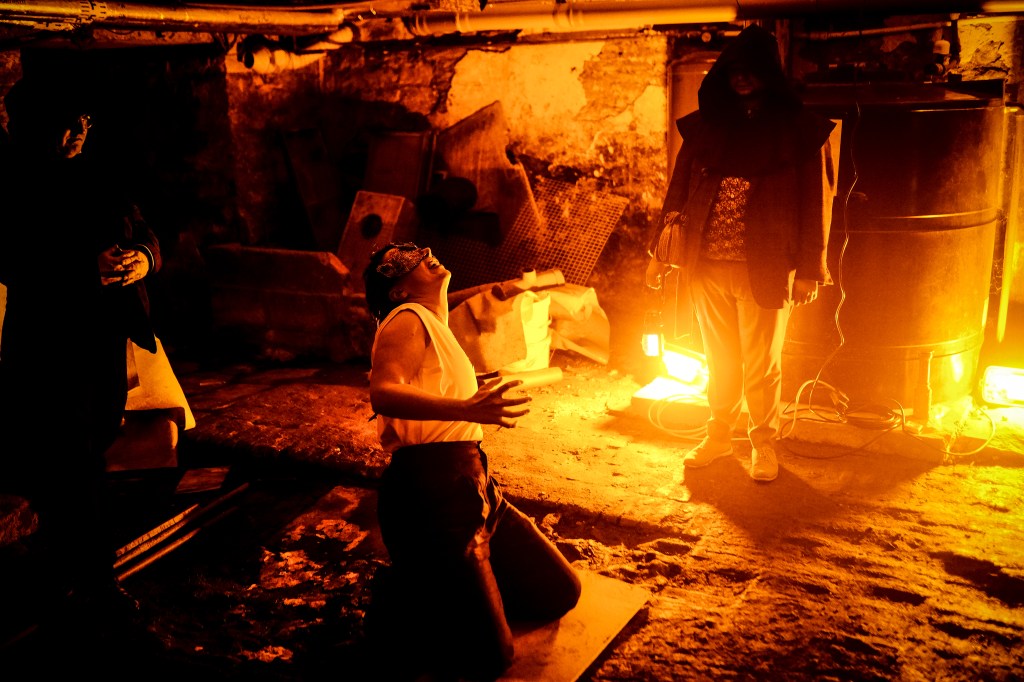
I’ve met Emily.
Oh, have you ever seen their one person Richard III?
I haven’t, but we were both on a panel at Worldcon in Glasgow last year.
Emily’s phenomenal. They’re doing some work at Bridge Command at the moment.
There’s probably six or seven of us. Ben Reed, who does a lot of work for games, composed a different soundscape in every room. There are three for each time of day, and some mobile or non-static soundscapes which are tied to characters, their state, and events the audience can be responsible for.
James Webster has done a bit of microfiction. He’s a really good friend and he’s provided a lot of feedback. Jonas Kyratzes, who worked on The Talos Principle 2, did possibly one of my favourite little bits of writing in the show, which always brings tears to my eyes.
Some elements by necessity are commissions, but a lot of them are collaborative. Initially, that’s through need because of money, but I’ve found it’s mutually rewarding. Emily, for example, is working on a one-person show, similar to their Richard III, that has their character from The Key of Dreams. It’s going to be of interest for fans, but it’s going to be its own thing, so if you know nothing about it, it’s absolutely fine. It’s a John Constantine, burnt-out occultist vibe.
We’ll market it and advertise it and they’ll use resources we have, but that’s going to be their passion project. They’ll tour with it, but it also acts as a little bit of a gateway to us.
Logistics
I’m interested in the business and logistics. I’ve read that you have a maximum of 30 audience members per performance, usually probably a little bit less, is that right?
23 is the maximum that can sleep in the venue – some of the rooms are three-person, and there’s a four-person double room that’s next to each other. Then we’ve set this arbitrary limit of seven off-site tickets. We could probably manage more but there’s a banquet and all the rest. As you say, we typically get between 20 and 24. I think the most we’ve ever had is 28, so we never actually reached that sort of arbitrary limit of 30 because people often want to stay at the house so they pick another date.
The logistics – my background is operation process improvement, this kind of stuff. We have spreadsheets and things. I’m trying to build a simple app through Google AppSheet, which is kind of a no-code environment, to provide a simple tool for setup and maintenance, but I’m not a coder so it’s slow going. I don’t want to think about how many hundreds of bits of paper we have, then props and all the rest.
We don’t change the venue very much. We live together at the house for two or three weeks at a time, so the actors know the space very well and they are responsible for setting up their area. They help us move furniture, and we’ve got quite good at kind of doing it all in the right order. Our stage manager, Kirsty [Arch], does a phenomenal job.
20 or 30 people doesn’t sound like a lot but because [the show is] essentially a whole day, we don’t have concrete paths for the whole journey. Part of the joy is people building relationships with other people, people helping each other, people plotting, people betraying. A lot of that happens with the characters.
Audience Engagement and Collaboration
A big thing about Lovecraftian horror is a big ritual, end of the world stuff. Fun, but probably better in a movie or a computer game because it’s easier to have the special effects to do something with that. Also, you’re more used to thinking in those terms.
Here, some people buy into it, others won’t, so the decision was made to provide the opportunity for people to care about the characters. It’s deciding what happens to them that ultimately you’ve got a lot of agency around, and the stories that you investigate. The moral decisions at the end of those are about what it is that you do. That’s all about collaboration and people talking to each other.
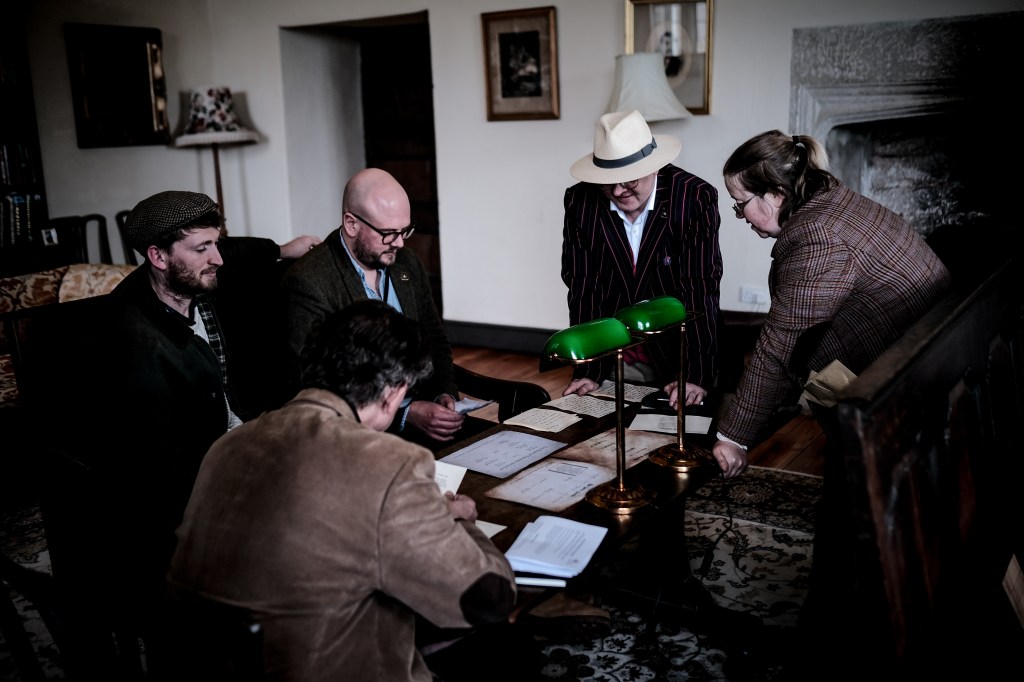
We’ve had people email us and say, “Myself and my husband, we’re autistic. It sounds great, but do we have to talk to or engage with the other audience?” That sounds quite harsh. But equally, the point is you can engage on your own terms. I mean, you’ll talk to them. It’s not like, no, I’m not talking to you. But in order to progress, in order to get what you want out of the experience, you don’t have to go through other people. You can.
The thing is, we find [engagement] happens naturally, even when people don’t expect it. A guy came from Israel with his daughter. This is not his thing, he’s a chaperone, he’s just totally lost, but he’s delighted his daughter’s having a great time. He contacted us before and said, “Can you just help her, but don’t tell her.”
We don’t need to. She just needs permission, and she’s a force for chaos and delight. And he just relaxes. I’m not sure he’d been to any immersive theatre before, but by the end of the show he’s engaging with the characters on his own terms. He’s talking about rituals, he’s telling stories, he’s doing this trade with one of the characters. He’s bought into the world.
Is that a function of the duration? If it was one or two hours long, maybe this guy wouldn’t have gotten into it to the extent that he did, but because he can get an understanding of the show and see what other people are doing, then after five hours, eight hours, twelve hours, he thinks, “I can do that.”
I think duration is definitely part of it but I don’t think you need eight hours or ten hours. The reason I say that is… I think people don’t believe you when you tell them “there’s no right way to do this.” They don’t. They think you’re saying that to make them feel better or because you have to say that.
Being able to dip your toe in, experiment, then change your mind, the whole waders, swimmers, divers thing – there’s lots of different kinds of barriers. Punchdrunk used something similar, though they don’t call it that. They roughly divide the audience into the people who are going to be full-on and chase all the one-to-ones; the people who are more into the details; and the people who just want to watch things happen around them.
Those are great categories, and most of us fit somewhere in those, but being able to move from one to the other and not feel like you failed or missed out – that’s what we try to do. We don’t always succeed because some people arrive at the next place and go, “oh my god there’s so much stuff and I’ve got to be going” and then it’s the job of the actors to try and show them that they don’t have to.
They usually succeed but it really comes down to the act of facilitation and the relationship that the actors, the characters, build with the audience. They wouldn’t be able to do that if the actors had less autonomy. The actors have functions: they have game functions, functions in terms of the narrative and the show, but one of the key things is building a relationship with the audience.
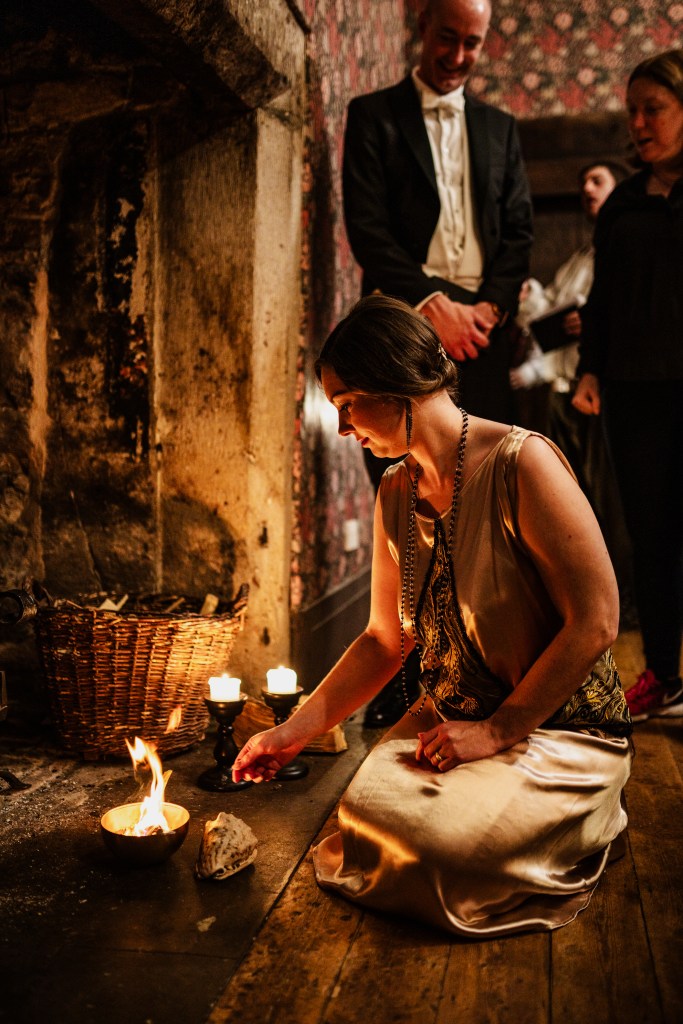
For example – and this freaked me out the first time it happened – they can build to the point where it’s so safe they can have an in-world argument with an audience member. This is something they’ve effectively informally negotiated amongst themselves because they built this relationship. They know you wouldn’t get a character insulting an audience member, however gentle, unless it was safe, because otherwise it feels quite personal. “This is a scripted piece and therefore you know how to respond to it.” Those little moments can happen.
Disney’s Star Wars: Galactic Starcruiser aimed at a similar kind of actor-facilitator. I was part of the First Order, the baddies. The main actor clocked that I could handle it, so he started berating me for not doing a puzzle correctly. That’s fine for me, but other people might not have the same reaction.
Exactly. That’s giving [actors] the autonomy and the trust, which, again, I found initially very difficult because I kind of feel… it feeds into imposter syndrome – I should have all the answers for all of this, because this is what I’m doing. But it is just so much better and it develops and it grows when you can give them the tools, and trust them to do what they need to do.
Business and Marketing
You mentioned you’re all together for two weeks at a time. Is that structured into seasons, or a block of performances or shows, and that’s how you organise it for everyone?
We’ve got chapters but they’re not organised like that. We’ve got a midsummer season finale and we’re calling it the final chapter, it’s a two day show. Anyone can come but we’ve initially pitched it at the people that have been before. We’ve sold about half the tickets so far which is deeply encouraging. The idea is that they leave a mark that will then continue on for the next season of shows.
This year we’re looking to do 18 shows, so over a two week period we might do three or four shows – probably four. We normally do something midweek, maybe have a rest day, then something at the weekend. We arrive, a couple of days set up; if it’s something new, like the midsummer, we’ll do a week’s worth of rehearsal, and set up all the rest of the changes.
Part of that’s because we don’t own the venue. It’s a really special house. It’s a liminal space, it’s not been changed very much. It has some disadvantages that we can’t change anything with it, but equally the house is literally a character in the story. We have to book it well in advance, so this year we’ve been more structured in terms of the dates, which is a little stressful.
Some dates have sold out, others have not. We have to figure out why and what to do about that, because there’s a huge appetite. I think 40% of our audience have come from the US, possibly even more. For some of the latest shows this year, I think they’re almost all from the US, which blows my mind. You’ve said it’s not surprising [via email] because of the big appetite there, but even so – the hassle [of travel].
We want to identify people we can potentially partner with, particularly on the travel agency side. It might work quite nicely, because part of the friction is flights and other logistics. They come and see our show, they go and see Bridge Command, they went to see The Manikins when it was on. People often ask us what they should do and we say, “there’s this, this, and this.”
“Immersive” doesn’t feel very competitive or cutthroat in the way that other [sectors] do because either [companies are] enormous like Punchdrunk, in which case they sort of ignore you, or they’re in a similar boat or smaller, in which case they want to help.
The sort of people who go to things like The Key of Dreams and Bridge Command, they like variety. It’s probably not the case that someone will only go to Bridge Command and nothing else.
You mentioned that some dates sell out really quickly and some take longer. How have things evolved over the time that you’ve been open?
I’m trying to decide what to say here…
You don’t need to say anything!
But this is literally what I’m always interested in. Escape rooms – what’s the business model? How can you spend $500,000? How are you making that back? What’s the volume you need, the ticket price? I’m super interested. So it would be massively hypocritical of me not to answer.
April [2024] was the first Key of Dreams. We did another show before, based on a license, called The Locksmith’s Dream. Some of the audience came from the previous show. Others, it’s word of mouth. We’re doing well, this year looks better than last year, which was already much better than the year before. So all that’s going in a good direction. We obviously had more costs and set up and the time to write and produce the show and everything else. We will, touch wood, turn profits. When we are full, the profit margin is very healthy.
It’s getting full. The challenge is getting in front of the right people. We run ads, but [The Key of Dreams] isn’t an impulse buy. It isn’t like The Lost Estate shows or Bridge Command or Phantom Peak where it might be an impulse thing, £40 or £50. Well, okay, The Lost Estate is up to £200. But those sorts of things, it’s more around awareness.
That’s our biggest challenge. I think we’re doing well. You’ve seen our press page. All of those are actual reviews, they’re not just mentions. It feels like it’s possible to arrange the reviews and a testimonials in some way, like a puzzle, that will then just work. I’m quite data driven, so the lack of data causes me a great deal of pain, being able to see trends and patterns. A lot of this is trying: “Did that work? No, that didn’t work. What should we do next?”
I want to create a constellation of experiences around [The Key of Dreams], some of them collaborative with other people that they effectively own, some of them by us. For example, we’re working on a collaboration with Rita Orlov who runs a [puzzle game] company called PostCurious.
They’re phenomenal. We’re producing a boxed experience with them that starts in the 1920s, so some of the origin story. It’ll be its own thing. Reaching the audience that likes puzzles, reaching the audience that likes immersive theatre or gaming, that’s challenging.
It’s fascinating because you’re starting with the pinnacle experience – there aren’t many experiences as deep or high-end as The Key of Dreams – and then you’re like, “how can we make smaller things in the same world with the same characters to encourage people to ladder up.” Normally it’s the other way around! <laughs>
You’re absolutely right. It’s a little bonkers this way around. There are more disadvantages than advantages. For example, we’re working on a pilot for a horror podcast, again featuring one of the characters, to introduce people into the world. The idea is that we can produce engaging, interesting content that isn’t an advert, but is an advert if you know what I mean; that you can enjoy and then not have anything else to do with it, and that’s absolutely fine, or you can enjoy it and then come back.
Our advantage is that we have collateral and story and backstory and resources that, if you were just doing those other things, you wouldn’t bother making. You wouldn’t bother going to a manor house and taking lots of photographs, you wouldn’t bother composing a theme and then doing five different versions of it in five different styles. You wouldn’t bother producing the puzzles and the documentation or the props.
Obviously you wouldn’t, because that wouldn’t be a very good use of your time! But the hope is that by using those things, they have a weight to them because they’ve been used and they’re a real thing that has meaning in the world and outside the world. Lots of writers, Lovecraft is one of them, mix imagined history with real history. By virtue of dropping the name of an imaginary scholar or place or book in the same space as all these other things, it acquires this kind of weight, this kind of veracity or truth, this hinterland.
So yes you’re right, it is arguably the wrong way around.
I’m not saying it’s the wrong way around, I’m saying that normally people don’t do that. A lot of shows would kill for the press you’ve received. I’ve read about The Key of Dreams in three different publications. If you were making a video game or a puzzle box or a board game, it would have to be really good to break through because there’s so much competition, so to make an event like this is not necessarily wrong.
Meow Wolf are doing a similar thing, at least that’s what they’ve said. They have very big immersive physical experiences that cost less, but they also want to do more digital experiences and cheaper experiences. So I don’t know that it’s wrong. It’s novel, and probably that does make it harder because you can’t just be like, “we’ll just follow this path,” you have to go and make the pass for others.
Exactly. It’s easy for me to say, “these other shows, the pitch for them is easier.” Obviously things look easier from the other side, but it may be simpler to make that sort of offering because, again, how do you decide to pitch [The Key of Dreams]?
The original website I did was awful. Not in terms of content – beautiful photographs, good writing – but in terms of what the hell this is. I put everything in there and that’s just overwhelming. You’ve got to be me in order to find that interesting and there aren’t very many me’s.
We’re trying to appeal to people who like all these different things, and they all have a good time, so figuring out how to refine that message, how to attract people, is a challenge because marketing isn’t my forte. This is also why word of mouth is really valuable.
Social Media
I assume that, like a lot of places, you’re not letting people take videos during the show, and probably not photos. To what extent do you think that’s a barrier for word of mouth or social?
We don’t stop people, but people don’t [take videos or photos]. We don’t encourage people, definitely. I adamantly didn’t want anyone to have phones out. I know for Punchdrunk’s latest show [Viola’s Room], they give you a bag and you put your phone in it. It’s a really simple, elegant solution. We’re similar but we didn’t tie it up.
In the end, because we’re treating people as guests and have certain expectations, they just don’t. But you are right about the videoing. There’s less TikTok content. We’re working on a bit of found footage of one of the characters that’s not in the show as such, they’re a radio broadcaster, sort of Blair Witch Project, as an experiment to see if we could get a bit of traction. It’s a bit funny, a bit embarrassing.
But I think part of the attraction might be that you aren’t on your phone during the show.
I’m sure that’s the case, and that’s why a lot of people want to go to immersive experiences. The biggest ever spike we’ve ever had in Zombies, Run! downloads was when a young woman we didn’t know and we didn’t pay did a TikTok saying “I played Zombies, Run! and it was really good,” and we had a million downloads. We didn’t build in anything to enable that, it just happened.
Trying to sort of engineer those… it’s one of the reasons why we reach out to lots of people. I dabbled with the whole influencer thing, spoke to a bunch of agents, but the conversation is always about money.
I don’t think –
And it’s also wrong.
I don’t think it works, honestly. Well, that’s not true, of course it works. I just don’t think… you’re not doing paid blog posts, you shouldn’t have to do paid TikToks, frankly.
Absolutely. I said this to the guy that’s done a bit of marketing for us, that’s that’s not real, and he looked at me and said it’s the internet. But there is also a genuine relationship that people have when they’re passionate or enthusiastic about something that is worth far more than them saying they’ve got ten million followers. There are people in the gaming community, whether it’s PC gaming, crossover or RPG, that if they had a good time, talked a bit, it would uptick more eyeballs, but it’s not just that we don’t have the budget to pay people.
Neil Patrick Harris came to our previous show and gave us a testimonial. He got a free ticket. I don’t begrudge that at all because we couldn’t afford to pay whatever the hell his day rate is, or any sort of marketing. That didn’t cause as much of an uptick as I thought it would. I had this naive idea that he’s huge and there’ll be a thing, but even now, two years later, it is still leading people to the website slowly. It’s like lots and lots of streams, little rivulets, that hopefully will turn into a raging torrent.
The Key of Dreams has been on my radar for a long time. Even if we didn’t talk, I probably still would’ve gone, but maybe only next year. You need to survive because you don’t know how many people are out there who will eventually go.
That’s it. Endurance. I was hoping for those sorts of moments. The first time we got a review was The Stage. I was incredibly excited. It’s tiny, but it feels like real validation.
It has influence amongst other influencers.
I was so excited about The Guardian as well. Even though the review was great, none of these things seem to be transformative, which I probably could have been told.
Location
What about the location? For me, that’s the number one barrier. It’s not the cost. Obviously there’s a reason why you’re not in London, but if it were, I probably would have already gone.
Initially it was finding a place that was difficult. We wanted a house that has history, a house that could ideally do up to 40 people, which this house doesn’t. The closer you get to London, not only the more expensive houses get, but the more likely they have been turned into very expensive private homes, flats or hotels.
A hotel doesn’t work. The cost is way too high, and bluntly, I wanted complete control over the whole experience, like the dining. We have a couple of chefs we work with; it’s not that a hotel would necessarily do a worse job, it’s that I can put the focus on the things I think are important. We can have the chef come out and present a particular dish and there’s a story reason for that. The dishes can be presented in a particular way, which a hotel or a restaurant could potentially do, but they have their way of doing things. That adds to the immersion.
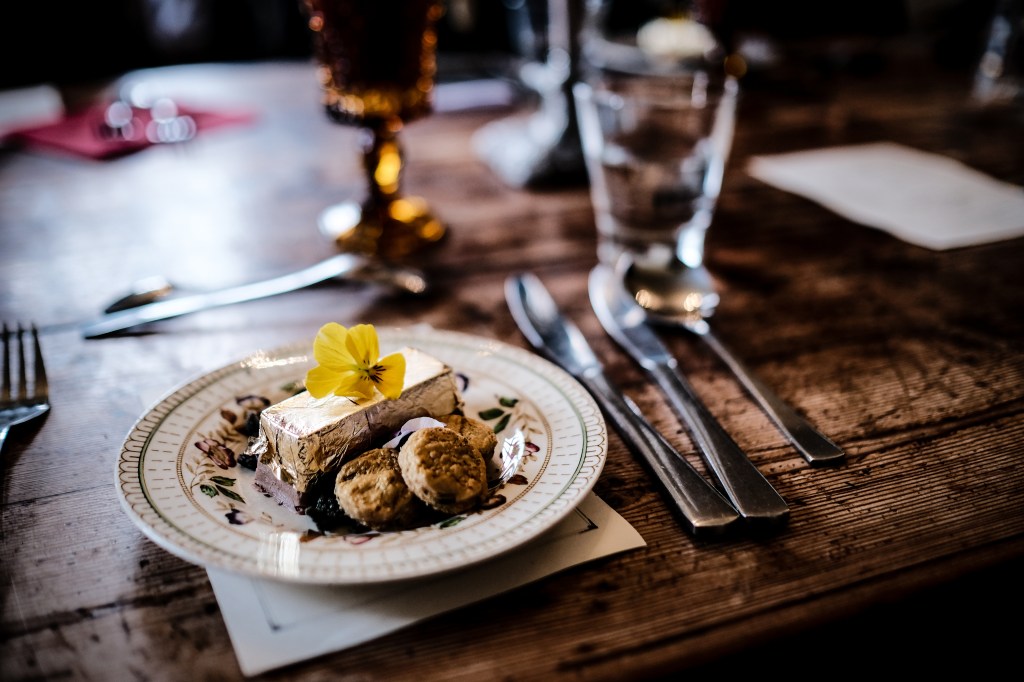
Something that people have said – Neil Patrick Harris said – the actors are actually taking your bags to your room, they’re actually serving you dinner, they’re actually cooking dinner, all of these things. That is fairly unique. This house is just really special.
It’s bad if you’re coming from Edinburgh – there might be flights into Cardiff…
There are. We can get there!
It’s 90 minutes from [London] Paddington to the nearest train station, which is not terrible. I would love to do something in London or even the US, but I would need to find funding. Ideally what I want is what happened with Bridge Command where they have an angel investor who comes along and says, “this is amazing, have a chunk of money!”
That obviously comes with strings but I’d love to do something similar. A partnership with a boutique hotel, where you run it during the off seasons, because they want to fill the venue. Then you’ve got a bar…
Doing it with a hotel makes a lot of sense. This is where the parallels from a logistical point of view to blockbuster larp become more apparent, like the College of Wizardry and Odysseus. Odysseus spent an enormous amount of time and money creating a sci-fi larp which lasted for three days. They ran it three times for 300 people and now they’re trying to decide whether they can do it permanently. They say they need to sell 1000 tickets per year at €1000 each to make it work.
As someone who has made these experiences before and probably will make them again, it’s fascinating watching from the outside. It seems like the business just about works. There’s a high capital cost and a lot of technology, but it’s becoming a little bit easier and easier over time. I’m confident demand is increasing. It’s just, how can you know when it makes sense to pull the trigger and get funding.
People don’t really want to talk about [the economics], not because they’re hiding anything but because it’s not interesting to them or it’s a little embarrassing. I want to pay our actors more, I want to build something where I’ve got a steady revenue stream where we can do adjacent projects and I can work with exciting and interesting people. I guess that’s why you go from a well-paid job; I’m not here to make a lot of money. Hopefully there are any number of commercially-adjacent ventures that could make a good amount of money, and if they do, great.
But ultimately, you’re doing this to produce something that’s creatively engaging and rewarding.
For me, that comes back to working with other people that are interesting. Despite my constant inability to stop talking, I really do engage and value people with expertise. I think one of the strengths we have is that we’re an older company. Most of the acting team are in their 40s. There’s advantages and disadvantages. One of the advantages is that they’ve got life experience, but they’ve also got a lot of experience around what they do.
One of our actors does a lot of work for the National Trust and Heritage England, so we’ve built his character so he can use some of his information and either delight or bore people to death about what a ha-ha is and what the origin was, because he literally plays the owner of the house. Being able to take actual experience and knowledge that people have and build it in – there’s risk with that, and the way we deal with a person being the only one with all that knowledge is by, again, having a flexible system. If we get another actor in to perform that function, they’ll be a slightly different character. There’ll be certain key things they have to do but all these other things that give texture and make them feel real will also be coming from knowledge they have.
Inspiration
What “immersive” things do you take inspiration from?
[Laura Langrish, lead writer, joins]
Laura: We both loved Punchdrunk. One of the first things [Ivan] took me to was The Drowned Man, when we met. Ivan is one for poking through sets rather than chasing down actors, and that attention to detail is hugely important to him.
I want to follow a story, so I will pick a character up. I was advised, and really enjoyed, following an object, just finding that story. Story is what I do. I don’t know if you know the game Gone Home.
Yes!
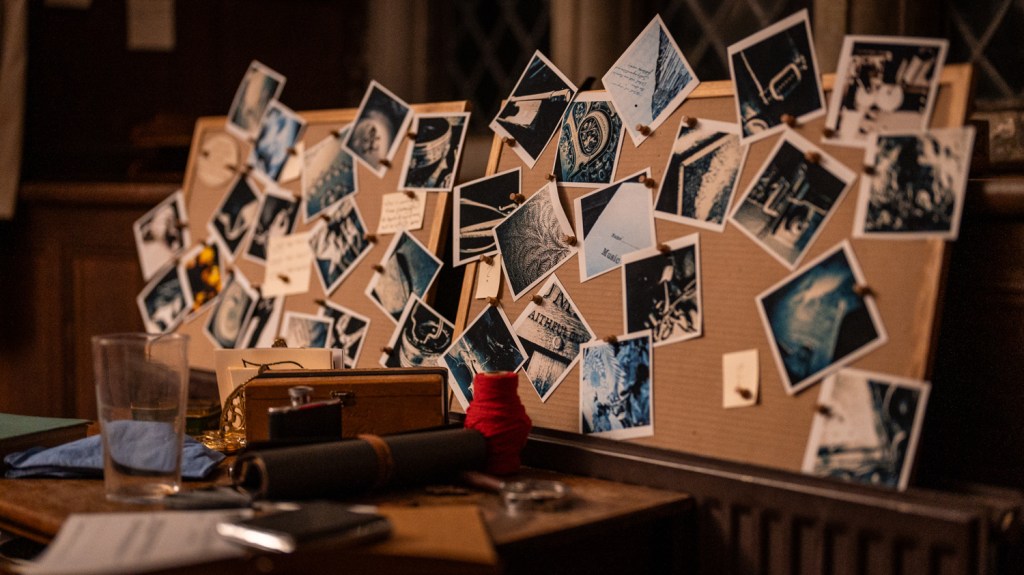
Laura: That was very inspiring for me in terms of writing the deconstructed narratives. As you move around the [The Key of Dreams] and pick up objects, you build a thread. We have literally red string murder boards you can add photographs of these things to and a little bit of information, and go and see what other people [have done]. I’ve done a few escape rooms and I really enjoy the mechanics, I enjoy the puzzling, but I want story.
Recently I’ve been playing Inscryption, which I’m thoroughly enjoying. There’s a game element and you can learn it, but once you’re playing you’re like, “Oh, there’s more to it, and there’s another level and there’s another layer,” and that again is an inspiration for [The Key of Dreams] as you start unpeeling more and more layers to find out what’s actually going on.
We love board games. One of the things I liked about Postcurious and why we reached out to Rita is that it’s a game but it’s also a story. I’m a big fan of ergodic literature: XX, S., and House of Leaves and all those kind of things. I love that it’s more than it seems on the surface.
Ivan: In a larp, you’ll do magic if you’re a wizard. You’ve got rules that you learn, then you tear up a card or you do the thing. [But our] goal is to get people to do things that are magical, or kind of magic in effect, without feeling too awkward or embarrassed if they’re not that way inclined. [Magic that feels] natural, almost inevitable, but also like it’s come from them. It’s not that you’re bringing a character sheet and these are the spells you can do.
Eurogamer interviewed us, then the writer came and reviewed [The Key of Dreams]. He says something like, “It’s 11 o’clock and I’m kneeling and I’m engaged in a cult ritual. I’m not entirely sure how I got here.” That’s literally it. That’s absolutely delightful. The show follows the rough path of a typical horror story or weird fiction, it’s like…
Laura: It’s Lovecraftian: “this is okay, it’s a bit odd; no really it’s odd; OK, what the heck just happened?!” People get really into it in a way you don’t always expect. In a particular show – no spoilers – people were casting a ritual as part of the story. You’d expect them to go, “okay this is part of what we have to do,” but this group literally stood around in a circle, held hands, and chanted. One of the actors leaned over to me and went, “Did you tell them to do that?” I’m like, “Nope.”
Time is a large part of that. You go through that journey to where the mad stuff feels fairly normal because you’ve been in it for so long, and because you’ve read about it. There’s lots and lots to read, and it can be a bit overwhelming. You can get most of that information through talking to other people or to the actors, but if you’re reading detailed diaries and letters describing things that happened in the rooms you are sitting in, and then later in the evening you walk in and it’s all set up, you’re like, “I know this, I know what happens here.” That, in itself, is a magical thing.
Ivan: It’s the recognition, absolutely.
A Theory of Duration and Genre
I have a theory about duration. There are certain shapes of media or entertainment that fit certain durations of time. A movie is a really good way to spend two hours because it’s a complete story, but you wouldn’t have an eight hour video because you need to go to the toilet and do other things.
It would be hard to have the kind of effect you mentioned in one hour or two hours. It’s not impossible, it’s just harder. Escape rooms have to do it in a certain way, maybe a more cliched way. But now we’re moving to a world where people have more free time. They’re able to commit to a full day or two days. The kind of experience that fits that length of time, that you can’t do in other media, is deeper and more involving. That’s why this isn’t just 1960s environmental theatre again; that’s why that’s why we’re seeing more things like this.
Ivan: It almost fits in the box of, “this is a weekend break,” or an intense experiential thing. In terms of cost, as well. We should really be more expensive with the value proposition for staying overnight, never mind the actor to guest ratio. Whether there’s enough people that want to pay it – I think there are – is another thing.
Some people spend the same amount of money to go to a gig abroad for the weekend or watch football. People do things in a similar price bracket and for a similar duration. It’s just… how do you get put in that group, because those are all – genre isn’t the word, but you know, it’s music or it’s sports or it’s a holiday. [The Key of Dreams] isn’t a holiday, although it is.
It’s an immersive experience – that’s what it says on your website!
Laura: It’s taken us a long time and I still don’t think we’re quite there. We’re a lot closer to explaining it quicker now. We would take an hour to explain it, whereas I think we can do it faster.

All images courtesy The Key of Dreams.
If you enjoyed this, check out my writing on other ambitious immersive experiences including the epic sci-fi larp Odysseus, the Star Wars: Galactic Starcruiser, Bridge Command, and The Morrison Game Factory (produced by PostCurious).

 mssv
mssv 