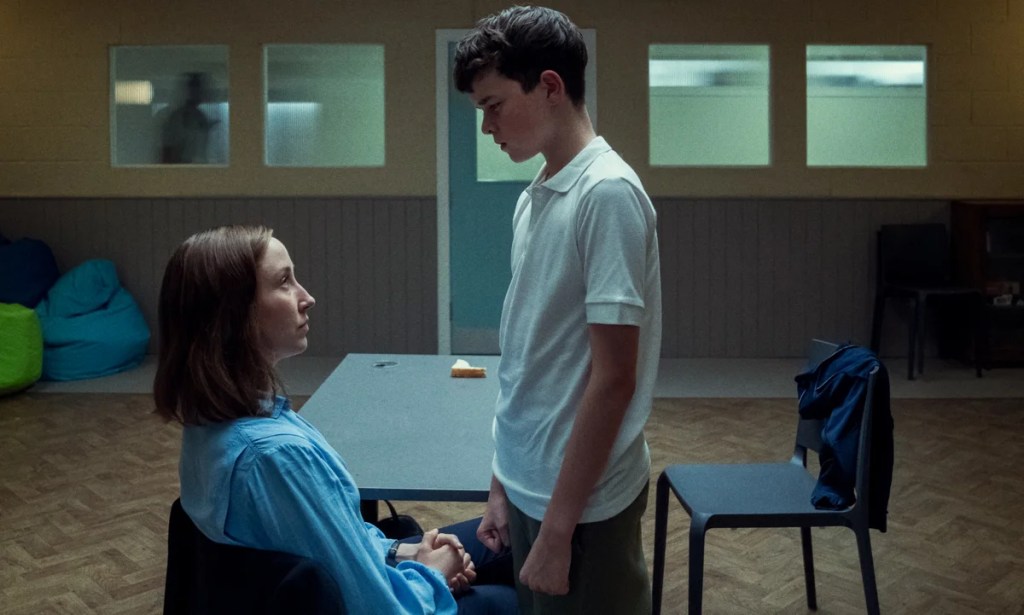
I have not watched Adolescence. If this makes me unqualified to discuss the effect of social media on children and boys, feel free to skip this post – certainly everyone seems to have become an expert after watching a four hour TV drama.
I have read a lot of reactions to Adolescence, however. Politicians and commentators are tripping over themselves to proclaim that banning phones from schools is the best answer to the myriad problems faced by young people, if not banning social media entirely.
This may seem like a repeat of the Mr Bates vs The Post Office phenomenon, where the British government can only be chivvied into action by means of a sensationally popular drama, but the difference is that the government has long wanted to restrict phone use in schools, and Adolescence is giving them a new, populist excuse. The show might say that things are more complicated – for one thing, desktop computers were also used – but the effect on many viewers is black and white.
Take Martha Gill’s piece in The Guardian today:
There is no trauma in his life, no abuse. As the writer, Jack Thorne, puts it: “He comes from a good background, like me; he’s a bright boy, like I was. The key difference between us? He had the internet to read at night whereas I had Terry Pratchett and Judy Blume.”
Proponents of the first idea want investment in youth centres and mentoring programmes, and to encourage more men into teaching. These notions have much merit, and would of course be good on their own terms. But as a solution to the problem of misogyny among radicalised schoolboys, I lean more towards the ideas offered by the second school of thought: getting them away from their smartphones.
Here’s one indication that youth clubs may not be the answer: online culture is not merely compensating for the real world, but outcompeting it. As tech geniuses devote all their brainpower to keeping people engaged, algorithms are getting smarter, and online life more exciting. I’ve previously written about the similarities between social media and casino slot machines: both use league tables, points, lucky streaks and rewards to get the dopamine pumping and keep us hooked. A survey last week of 14- to 17-year-olds found 40% spent at least six hours a day online – the equivalent of a school day. This is not just about a lack of other options. These platforms take the stimulus to socialise – recognition, inclusion, approval – and gamify it to an addictive level. Why spend time with your friends or go to community centres when online culture is more rewarding?
This is an exemplary piece because it encapsulates so much of contemporary thinking. Assuming banning phones and social media is feasible, which it is not, the question then becomes: what are kids meant to do instead? Video games are out, because they are obviously bad. Youth clubs barely exist any more, nor do spaces where kids can play and experiment without being under the thumb of adults. The answer is that children should do as Generation X once did – read good, character-building books.
Far be it from me to defend gamified social media. I did, after all, write an entire book critiquing gamification in 2022. I would go so far as to say I am an expert in the use of gamification to manipulate people and corrupt politics – for example, I know that people who use “dopamine” do not understand what it is.
So I feel confident in saying that while algorithmic, corporatised, gamified social media is often bad, using the internet to connect people is not, on the face of it, bad. If it’s gamification and algorithms you’re worried about, the answer is to build and foster online spaces that reduce or eliminate their ills. Unfortunately the UK and many other countries have simply given up on funding convivial public spaces, whether online or offline, leaving the entire thing up to the private sector: “we’ve tried nothing and we’re all out of ideas.” The public sector has long exhorted the government to create digital public spaces and has roundly been ignored or shoved aside by tech giants. You could blame this on the Tories being in power for fourteen years, but does anyone truly believe Labour is going to spend any amount of money on this?
Even if you could ban social media until the age of 16 or 18, exactly what is meant to happen on their birthday? The better approach is to improve social media for everyone and to create spaces for children and teenagers to experiment and grow. Not a basement with a ping pong table and a stack of “good” books that Gen X apparently spent all their spare time reading, but spaces that can compete with the excitement and drama and wonder and spectacle of the online world: experimental playgrounds, sports, larps, pro-social online games, etc. There’s an army of game designers and community organisers absolutely champing at the bit to help, and they aren’t looking to become billionaires, either.
But it’s easier to ban things than build things.

 mssv
mssv 